

More news on this day
United Airlines and the union representing its flight attendants appear to be moving toward a new tentative labor agreement, a development that could ease months of uncertainty for travelers watching the negotiations for signs of potential disruption and changes to onboard service.
Get the latest news straight to your inbox!
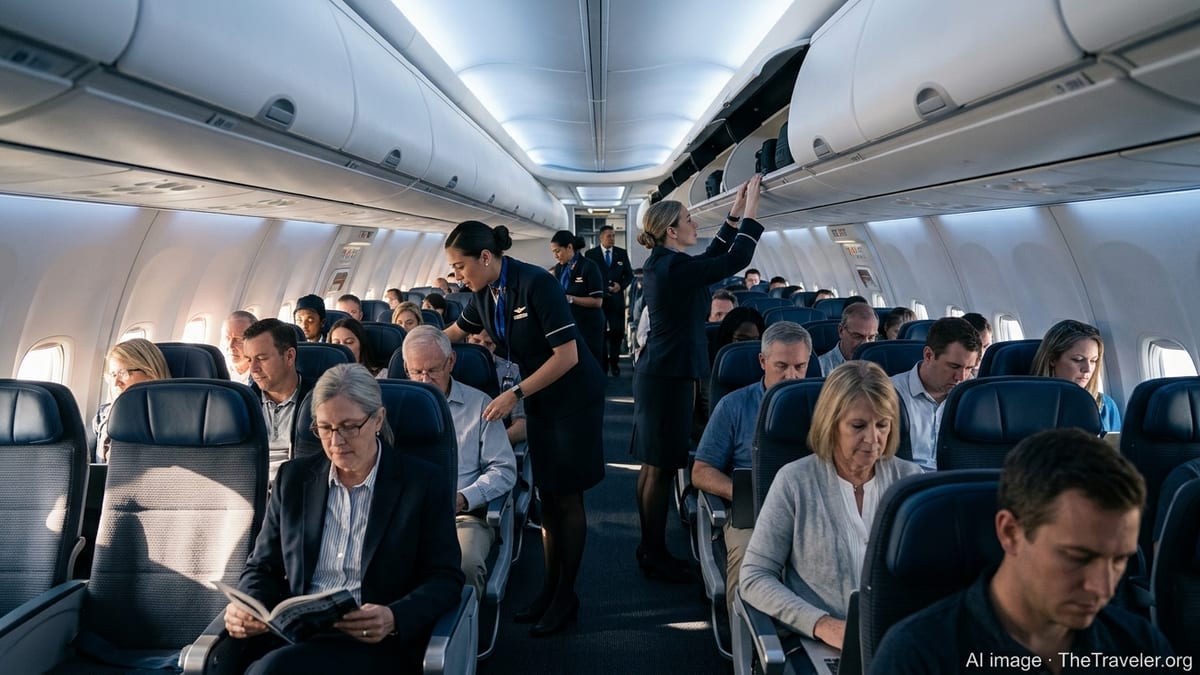
Talks Enter Final Stretch After Years of Tension
Contract talks between United Airlines and the Association of Flight Attendants-CWA have stretched over several years, shaped by strike-authorization votes, federal mediation and earlier failed attempts to secure a long-term deal. Publicly available information shows that flight attendants previously authorized a strike by an overwhelming margin in 2024, signaling deep frustration with pay, scheduling and quality-of-life provisions.
Those tensions intensified when a tentative agreement announced in 2025 was later rejected by a large share of voting flight attendants, pushing the parties back to the bargaining table and prolonging the uncertainty around cabin crew staffing and morale. Negotiations have since continued under the framework of the Railway Labor Act, which tightly regulates when and how airline workers can strike and has kept flights operating even during periods of sharp disagreement.
Recent updates from the union and company indicate that the latest round of talks, held in mediated sessions, has produced substantial progress on remaining issues. Reports from union communications and industry coverage describe the parties as being very close to a new tentative agreement, often referred to as TA2, that could be sent to union leadership and then to rank-and-file members for a ratification vote in the coming weeks.
While the exact timeline remains fluid, the tone of recent public statements contrasts with the stalemate of late 2025, suggesting that both sides are motivated to close out negotiations before another peak travel period and to provide the workforce and passengers with more certainty.
What Is on the Table for Cabin Crew
Although full contract language has not been released, available summaries and member briefings point to several core issues likely to define the new deal. Pay is at the center, with United indicating in recent updates that it is prepared to offer wages that would put its flight attendants at or near the top of the U.S. airline industry. That follows a broader pattern across major carriers, where pilots and cabin crew have used a tight labor market and robust profits to push for higher compensation.
Scheduling and rest rules are another key area. Flight attendants have raised concerns about long duty days, irregular patterns and unpaid time on the ground, arguing that these factors affect both safety and the ability to deliver consistent service to passengers. Any compromise that improves rest, reduces fatigue and gives crews more predictable rosters is likely to resonate directly in the cabin, where better-rested staff can devote more attention to customers and safety procedures.
Quality-of-life items such as hotel standards during layovers and protections when flights are delayed or disrupted have also featured prominently in union communications. Improvements in these areas could help United recruit and retain experienced cabin crew at a time when airlines are still rebuilding workforces that were thinned during the pandemic era. For travelers, more stable staffing and lower turnover often translate into smoother service, faster recovery from irregular operations and a more consistent onboard experience.
Industry observers note that whatever emerges at United will sit alongside recent agreements at other major U.S. carriers, shaping expectations for pay and working conditions and influencing how airlines compete for flight attendants in the years ahead.
Short-Term Impacts on Travelers Remain Limited
For passengers holding tickets on United this spring and summer, the most immediate question has been whether talks could trigger strikes or large-scale disruptions. Under the Railway Labor Act, airline workers cannot walk off the job at will, and multiple procedural steps, including formal mediation and a cooling-off period, are required before any legal strike can occur. Publicly available coverage indicates that these guardrails have so far kept United’s operation intact despite heated rhetoric around the bargaining table.
That legal framework, combined with the latest signals that a new tentative agreement is near, means the risk of abrupt, negotiation-related cancellations currently appears limited. Travelers may still see informational pickets or union visibility campaigns at airports, but these events are typically designed to raise public awareness rather than halt flights.
United has continued to operate a full schedule through previous stages of the talks, including during strike-authorization votes and after the rejection of the 2025 tentative agreement. Industry analysts point out that both the airline and the union have strong incentives to avoid a breakdown that could damage the carrier’s reputation, undercut financial performance and weaken support for the eventual deal among customers and employees.
Even so, frequent flyers and corporate travel planners are monitoring developments closely, particularly around key holiday and business travel periods. Many experts recommend that travelers stay flexible with itineraries, use changeable or refundable fares when possible and sign up for real-time flight alerts during periods of heightened labor activity, even if full-scale disruption is unlikely.
How a New Deal Could Change the Onboard Experience
If United and its flight attendants finalize and ratify a new contract, the effects for travelers are expected to unfold gradually rather than overnight. Higher pay combined with better scheduling and rest provisions could help stabilize staffing levels and reduce last-minute crew shortages, which in turn may cut down on cancellations and delays tied to crew availability.
Enhanced work rules could also support more consistent cabin service. When flight attendants have more predictable schedules, time to recover between trips and improved hotel accommodations on layovers, they may be better positioned to manage long flights, complex service flows and passenger conflicts. That can result in more attentive service, faster response to requests and a calmer atmosphere during irregular operations.
The agreement may additionally address training and career-progression elements that influence how experienced flight attendants are distributed across United’s network. Stronger retention incentives can help keep senior crew members on long-haul and premium-heavy routes, where travelers often expect a high level of service and where flight attendants play a crucial role in managing complex, multi-hour operations.
Cabin upgrades and new product rollouts, such as refreshed seating, enhanced premium cabins or revised buy-on-board menus, also depend heavily on a motivated and adequately staffed cabin crew. A more stable labor environment could give United more confidence to invest in service enhancements, knowing that the workforce responsible for delivering them is aligned under a modern contract.
Broader Signals for Airline Labor and Customer Expectations
The near-conclusion of United’s cabin crew negotiations is being watched across the airline industry as another marker in a wave of post-pandemic labor resets. Major U.S. carriers have already renegotiated contracts with pilots and many ground workers, adjusting pay scales and work rules to reflect a changed labor market and strong demand for air travel.
For travelers, these agreements can influence ticket prices, route networks and the overall quality of the travel experience. Higher labor costs are one of several factors that may put upward pressure on fares over time, especially on routes where competition is limited. At the same time, many passengers have grown more vocal about reliability and in-flight service since the disruptions of recent years, expecting that record profits and premium fare increases will be matched by improvements in what they experience onboard.
United’s talks with flight attendants also highlight how closely customer experience is tied to frontline working conditions. Cabin crew are often the only employees passengers interact with in person, and their ability to manage safety, service and conflict on full flights is shaped by the contracts now being rewritten. As other negotiations unfold across the industry, travelers may increasingly factor airline labor relations into their loyalty decisions, favoring carriers where stable contracts and visible staffing levels lead to fewer disruptions.
Should United finalize and ratify its next agreement in the near term, it would mark a significant step toward labor stability at one of the world’s largest airlines, and could set new benchmarks for cabin crew contracts that ripple outward to competitors and, ultimately, to the passengers who fly them.