

More news on this day
United Nigeria Airlines has been admitted into the International Air Transport Association’s Clearing House, a key financial milestone that strengthens the carrier’s push to launch long-haul services from Nigeria to Dubai, Rome, London and New York.
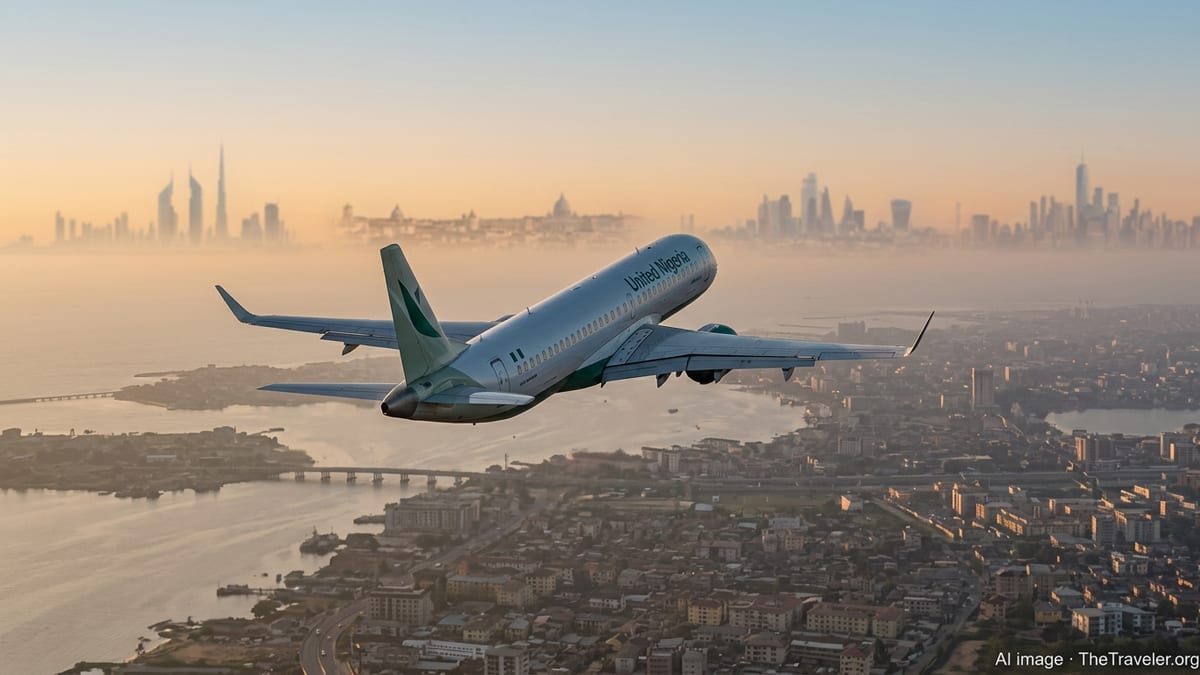
A Financial Green Light for Global Expansion
The airline confirmed its official entry into the IATA Clearing House in early March 2026, describing the move as a definitive step in integrating its operations into the global aviation settlement system. Effective for transactions from February 1, 2026, United Nigeria can now settle passenger and cargo interline billings through IATA’s centralized platform, the same financial backbone used by many of the world’s major carriers.
By joining the Clearing House, United Nigeria reduces the friction and risk associated with bilateral settlement arrangements, which can be complex for airlines seeking to grow beyond domestic and regional markets. The membership improves the airline’s credibility with potential partners, travel agents and corporate clients, all of whom rely on seamless financial clearing when booking multi-leg journeys.
The step also aligns with United Nigeria’s push to showcase compliance with international standards. The airline, which already holds IATA Operational Safety Audit registration, is positioning these credentials as evidence that it can meet the regulatory and operational expectations of high-value long-haul markets.
Industry analysts say admission to the Clearing House is typically a precondition for deep commercial relationships, from codeshares to interline agreements, that can make or break the viability of new long-distance routes.
Regulatory Designations to Dubai, Rome, London and the US
The financial upgrade comes on the heels of Nigeria’s designation of United Nigeria Airlines to operate international services to a range of key global gateways. The airline has regulatory approval to fly to Dubai in the United Arab Emirates, Rome in Italy, London in the United Kingdom and selected US cities under bilateral air service agreements, alongside other European destinations such as Amsterdam and Dublin.
While launch dates for long-haul services have not yet been formally announced, the combination of government designation and IATA Clearing House access effectively clears two of the biggest hurdles facing a Nigerian carrier with global ambitions. Network planners can now refine schedules and aircraft deployment for proposed links between Nigerian hubs and long-haul markets, knowing that both traffic rights and settlement mechanisms are in place.
Nigeria’s aviation authorities have encouraged domestic carriers to grow international operations in order to capture a larger share of outbound Nigerian traffic that is currently dominated by foreign airlines. United Nigeria’s expansion plans to cities like London and New York align with this policy goal, potentially offering more direct options for Nigeria’s large diaspora and business community.
For travellers, the move raises the prospect of additional competition on historically high-fare routes between Nigeria and key financial centres, particularly London and New York, where demand for both business and visiting-friends-and-relatives travel remains strong year-round.
From Domestic Operator to Emerging International Player
United Nigeria Airlines launched commercial operations in 2021 as a privately owned carrier focused on domestic Nigerian routes, later adding regional services from Lagos and Abuja to Accra in Ghana. In just a few years, it has expanded its fleet to include both narrow-body and regional jets serving multiple Nigerian states, building a reputation at home for on-time performance and regulatory compliance.
The carrier has been steadily laying the groundwork for a larger international footprint. Partnerships with global distribution platforms and ticketing specialists have broadened its reach in overseas travel agencies, while fleet plans call for the introduction of wide-body aircraft capable of nonstop services from Nigeria to Europe, the Middle East and North America.
Joining the IATA Clearing House fits into this incremental strategy. With domestic and short-haul regional operations providing a base of traffic and experience, the airline is now focusing on the systems and agreements needed for more complex long-haul flying. Executives have framed the international push as part of a broader effort to position Nigeria as a competitive aviation hub in West Africa.
That ambition comes at a time when global carriers are reassessing their African networks, opening a window for nimble regional airlines to secure new traffic flows. United Nigeria’s evolving network suggests it intends to compete directly for passengers who might otherwise connect via Gulf or European hubs.
Strategic Importance of Dubai, Rome, London and New York
The selection of Dubai, Rome, London and New York as priority cities reflects both commercial opportunity and diaspora patterns. Dubai remains a major employment and trade magnet for Nigerians, as well as a popular shopping and leisure destination. Direct flights from Lagos or Abuja into Dubai would tap robust two-way traffic and cargo demand, particularly for high-value goods.
Rome and London serve as critical gateways into continental Europe and the United Kingdom, markets with deep historical and economic ties to Nigeria. London in particular is one of the busiest long-haul routes for Nigerian travellers, with strong premium and leisure demand driven by finance, education and family travel. Additional Nigerian carriers on this corridor could reshape capacity and pricing dynamics.
New York, meanwhile, provides access to one of the world’s largest aviation markets and to a substantial Nigerian and West African diaspora spread across the US Northeast. A direct link between Nigeria and New York would place United Nigeria in direct competition with established foreign carriers, but it also offers the airline a high-profile route that can elevate its global brand.
Beyond point-to-point traffic, these cities function as powerful connecting hubs. Tapping into onward connections in North America, Europe and the Middle East will be crucial for United Nigeria’s long-haul strategy, and Clearing House participation is central to settling complex multi-airline itineraries that feed such networks.
Challenges and Opportunities in Nigeria’s Long-Haul Market
Despite the promising step into IATA’s Clearing House, United Nigeria faces a challenging operating environment. Nigerian airlines have historically struggled with foreign exchange constraints, high operating costs and infrastructure limitations, all of which complicate long-haul operations. Volatile currency markets and regulatory uncertainty can make aircraft leasing and fuel procurement more expensive than in rival hubs.
At the same time, there are clear opportunities. Recent efforts to resolve issues around blocked airline funds in Nigeria and broader policy discussions about supporting local carriers could improve the financial viability of new services. If macroeconomic conditions stabilize, United Nigeria will be better positioned to sustain long-distance routes rather than relying solely on high-yield peak periods.
Passenger expectations will also shape the airline’s prospects. Competing on routes to London and New York requires consistent service quality, modern cabins and robust customer support, as well as dependable on-time performance. The carrier’s investment in international safety and settlement standards signals an awareness that success in these markets will be judged against global benchmarks.
As United Nigeria Airlines moves from planning to execution on its international route map, its progress will be closely watched by both Nigerian travellers and the wider aviation industry. Its ability to convert Clearing House membership and regulatory approvals into sustainable operations on marquee routes like Dubai, Rome, London and New York will be a key test of Nigeria’s broader aviation ambitions.