

More news on this day
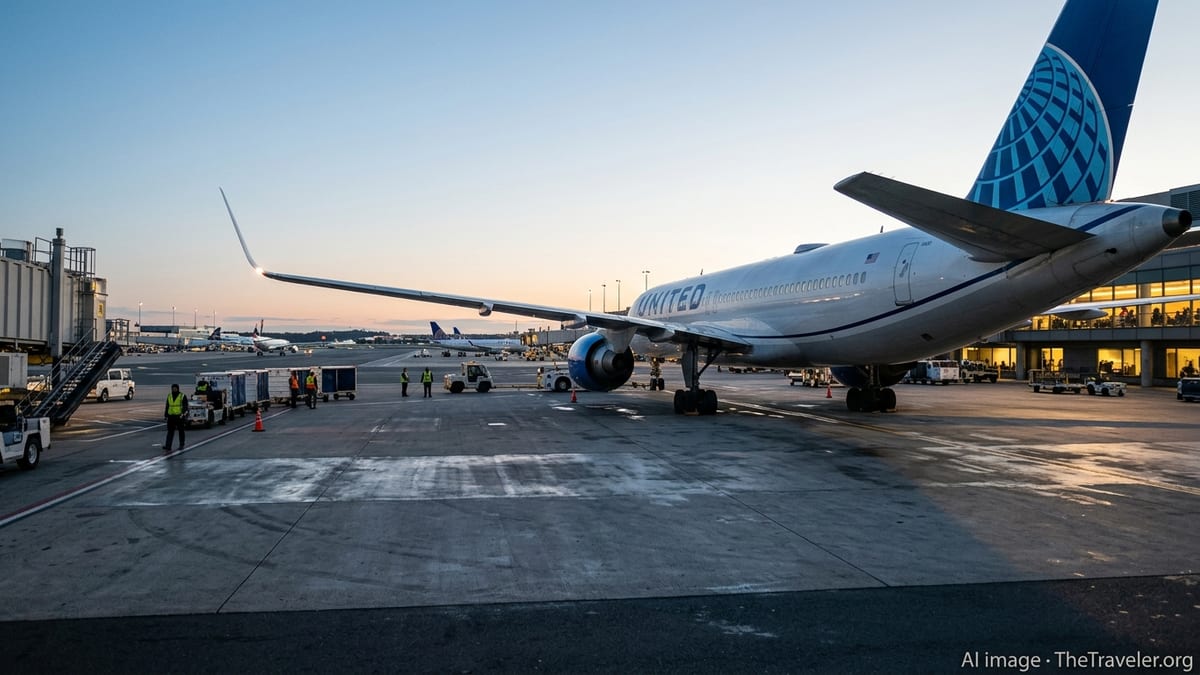
United Airlines is preparing to roll out an ultra-long one-stop itinerary of roughly twenty two hours in 2026, highlighting how the carrier is using extended flight times, new routes and optimized connections to stitch together cities across multiple continents in a single booking.
Get the latest news straight to your inbox!
A Marathon Itinerary Built Around United’s Growing 2026 Network
Publicly available schedules and airline communications for 2026 show United layering new long haul sectors and additional frequencies onto an already dense international network. The result is an increasing number of one stop journeys that can link distant city pairs in around twenty two hours, especially when an overnight transatlantic or transpacific leg is paired with a tightly timed onward connection.
United’s summer 2026 plans from its Newark hub include fresh nonstop services to European destinations such as Bari in southern Italy, Split on Croatia’s Dalmatian coast, Glasgow in Scotland and Santiago de Compostela in Spain. These flights join an existing roster of seasonal and year round routes that already extend from North America to Greenland, Mongolia, Portugal, Mexico and Senegal, among others. As new departures are layered on top of this map, connecting options multiply and allow for longer but still single stop itineraries that approach the twenty two hour mark.
Additional winter 2026 schedule changes point to more long haul links into the Caribbean and North Atlantic, including announced service from Newark to Dominica’s Douglas Charles Airport and a second summer of operations to Nuuk in Greenland. When these routes are combined with United’s domestic and transcontinental banks at large hubs such as Newark, Chicago, Houston and Washington, a traveler can feasibly depart a secondary U.S. city, connect to an overnight long haul leg and then continue onward to a final destination abroad, all within a single one stop journey lasting close to a full day.
Industry observers note that this type of itinerary is not a single branded flight number stretching for twenty two hours but rather a carefully coordinated connection pattern. By aligning departure and arrival banks around key long haul flights, United can market itineraries that keep total travel time competitive while still relying on proven hub and spoke economics.
Strategic Hubs Turn One Stop Trips into Global Bridges
United’s 2026 schedules reinforce the importance of a few cornerstone hubs that act as springboards for long distance connections. Newark Liberty International remains the airline’s primary Atlantic gateway and is central to many of the longest one stop itineraries linking North America with Europe, Africa and parts of the Middle East. Reports indicate that Newark has hosted more international and European departures for United than any other hub, underscoring its role as a global bridge.
Chicago O Hare continues to grow as a domestic and transborder connector, with new gates and additional services enabling passengers from smaller U.S. markets to reach long haul banks more reliably. Expanded winter schedules describe larger aircraft on certain domestic trunk routes, aimed at improving connectivity into major hubs and providing more consistent options for onward international travel.
Washington Dulles and Houston Intercontinental add further long haul reach, particularly toward Europe, the Middle East, Latin America and the Caribbean. When viewed together, these hubs create multiple paths for a twenty two hour one stop journey, whether that involves a late evening departure from a regional U.S. city, an overnight transatlantic sector and a morning continuation into a secondary European or island destination, or a similar pattern in the opposite direction.
For travelers, this hub strategy means that the practical experience of a one stop global trip hinges on short transfer times, clear wayfinding and coordinated schedules. United’s internal connection management tools, described in corporate materials as saving large numbers of potential misconnects, are designed to keep such itineraries viable even when individual flights face delays.
Onboard Technology and Comfort for a 22-Hour Journey
Spending nearly a full day in transit raises the stakes for onboard comfort, and United is leaning on a wave of cabin and technology upgrades timed around the mid 2020s. The airline has been rolling out high speed satellite Wi Fi based on Starlink technology across portions of its mainline and regional fleets, with plans indicating hundreds of equipped aircraft by the end of 2025 and further expansion into 2026. Reports from early flights describe significantly faster and more reliable in flight connectivity than legacy systems.
Alongside connectivity, new and refurbished aircraft types are playing a growing role on long routes feeding into these extended itineraries. United has outlined plans to replace older narrowbodies on certain island and regional services with modern Boeing 737 MAX variants, featuring seat back entertainment and upgraded cabins. Widebody aircraft used on transatlantic and transpacific sectors have seen ongoing retrofits with newer business class seats, refreshed premium economy offerings and updated lighting and cabin finishes.
For a one stop itinerary lasting close to twenty two hours, these changes can materially affect how passengers experience the trip. Reliable Wi Fi allows travelers to work, stream or communicate continuously across time zones, while newer seats and improved cabin ergonomics make it easier to rest between connections. Coupled with refined meal service and amenity offerings on flagship long haul routes, United is positioning these flights as more than just long transfers between hubs.
From an operational perspective, consistently delivering this level of service requires carefully scheduled maintenance windows and a fleet plan that ensures upgraded aircraft appear on the most demanding routes. Public network updates suggest that United is concentrating its newest hardware on long haul and strategic regional flights, precisely the segments that anchor full day one stop journeys.
Network Expansion, Competition and Environmental Considerations
United’s push toward more extensive one stop connectivity in 2026 comes amid intense competition among major global airlines to capture long haul leisure and premium demand. Other carriers are also expanding transatlantic and transpacific offerings, but United’s emphasis on secondary European cities, Arctic gateways and emerging leisure markets provides a distinct angle that can support unique twenty plus hour itineraries.
The carrier’s public communications highlight a growing list of destinations that no other U.S. airline serves nonstop, including select cities in Greenland, Mongolia and southern Europe. By pairing those routes with deep domestic feed and additional flights to established hubs, United can attract travelers seeking both convenience and novel destinations, all within a single connection.
At the same time, ultra long travel days raise questions about environmental impact. United has promoted its investment in sustainable aviation fuel at key hubs and has outlined broader emissions reduction goals, positioning these steps as part of a long term strategy to make growth more sustainable. While such initiatives do not eliminate the carbon footprint of a twenty two hour itinerary, they indicate that airlines are being pushed to balance network expansion with climate considerations.
Analysts point out that one stop journeys can, in some cases, be more efficient than multi stop alternatives, especially when modern aircraft and optimized routings are used. As carriers refine schedules for 2026 and beyond, the challenge will be maintaining attractive long distance connectivity while demonstrating measurable progress toward emissions targets.
What Travelers Can Expect in 2026
For passengers planning long haul trips in 2026, United’s evolving network suggests more options for complex one stop journeys that approach twenty two hours door to door. Leisure travelers heading to new European destinations from secondary U.S. cities may find that an evening departure, overnight leg and morning connection provide a relatively efficient path, even when the total travel time nears a full day.
Corporate travelers and frequent flyers may focus more on the quality of the onboard product and reliability of connections than on headline flight times. Expanded use of fast in flight connectivity, refreshed cabins and larger aircraft on key feeder routes should make long itineraries more workable as mobile offices, especially when paired with premium seating or extra legroom options.
Practical considerations will still matter. Travelers booking these lengthy one stop trips will need to pay close attention to minimum connection times, airport layouts and potential weather risks at key hubs. The success of the model depends on tight coordination across United’s domestic and international operations, as well as continued investment in technology that can automatically rebook or support customers if disruptions occur.
As airlines finalize their 2026 schedules, United’s approach illustrates how carriers are using a mix of new destinations, upgraded aircraft and digital tools to create long yet streamlined journeys. For some travelers, the prospect of a twenty two hour one stop flight will be daunting. For others, it may represent an appealing way to reach far flung corners of the world with only a single change of planes.