

More news on this day
United Airlines is accelerating the industry’s premium-cabin arms race, unveiling an all-new Dreamliner interior with enclosed business-class suites and upgraded premium economy seats that aim to leapfrog rival offerings from Air Canada, Delta, Emirates, Air France, Etihad, Lufthansa and other global carriers.
Get the latest news straight to your inbox!
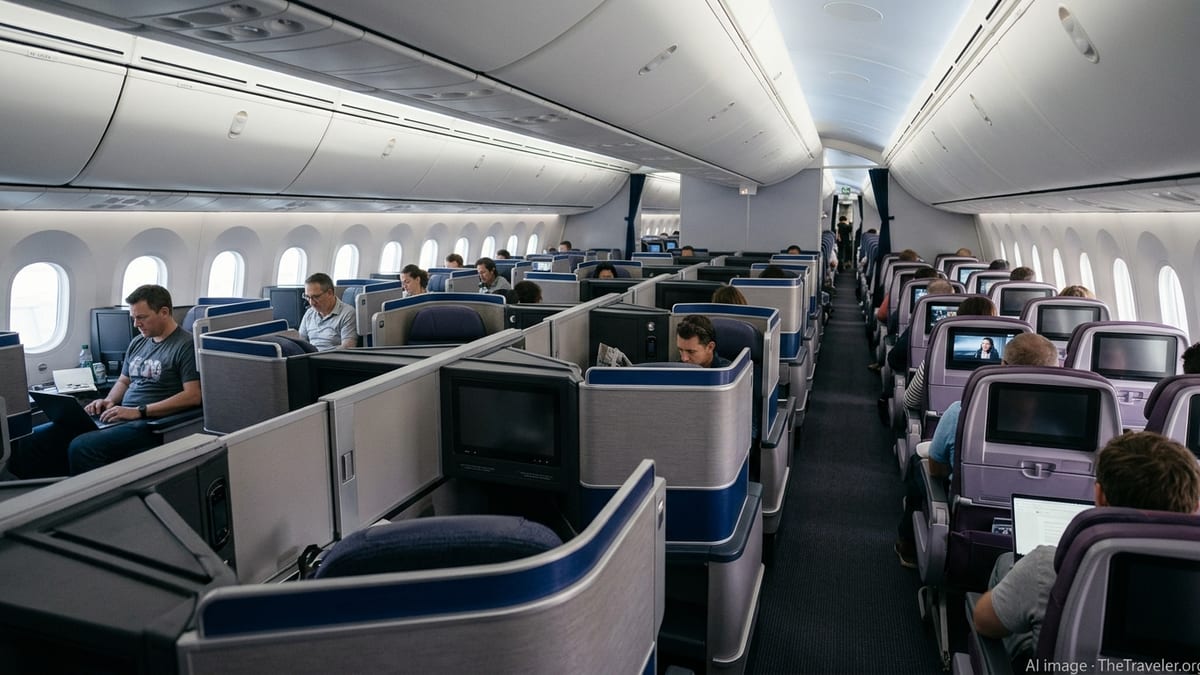
Suite-Style Polaris Takes Center Stage on New Dreamliners
United’s latest Boeing 787-9 Dreamliners, set to enter long-haul service from late 2025, will debut a redesigned Polaris business-class cabin built around fully enclosed suites. Publicly available information shows that the new layout introduces higher walls and sliding doors across most seats, responding directly to growing traveler demand for privacy and personal space on overnight flights. Early previews describe a brighter, warmer design language and expanded storage, positioning the refreshed Polaris as one of the most advanced business cabins among North American airlines.
At the front of the cabin, United plans a small number of even larger Polaris Studio suites. These first-row positions are reported to feature expanded surfaces, additional storage and a more residential feel, effectively creating a sub-cabin within business class for high-yield customers. Industry observers note that this two-tier suite strategy mirrors trends in the luxury hotel sector, where premium room categories drive outsized revenue relative to their footprint.
The broader Polaris cabin is also set to receive upgraded 4K seatback screens, wireless charging and enhanced in-seat lighting. Taken together, these changes signal a shift away from incremental refreshes toward a comprehensive reimagining of the long-haul environment. In contrast, competitors such as Delta and Air Canada continue to roll out refinements to existing suite products, while European and Gulf carriers are focusing heavily on retrofit programs rather than entirely new cabin concepts.
United’s decision to launch its most ambitious premium product on the 787-9 underscores the strategic role of this aircraft type on transatlantic and transpacific routes. With a high concentration of business seats compared with earlier configurations, the new layout is calibrated for markets where passengers are willing to pay more for privacy, direct aisle access and a quieter, more exclusive atmosphere.
Premium Plus Becomes a Technology-Rich Comfort Zone
Alongside the upgraded Polaris suites, United is investing heavily in Premium Plus, its premium economy cabin. The new Dreamliner interior introduces redesigned Premium Plus seats with added privacy wings, larger armrests and integrated wireless charging, creating a more defined separation from standard economy. This focus reflects wider industry data indicating that premium economy has become one of the fastest-growing cabin segments for long-haul travel, offering a balance between affordability and comfort.
Reports indicate that United’s refreshed Premium Plus will also feature larger 4K seatback displays and Bluetooth audio across every seat, bringing entertainment capabilities closer to what has typically been reserved for business class. By standardizing these technologies across the forward cabins, United aims to present a coherent “premium tier” product family stretching from Premium Plus through Polaris Studio.
Other carriers are also investing in premium economy, but often through incremental upgrades. Delta’s Premium Select, for example, has seen refreshed seat covers and memory-foam cushioning, while European and Middle Eastern airlines have concentrated on expanding the number of aircraft offering the cabin rather than significantly rethinking the experience. United’s approach on the 787-9, by contrast, bundles privacy, technology and service enhancements into a single, high-visibility launch.
The airline is further betting that a more aspirational Premium Plus experience will attract travelers who might previously have chosen extra-legroom economy or discounted business fares. For corporate travel buyers, a clearly differentiated premium economy cabin with technology-forward amenities may offer a more defensible compromise between employee comfort and cost.
Raising the Stakes Against Global Competitors
United’s interior reveal comes as global airlines compete aggressively on cabin design to capture premium demand. Emirates has expanded its premium economy network and is in the midst of a large-scale retrofit program to install the cabin across dozens of A380 and 777 aircraft, while European flag carriers such as Air France and Lufthansa have refreshed long-haul business products with new seats and doors. Yet much of this activity focuses on standardizing offerings rather than introducing entirely new cabin architectures.
According to published coverage, United’s move to introduce two distinct business suite types, coupled with a highly specified premium economy cabin and upgraded economy screens, marks one of the most comprehensive “nose-to-tail” redesigns announced by a major carrier in recent years. This contrasts with Delta’s strategy of renaming and streamlining cabin brands while refining existing products like Delta One Suites and Premium Select, and with Air Canada’s incremental rollout of premium economy across more routes.
Gulf carriers such as Etihad are also pushing boundaries with next-generation business suites and boutique-style first-class products, but their premium economy offerings remain comparatively limited in scale. United, by comparison, is concentrating its efforts on maximizing the density and quality of premium seats on aircraft that primarily serve high-volume transatlantic and transpacific markets, rather than splitting investment between ultra-luxury first class and business.
This intensifying competition has clear benefits for travelers. As airlines vie to outdo each other on privacy, technology and comfort, once-exclusive features such as suite doors, large 4K displays and personalized lighting controls are filtering down from flagship routes to a broader slice of the long-haul network. United’s strategy positions it to be among the first U.S. carriers to offer this level of consistency across a substantial part of its future widebody fleet.
Designing for the Modern Traveler’s Expectations
The latest wave of cabin innovation reflects broader shifts in traveler behavior. Business and leisure passengers alike are seeking spaces that support sleep, work and entertainment, often within a single flight. United’s new premium cabins explicitly address this by emphasizing privacy, surface space for laptops and devices, power access and high-resolution screens that can double as second monitors for work or streaming.
Premium economy has become a focal point for these expectations. In the past, many airlines treated the cabin as an intermediate product with modest seat upgrades and slightly better meals. United’s decision to embed features such as wireless charging and larger 4K screens in Premium Plus suggests that travelers increasingly view this cabin as a long-haul “home base” rather than merely a step up from economy.
Other major airlines are adapting in their own ways. Emirates has leaned into soft-product touches like dining and service rituals in premium economy, while European carriers have refined seat ergonomics and expanded legroom. Delta has focused on brand cohesion across its cabins, emphasizing consistent materials and design cues from Premium Select through Delta One. The shared thread is recognition that travelers are willing to pay for a noticeably better experience, not just marginal improvements.
United’s ambition to compress more premium seating into the forward section of its 787-9s also aligns with a broader revenue shift. Airlines increasingly rely on premium and extra-legroom cabins for profitability on long-haul sectors, especially as corporate travel patterns evolve. By pairing high-density premium layouts with aspirational design, United is signaling confidence that demand for upgraded experiences will remain robust.
What Flyers Can Expect as the New Cabins Roll Out
Travelers will begin to see United’s Elevated interior appear first on new 787-9 deliveries, before the airline considers wider deployment of design elements across its fleet. For customers on key transatlantic and transpacific routes, this will translate into a markedly different onboard experience, with clear visual and functional distinctions between cabins.
Polaris passengers can anticipate enclosed suites with doors, larger displays, more intuitive storage and a refined aesthetic that aligns more closely with boutique hotel interiors than traditional airline cabins. Those booked in Premium Plus will see a cabin that looks and feels more exclusive, with improved seat comfort, privacy features and upgraded technology that narrows the gap with business class.
Economy travelers are also expected to benefit from the redesign, particularly through larger high-resolution seatback screens and Bluetooth connectivity. While seat pitch and width changes are more constrained by aircraft layout, a more engaging and flexible entertainment environment can substantially improve the long-haul experience even in the rearmost cabin.
As competitors continue to refine their own products, the race to define the future of long-haul comfort is far from over. For now, United’s new suite and premium economy designs position the airline at the forefront of a global shift toward more personalized, tech-forward and comfort-driven cabins, setting a new benchmark that others will likely feel pressure to match.