

More news on this day
United Airlines is piloting a new “Home Bag Pick-Up” service that could allow travelers to hand off checked luggage from their doorstep the day before departure, bypassing the traditional airport bag-drop altogether.
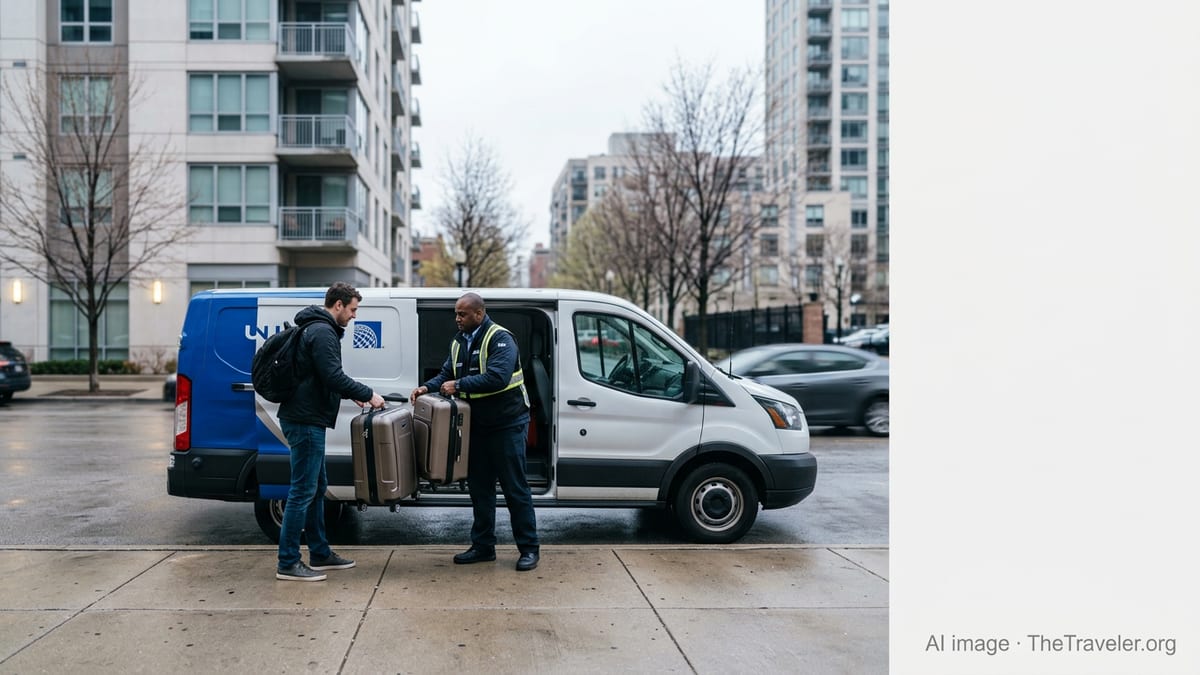
Early Pilot Quietly Launches from Chicago O’Hare
The experimental service surfaced this week via pop-up messages in United’s online check-in flow for select customers departing Chicago O’Hare International Airport. The prompt describes a “Home Bag Pick-Up” option that would send a driver to collect checked luggage ahead of time, with bags transported directly to the airport and loaded onto the flight.
United has not yet issued a broad public announcement, but details shared by travelers and industry blogs suggest the initiative is in a tightly controlled test phase. For now, availability appears limited to certain Chicago-area addresses and specific itineraries, with capacity capped so the carrier can fine-tune operations.
The pilot comes as United continues to position its Chicago hub as a testbed for digital and operational innovations, from app-based bag tracking to revised check-in rules. If successful, the home pick-up concept could be expanded to other major hubs such as Newark, Denver or San Francisco.
For passengers who qualify, the appeal is straightforward: hand off heavy suitcases the day before flying, then arrive at the airport with only a carry-on or personal item, heading straight to security instead of queuing at a check-in counter or self-tag kiosk.
How the “Home Bag Pick-Up” Service Is Expected to Work
According to descriptions seen in the check-in process and accounts shared by travelers, the new service is designed for standard checked baggage, not oversized or special items. Customers would schedule a collection window, typically on the afternoon or evening before departure, during which a contracted driver verifies identity and scans bag tags before sealing luggage for transport.
Once collected, the bags are delivered to United’s facilities at O’Hare, where they are processed, screened by security partners and staged for loading onto the correct flight. Travelers would see their luggage status update in the United app much as it does today for bags checked at the airport, tracking each handoff from pickup to aircraft loading.
In its initial form, the service is expected to be free or modestly priced to encourage adoption and help United gather real-world data. Industry observers note that other global carriers have experimented with paid home bag services in select markets, but United’s test appears focused on integrating pickup seamlessly into its existing digital check-in and bag-tracking tools.
Operationally, the trial will test how reliably third-party drivers and airport ground teams can coordinate under tight cut-off times, especially during peak travel days or severe weather. Any widespread rollout would likely hinge on proving that the process is both secure and punctual at scale.
Why United Is Betting on a Bag-Drop Shortcut
The home pick-up experiment is part of a broader push by United to smooth pain points across the pre-flight journey. Over the past year, the airline has tightened domestic check-in deadlines, introduced enhanced mobile bag-tracking features, and expanded options for earlier bag check at certain hubs, all aimed at reducing last-minute congestion at counters and queues.
By relocating bag drop from the terminal to the traveler’s front door, United could significantly reduce lines at check-in during morning and evening bank times. Fewer people wrestling with large suitcases at kiosks or counters would free up staff to handle complex issues and special-service customers, while giving travelers a faster path to security.
The model also dovetails with United’s investment in its mobile app, which increasingly serves as the primary interface for booking, check-in and day-of-travel changes. A streamlined bag experience that begins at home would reinforce that digital-first strategy and potentially differentiate United in a crowded domestic market where basic onboard offerings have become largely commoditized.
For frequent flyers and business travelers, the convenience factor could be considerable. Being able to head to the airport unencumbered by large bags, especially when using public transit or rideshare to reach O’Hare, may shave meaningful time and stress from already compressed travel schedules.
Security, Reliability and Traveler Trust in Focus
Any service that removes bags from the passenger’s direct custody raises questions about security and reliability, and United’s trial will be closely watched on both fronts. The airline will need to demonstrate that remotely collected luggage is screened to the same federal standards as bags handed over at the terminal, with clear chains of custody and robust tracking.
Travelers will also want reassurance about what happens if something goes wrong: delayed pickup, missed flights, mishandled bags or damage en route to the airport. How United structures guarantees, liability and customer service support around the program will likely determine how quickly flyers are willing to adopt it beyond the curiosity phase.
Advocates argue that if executed well, a home pick-up model could actually reduce risk by smoothing spikes in airport bag volume and giving ground teams more predictable workflows. Critics counter that adding another handoff between traveler and aircraft increases potential failure points, particularly when third-party contractors are involved.
The test in Chicago will effectively serve as a live proving ground for whether United can maintain or improve its baggage performance metrics while inserting this extra step, and whether travelers feel comfortable handing over their suitcases a day before they fly.
What This Could Mean for the Future of Airport Travel
United’s “Home Bag Pick-Up” pilot lands at a time when airlines and airports are rethinking how much of the traditional check-in process really needs to happen inside the terminal. From remote bag screening on certain international routes to expanded early bag-check windows at hubs, the trend is toward pushing time-consuming tasks away from the most crowded parts of the journey.
If the Chicago experiment proves successful, similar home-based bag services could spread to other large U.S. cities where travelers often contend with long commutes and congested curbside areas. In dense urban markets, being able to ride public transit to the airport without luggage could be particularly attractive.
For now, the trial remains small and largely under the radar, but it hints at a future in which the airport experience begins long before travelers reach the terminal doors. By testing ways to eliminate bag-drop queues altogether, United is signaling that the next wave of competition in air travel may be less about in-flight amenities and more about everything that happens before passengers ever see the boarding gate.