

More news on this day
United Airlines is stepping up the premium travel race with a new generation of Polaris business-class suites featuring privacy doors, larger screens and upgraded amenities on its latest widebody and narrowbody aircraft.
Get the latest news straight to your inbox!
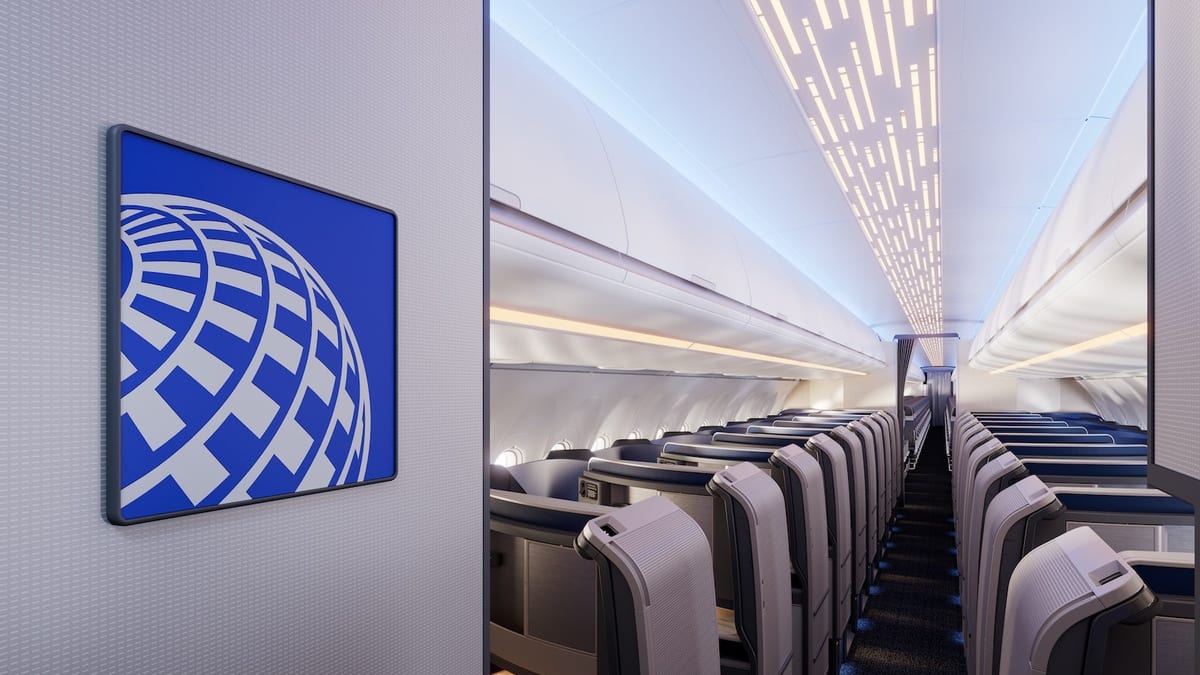
Image by The Points Guy
Polaris gets a major upgrade on new Dreamliners
Publicly available information shows that United is preparing to debut a refreshed Polaris cabin on new Boeing 787-9 Dreamliners fitted with the airline’s so-called Elevated interior. The layout centers on a redesigned business-class suite that adds sliding doors, more personal space and advanced in-flight technology compared with the current Polaris product.
According to recent company materials and industry coverage, each Polaris suite on these jets will offer an all-aisle-access, lie-flat seat paired with a 19-inch 4K OLED touchscreen, Bluetooth audio and multiple power options including wireless charging. The design aims to create a more residential feel, with warmer finishes and improved storage while retaining the familiar Polaris bedding and service style that has helped define United’s long-haul offering.
Reports indicate that United expects the first 787-9 with the Elevated interior to arrive before the end of 2025, with initial long-haul routes slated from San Francisco beginning in 2026. The carrier has outlined plans for roughly 30 Dreamliners with these cabins to join the fleet over the next several years, significantly increasing the share of premium seats on its international network.
The move comes as large US airlines intensify their focus on high-yield business travelers and affluent leisure passengers. Analysts note that the addition of doors and suite-style privacy brings United in line with newer business-class products from rivals in North America, Europe and the Middle East.
New Polaris Studio suites at the top of the cabin
At the front of the refreshed 787-9 business cabin, United is introducing an even more posh option branded as Polaris Studio. Coverage of the program describes eight oversized suites per aircraft, positioned in the first row of each business section and marketed as a distinct seating category above standard Polaris.
These Studio suites are reported to be about a quarter larger than the regular Polaris seats, with additional space for working and dining as well as a belted ottoman that can accommodate a traveling companion during cruise. Passengers will also find a 27-inch 4K OLED screen, which recent reports say is the largest seatback display planned on a US carrier, alongside expanded storage and upgraded finishes.
United materials indicate that Polaris Studio customers will receive differentiated service elements, including enhanced food and beverage options and access to select ground privileges such as dedicated reception areas at key hubs. The airline appears to be positioning Studio as a bridge between traditional business class and the ultra-exclusive products offered by some international competitors, without reintroducing a separate first-class cabin.
Pricing for Polaris Studio has not been widely detailed, but early commentary from industry observers suggests that these seats will be marketed at a premium over standard Polaris, particularly on flagship routes where corporate and high-end leisure demand is strongest.
Widebody comfort comes to single-aisle Polaris cabins
United’s premium strategy is not limited to long-haul widebodies. Reports in recent months describe plans to bring Polaris suites with doors to select Airbus A321 variants, part of the airline’s broader United Next fleet renewal program and a wider industry shift toward upscale narrowbody cabins.
The airline has already highlighted a new A321XLR configuration that will feature a customized Polaris seat for single-aisle flying, including full-flat beds and privacy doors for each passenger. Industry analyses indicate that these jets are being designed for transatlantic services and longer transcontinental flights, effectively exporting a widebody-style experience to routes that have traditionally relied on smaller, less private business-class seats.
More recently, an emerging A321 subfleet focused on premium transcontinental routes has been detailed in aviation and business press coverage. This so-called Coastliner concept is described as carrying lie-flat Polaris seats with all-aisle access, along with a refreshed economy cabin and a dedicated self-serve snack bar at the rear of the aircraft. The aim is to make cross-country journeys feel closer to long-haul international flights in terms of comfort and amenities.
By adding doors and higher-spec seating to narrowbody aircraft, United appears to be anticipating a future in which business travelers expect a consistent level of privacy and technology regardless of aircraft type or flight length.
Part of a broader push into premium travel
The rollout of posh new Polaris suites is unfolding against a backdrop of strong demand for premium cabins across United’s network. Recent financial and fleet updates show that the airline has been steadily increasing the number of premium seats in its system while accelerating deliveries of new aircraft and upgrades to existing jets.
Industry data from 2025 highlight that United added dozens of new aircraft and retrofitted more than a hundred narrowbodies with updated interiors in a single year, pushing a large share of the domestic fleet to a higher standard of comfort. Premium cabins, including Polaris and premium economy, generated revenue growth that outpaced the main cabin, reinforcing management’s decision to prioritize investment at the top end of the market.
On the international side, the Elevated 787-9 interior and upcoming A321XLR deployments are intended to support a strategy centered on long, nonstop routes from major US hubs such as San Francisco, Newark and Washington Dulles. Publicly available planning documents and commentary from earnings presentations point to additional premium-heavy aircraft arriving through 2027, as United bets on sustained demand from corporate accounts and affluent leisure travelers.
For passengers, the changes mean that more United flights will feature enclosed suites, larger 4K entertainment screens, enhanced bedding and amenity partnerships, and more thoughtful lighting and design. For competitors, the moves raise the stakes in a crowded transatlantic and transpacific market where product differentiation increasingly hinges on privacy, technology and space as much as on schedule and price.
Competitive stakes in the global business-class race
United’s new Polaris suites arrive at a time when major airlines in the United States and abroad are racing to install door-equipped business-class products. Coverage in outlets such as CNBC and other business publications has chronicled how American and Delta are also refreshing their long-haul cabins with suites, while European and Gulf carriers continue to roll out high-end designs.
In this context, United’s decision to pair Polaris Studio with a more advanced standard Polaris suite positions the carrier to compete not only on hard product, but also on perceived exclusivity at the very front of the cabin. Aviation analysts note that such differentiation can be particularly attractive to corporate clients that value incremental comfort and privacy on ultra-long-haul sectors.
The addition of posh Polaris cabins on upcoming Dreamliners and A321-family jets may also shape United’s network strategy, supporting more point-to-point long-haul flying with a consistent premium experience. As deliveries ramp up in the second half of the decade, observers will be watching how quickly these new suites appear on marquee routes and how aggressively rivals respond with further cabin upgrades of their own.
For now, the planned cabins underscore how far the business-class experience has evolved from simple reclining seats at the front of the aircraft. With suite doors, oversize 4K screens and increasingly bespoke service touches, United’s next generation of Polaris aircraft seeks to redefine what passengers can expect from a transoceanic or cross-country trip.