

More news on this day
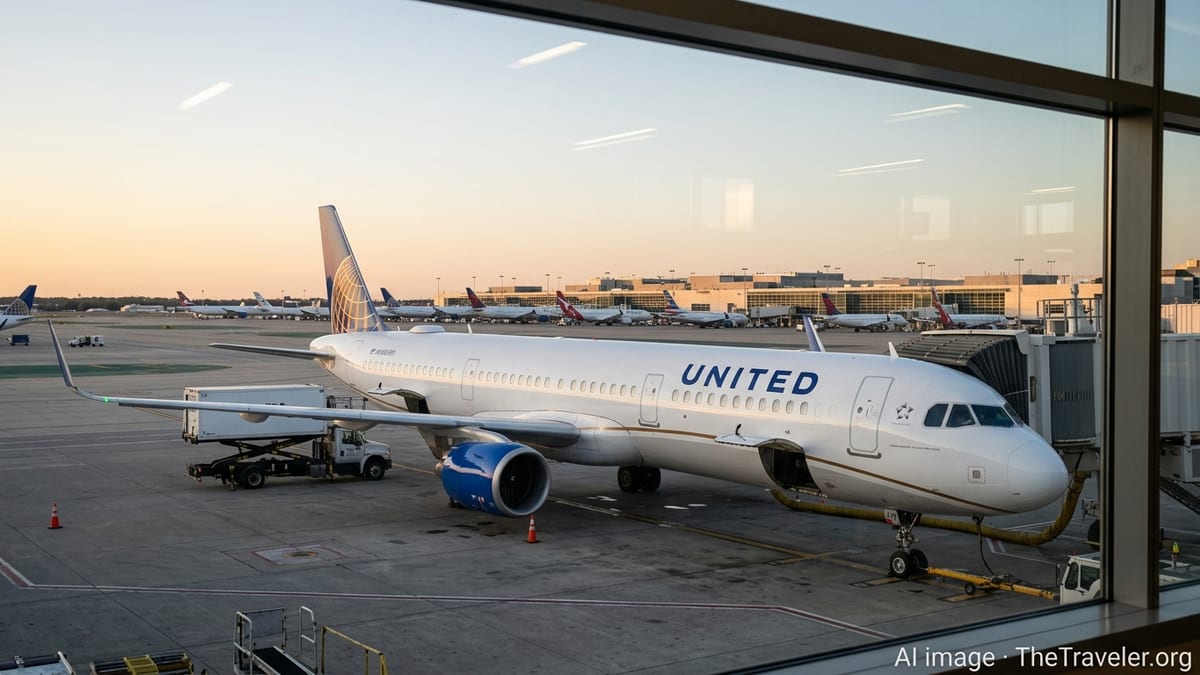
United Airlines is preparing to launch a new generation of long-range narrowbody aircraft from 2026, with 150-seat Airbus A321XLRs introducing a redesigned Polaris business-class suite, a heavily premium-weighted cabin and a self-serve snack bar for transatlantic and premium domestic routes.
Get the latest news straight to your inbox!
A New Flagship Narrowbody for Long, Thin Routes
Publicly available fleet data shows United has 50 Airbus A321XLRs on order, with deliveries scheduled to begin in 2026 as part of the airline’s broader fleet renewal strategy. The type is expected to replace aging Boeing 757 aircraft on “long, thin” routes where widebodies are too large but range and comfort remain essential.
Seat map analyses and industry reporting indicate that United is planning a relatively low-density 150-seat layout on the A321XLR, positioning the aircraft as a premium-focused workhorse for transatlantic flights from its East Coast hubs and for selective high-yield domestic sectors. This departs from the denser layouts seen at some competitors and underlines the airline’s intent to sell more high-yield seats rather than maximize total capacity.
The aircraft’s extended range, combined with a smaller gauge, gives United flexibility to open new point-to-point routes to secondary European and Latin American cities, or to maintain year-round service on markets that cannot justify larger twin-aisle jets. Industry observers expect the A321XLR to appear first on routes currently served by internationally configured 757s, especially from Newark and possibly Washington Dulles or Chicago O’Hare.
Within United’s “United Next” growth plan, the A321XLR is a key piece of a wider shift toward modern, fuel-efficient aircraft. Airbus materials highlight the type’s substantial fuel-burn reductions per seat versus older models, which aligns with the carrier’s public sustainability and cost-efficiency goals.
Heavily Premium Cabin With Just 150 Seats
Compared with typical A321 layouts exceeding 180 seats, United’s planned 150-seat configuration is notably restrained, reflecting a cabin that is expected to be weighted toward premium seating. While exact row counts may adjust before entry into service, fleet documentation and specialist coverage point to a three-cabin structure with Polaris business class, United Premium Plus and United Economy, including extra-legroom Economy Plus.
Industry reporting suggests that United is aiming for a business cabin that is smaller than on many twin-aisle jets but still sufficiently sized to support core corporate and loyalty demand on transatlantic routes. Premium Plus is expected to occupy a larger share of the cabin than on many existing narrowbodies, echoing a broader trend across major carriers as travelers seek more comfort without paying full business-class fares.
The trade-off for this emphasis on premium seating is a reduced number of standard economy seats. Analysts note that this structure is designed less for peak leisure volume and more for yield optimization on routes with strong corporate, small business and high-status frequent-flyer traffic. For leisure-focused periods, United can still deploy higher-capacity widebodies or standard A321neo aircraft, preserving flexibility across its network.
Overall, the 150-seat figure places United’s A321XLRs firmly in the category of “premium narrowbodies,” a segment that several global airlines are tapping to bridge the gap between large widebodies and traditional single-aisle workhorses.
New-Generation Polaris Suites in a 1-1 Layout
The most closely watched feature of United’s A321XLR is the debut of a new Polaris suite specifically tailored for narrowbody long-haul service. Aviation analysts and enthusiast seat-map reconstructions indicate that the aircraft will introduce a next-generation Polaris product in a 1-1 configuration, providing every passenger with a fully flat bed and direct aisle access.
Renderings and expert commentary describe an updated herringbone-style arrangement with greater privacy, higher shell walls and sliding doors at each seat. The design language appears to build on United’s newer “Polaris Studio” branding seen on future 787 configurations, but adapted to the narrower fuselage of the A321XLR in a single-aisle format.
The seats are expected to feature larger personal storage areas, wireless charging, multiple power outlets and enhanced 4K seatback entertainment screens, continuing the trend toward tech-forward premium cabins. Early visuals circulating in aviation media also suggest mood lighting and refined cabin finishes that echo the airline’s latest widebody interiors.
By opting for a 1-1 layout rather than the staggered 1-2-1 pattern used on its widebodies, United is signaling that the A321XLR will be marketed as an intimate, high-end business-class experience. Industry observers see this as a strategic response to competitors that already offer suite-style seats on long-range narrowbodies, especially on premium transatlantic routes.
Snack Bar and Onboard Experience Upgrades
Beyond the new Polaris suites, United’s A321XLRs are expected to introduce an elevated economy and Premium Plus experience, with a particular focus on self-service amenities. Reports indicate that the cabin will include a dedicated snack and beverage bar area, allowing passengers to help themselves between meal services on longer flights.
Such self-serve zones have become more common on modern widebodies, but their integration into a single-aisle aircraft underscores the airline’s attempt to close the comfort gap between narrowbody and twin-aisle long-haul flying. For passengers seated in Premium Plus and Economy Plus, easy access to drinks and light snacks can significantly improve the perceived value of the product on overnight or multi-hour segments.
The A321XLR interior is also expected to benefit from the latest Airbus Airspace cabin elements, including larger overhead bins, redesigned sidewalls for increased shoulder room and advanced LED lighting schemes. These features are intended to make the single-aisle environment feel more spacious while supporting better rest on overnight services.
United’s broader cabin-refresh initiative includes installing Bluetooth audio connectivity, larger high-definition screens and consistent power access across cabins on new aircraft. The A321XLR is anticipated to align with these standards, giving passengers a more seamless experience when connecting between narrowbody and widebody legs on a single itinerary.
Network Role and Competitive Positioning
From a network perspective, the A321XLR gives United an important tool in the increasingly competitive North Atlantic and deep South America markets. The aircraft’s range enables nonstop service from U.S. hubs to smaller European and Caribbean destinations that might otherwise require connections or operate seasonally on widebodies.
Industry coverage has highlighted that other North American carriers are already positioning their A321XLR fleets as premium transatlantic platforms, with suites in business class and multi-cabin layouts. United’s decision to pair a low overall seat count with an advanced Polaris product and snack bar concept places it directly into this premium long-range narrowbody race.
Analysts suggest that the A321XLR will likely be deployed on routes where schedule frequency and right-sized capacity matter more than sheer volume, such as secondary European capitals, niche leisure destinations and high-yield transcontinental links. The aircraft also offers flexibility for shoulder-season flying, when demand falls below levels that justify large twin-aisle jets.
As deliveries begin in 2026, travelers can expect United’s A321XLRs to become a visible symbol of how long-haul flying on single-aisle aircraft is evolving. With a 150-seat configuration, new Polaris suites and a more residential onboard feel that includes a snack bar, the airline is betting that passengers will accept, and even prefer, a narrowbody if the onboard experience matches or exceeds that of larger aircraft.