

More news on this day
United Airlines is charging ahead with one of the most ambitious fleet expansions in North American aviation, and analysts say the carrier’s more than 250 new aircraft scheduled to arrive by 2028 are poised to pump unprecedented capacity into Spain and Mexico, amplifying tourism flows and lifting hotel performance across both destinations.
Get the latest news straight to your inbox!
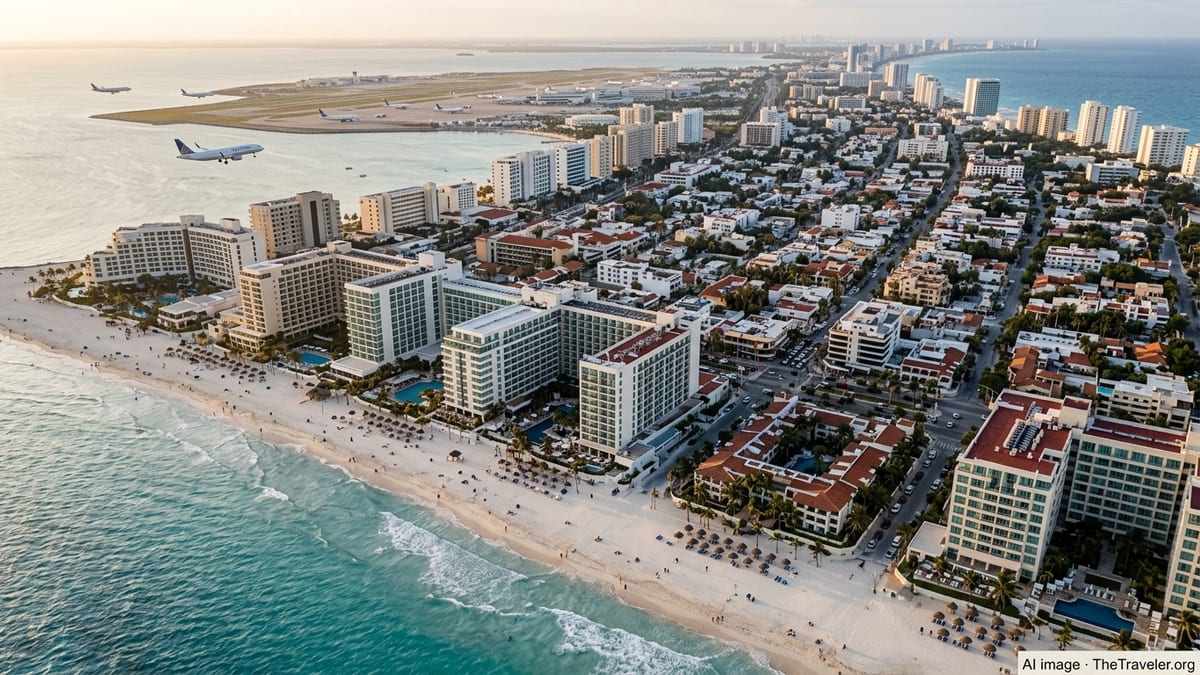
United’s Fleet Buildout Reshapes Transatlantic and Latin Networks
Public information from United’s "United Next" strategy shows the airline expects to take delivery of roughly 800 new narrowbody and widebody aircraft between 2023 and the end of 2032, with more than 250 of those jets due by 2028. The orders, which include large batches of Boeing 737 MAX and Airbus A321neo aircraft, are intended to modernize the fleet, add seats and improve unit economics on medium and long haul routes.
Industry and corporate disclosures indicate that these deliveries will substantially increase United’s available seat capacity, particularly from coastal hubs such as Newark, Chicago, Washington and San Francisco. The carrier has consistently tied its fleet growth to long haul leisure expansion, especially across the Atlantic and into Latin America, where high year round demand and resilient premium leisure traffic have supported aggressive scheduling.
Aviation analysts note that narrowbody long range aircraft like the A321neo and 737 MAX provide the flexibility to serve secondary European and Mexican cities profitably. That shift supports a broader trend in which U.S. airlines use new generation jets to open thinner point to point routes, rather than relying exclusively on a handful of large gateways, creating a direct pipeline of high spending visitors into emerging tourism hotspots.
Spain Emerges as a Strategic Winner in United’s Europe Push
Spain has become a centerpiece of United’s transatlantic strategy. Published coverage of the carrier’s 2024 and 2025 summer schedules notes that United now serves six Spanish destinations, the most of any U.S. airline, including Madrid, Barcelona, Malaga, Palma de Mallorca, Tenerife and Bilbao. The airline is unique in offering nonstop links from the United States to several of these leisure-focused cities, positioning Spain as a primary beneficiary of the upcoming aircraft wave.
Company announcements in late 2024 detailed what United described as the largest international expansion in its history, with new service from Newark to Bilbao and added capacity on existing Spanish routes. Aviation data for Barcelona and Madrid highlights increasing U.S. seat volumes, while regional tourism organizations report record visitor numbers to areas such as the Basque Country as connectivity improves.
The seasonal Palma de Mallorca and Tenerife services illustrate how forthcoming aircraft can amplify tourism. As United adds more efficient narrowbodies, it gains the ability to extend seasons, add frequencies and upgauge aircraft on these routes. Local reports from Mallorca already describe capacity increases of 30 to 50 percent on the New York route in recent summers, and stakeholders expect additional growth as new jets arrive and risk on secondary sun destinations becomes easier to manage.
Spanish hoteliers in coastal regions and island destinations are watching capacity decisions closely. More nonstop connectivity from the United States generally correlates with higher average daily rates, stronger shoulder season occupancy and a greater share of high yielding long haul guests, trends that could intensify as United deploys its expanded fleet across Iberian markets.
Mexico’s Resort Corridor Positioned for a Capacity Wave
Mexico, and particularly the country’s Caribbean and Pacific resort belts, stands out as the other major winner from United’s aircraft buildout. Industry analysis of U.S. carrier schedules between 2023 and 2024 shows double digit capacity growth into Mexican leisure markets, with United among the airlines increasing seats into Cancun and new destinations such as Tulum.
Tourism and airport data underline the scale of demand. Cancun International Airport continues to rank as Mexico’s leading gateway for international visitors, handling tens of millions of passengers annually and acting as the primary access point for the wider Riviera Maya. Mexican hotel market research points to a surge in new resort openings in Cancun, Tulum and nearby coastal zones, supported by strong revenue per available room and rising average daily rates, indicating that hotels have so far absorbed additional airlift without eroding pricing power.
Regional tourism reports for Quintana Roo describe a network of new routes and increased frequencies from the United States and Canada for 2025 and 2026, aimed at pushing arrivals even higher. As United folds hundreds of new single aisle jets into its fleet, industry observers expect the airline to protect and grow its share of this lucrative corridor, leveraging hubs like Houston, Newark, Denver and San Francisco to feed more travelers into Cancun, Tulum, Cozumel and Pacific beach destinations.
For hotel investors, the combination of large scale fleet growth and ongoing infrastructure projects in Mexico, including rail expansion across the Yucatan Peninsula, signals a longer runway for demand. Additional lift from United and competing carriers can support the opening of new all inclusive resorts and branded residences while still sustaining relatively high occupancy levels.
Hotel Markets Brace for Higher Occupancy and Rate Pressure
The knock on effect of United’s capacity expansion into Spain and Mexico is already visible in hotel performance metrics and development pipelines. Research on the Mexican hotel sector in 2024 records strong increases in both occupancy and average daily rates in key tourism hubs, as new room supply has trailed the surge in arrivals. In Spain, tourism bodies report record international visitor numbers in regions that have recently gained or expanded U.S. nonstop links, such as the Balearic and Canary Islands and northern coastal cities.
As more aircraft enter United’s fleet through 2028, hotel analysts anticipate that destinations with new or expanded nonstop service will see the sharpest gains. Long haul visitors arriving on direct flights typically stay longer and spend more per trip, which can justify rate increases and encourage higher end development. Resort owners in Mallorca, Costa del Sol, Cancun and the Riviera Maya are therefore positioning for a scenario in which air capacity growth continues to outpace room additions over the medium term.
However, observers also caution that rapid capacity expansion can intensify competition among hotels, especially if new construction accelerates in response to strong near term results. In markets like Cancun, where recent reports highlight a once in a generation hotel building boom, the interplay between United’s added lift and aggressive development will determine whether occupancy stays elevated or moderates as inventory catches up.
For now, the trajectory remains favorable. With United set to integrate more than 250 new aircraft by 2028 as part of a broader 10 year fleet renewal and growth plan, both Spain and Mexico appear well placed to capture a disproportionate share of the additional seats. That shift is likely to keep pressure on hotel capacity, support higher room rates in prime coastal and city locations and further cement both countries as flagship long haul leisure destinations for U.S. travelers.