

More news on this day
United Airlines is entering 2026 with a global network that analysts say is roughly four times larger than the storied reach Pan Am commanded at its height, underscoring how modern hub systems, alliances and long-range aircraft have transformed what it means to be a worldwide carrier.
Get the latest news straight to your inbox!
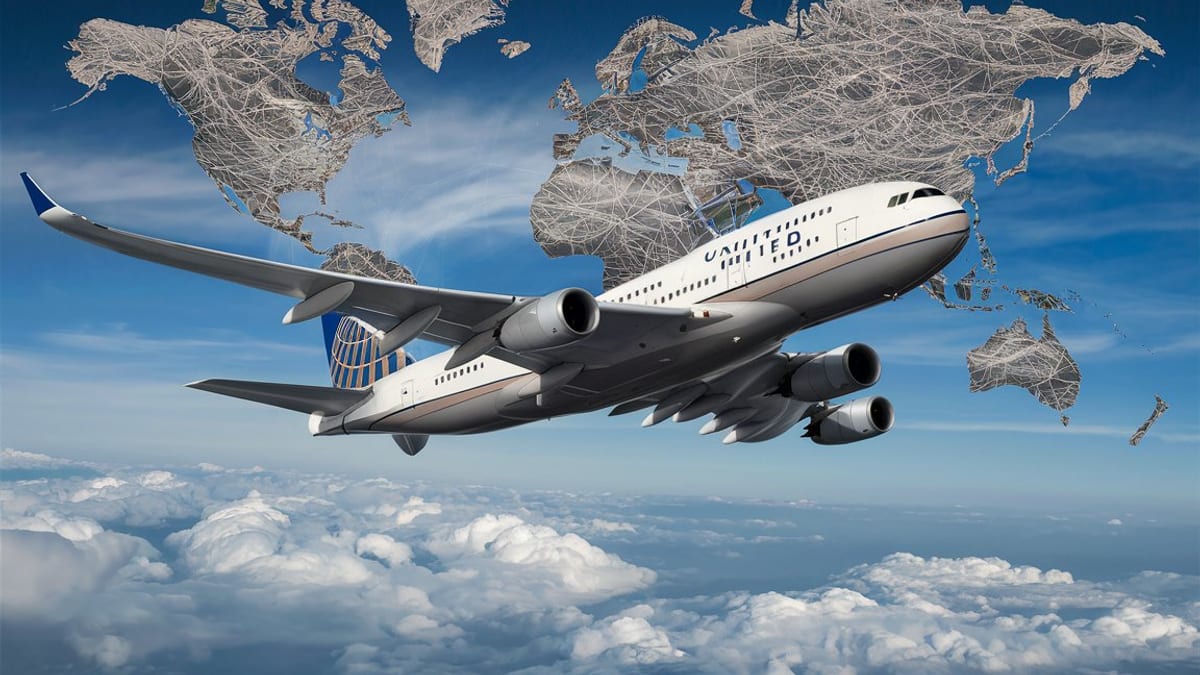
Image by Travel and Tour World – Tourism, Airline, Destination, MICE, Gobal Travel Market, Hotel news that you will find only over here.
A Modern Giant Compared With an Aviation Icon
Publicly available route data for 2026 indicate that United is scheduled to serve between 370 and nearly 390 destinations worldwide, depending on season and counting methodology. Industry trackers and airline filings note that United now reaches airports on six continents and offers more nonstop connections from the United States to overseas cities than any other domestic carrier.
By comparison, historical records suggest that Pan American World Airways, better known as Pan Am, served on the order of 90 to 100 cities at its early 1970s peak. While Pan Am’s name became synonymous with the jet age and pioneering long-haul flights, its network was built in an era before liberalized traffic rights, large-scale code sharing and today’s hub-and-spoke sophistication.
Measured simply by the count of destinations, United’s current footprint is therefore roughly four times the size of Pan Am’s, a symbolic milestone that highlights both the airline’s expansion and the structural evolution of global aviation. Instead of a handful of flagship intercontinental routes, today’s network is built around dense connectivity across North America feeding wide-ranging long-haul and regional operations worldwide.
The comparison also illustrates how the definition of a “global airline” has shifted. Where Pan Am linked key capitals and colonial gateways, United’s schedule extends deep into secondary and leisure markets across Europe, Latin America, Asia-Pacific and Africa, reflecting demand patterns shaped by tourism growth, diaspora travel and increasingly flexible work.
Unmatched Scale Across the Atlantic and Pacific
Recent schedule announcements for 2025 and 2026 show United leaning heavily into its role as the leading transatlantic and transpacific carrier from the United States. Published coverage of the airline’s summer 2026 plans points to a record-breaking Europe schedule, with new nonstop flights from the Newark hub to cities such as Split, Bari, Glasgow and Santiago de Compostela, supplementing an already dense map of major capitals and emerging leisure destinations.
On the other side of the world, United has been expanding into Southeast Asia and the South Pacific, adding or announcing services to cities including Bangkok, Ho Chi Minh City and Adelaide, alongside growing frequencies on established transpacific trunk routes. Reports describe United offering flights to more than 30 destinations across the Pacific region alone, reinforcing its claim to the broadest U.S. network into Asia and Oceania.
This dual strength across the Atlantic and Pacific contrasts with Pan Am’s mid-20th-century focus, when regulatory constraints and bilateral agreements limited competitive overlap and kept route maps more concentrated. United’s ability to deploy long-range narrowbody and widebody aircraft on thinner point-to-point routes allows it to serve smaller but strategically significant markets that would have been impractical decades ago.
The effect for travelers is a far denser lattice of city pairs. It is increasingly possible to fly from a midsize U.S. city through one United hub to a secondary European or Pacific destination in a single connection, a level of convenience that helps explain why analysts characterize United’s network as uniquely comprehensive among U.S. airlines.
Hub Power and Alliance Partnerships Extend the Map
United’s growth is anchored in a multi-hub strategy that distributes traffic across Chicago O’Hare, Denver, Houston, Los Angeles, New York/Newark, San Francisco and Washington Dulles. Each hub functions as both a domestic connector and an international gateway, enabling dozens of spoke cities to feed long-haul departures every day.
Recent schedule information highlights Chicago and Newark in particular as major engines of international connectivity. At O’Hare, United is expected to operate to more than 220 destinations in 2026, including close to 50 international cities across Europe, Asia and South America. Newark, meanwhile, has become a leading launchpad for new transatlantic routes, especially to Mediterranean and niche leisure markets that historically required connections through European hubs.
Beyond its own metal, United’s membership in Star Alliance multiplies the number of destinations that can be reached on a single ticket. Star Alliance partners across Europe, Africa, the Middle East, Asia-Pacific and Latin America extend itineraries far beyond the 380-plus airports United serves directly, supporting one-stop connections into hundreds of additional cities.
For comparison, Pan Am operated before the emergence of modern global alliances. Although it maintained bilateral partnerships and interline arrangements, the practical reach of its network was largely constrained to the cities it flew itself. United’s alliance and code share ecosystem therefore represents another dimension in which today’s connectivity surpasses the jet-age model.
From Flagship Routes to Deep Regional Coverage
United’s record network is not only a story of long-haul expansion. Domestic and near-international growth continues to thicken its schedule, with recent timetables showing added capacity to key sun destinations, secondary business markets and growing regional centers across the United States, Mexico and the Caribbean.
Reports detailing United’s 2025 and 2026 plans in Mexico, for example, cite two dozen or more destinations served across the country, from major tourism hubs to smaller cities that feed both leisure and visiting-friends-and-relatives traffic. Similar patterns are visible in Central America and the northern tier of South America, where expanded frequencies and seasonal routes link U.S. hubs with coastal resorts and emerging economic centers.
Within the United States, the airline has used new narrowbody aircraft to increase connectivity between hubs and non-hub cities, improving onward access to its global network. Seasonal expansions from hubs such as Denver and San Francisco into mountain and coastal communities illustrate how domestic growth underpins the international schedule, ensuring that more travelers can reach long-haul flights without multiple connections.
This breadth of regional coverage is one key reason aviation observers now describe United’s network as “unmatched” among U.S. carriers. Rather than relying solely on a few prestige intercontinental routes, the airline has built a layered system in which local, regional, transcontinental and intercontinental flying all support one another.
A Symbolic Passing of the Torch in Global Aviation
Pan Am’s legacy still looms large in aviation culture, from its pioneering transatlantic crossings to its role in popularizing the widebody jet. Yet the numerical comparison with United’s present-day network underscores how dramatically the industry has grown and diversified in the decades since Pan Am’s exit in 1991.
Today’s global carriers operate in a deregulated, highly competitive environment shaped by open skies agreements, low-cost competition and sophisticated revenue management. Within that landscape, United has leveraged its U.S. hub geography, fleet investments and alliance ties to construct a network that not only eclipses Pan Am’s at its height, but also sets a new benchmark for scale among contemporary airlines.
For travelers, the result is a level of connectivity that would have seemed extraordinary in the jet age. From small U.S. cities to secondary European coastal towns, from Pacific tech hubs to Mexican beach communities, United’s schedule for 2026 illustrates how far the concept of a “global airline” has evolved since Pan Am’s blue globe first circled the world.