

More news on this day
United Airlines is preparing to debut its most luxurious Boeing 787 cabins yet, introducing enclosed business-class suites and a dramatically more premium-heavy layout just as regulators finalize special conditions for high-walled, door-equipped seats that seek to preserve an open seating environment in emergencies.
Get the latest news straight to your inbox!
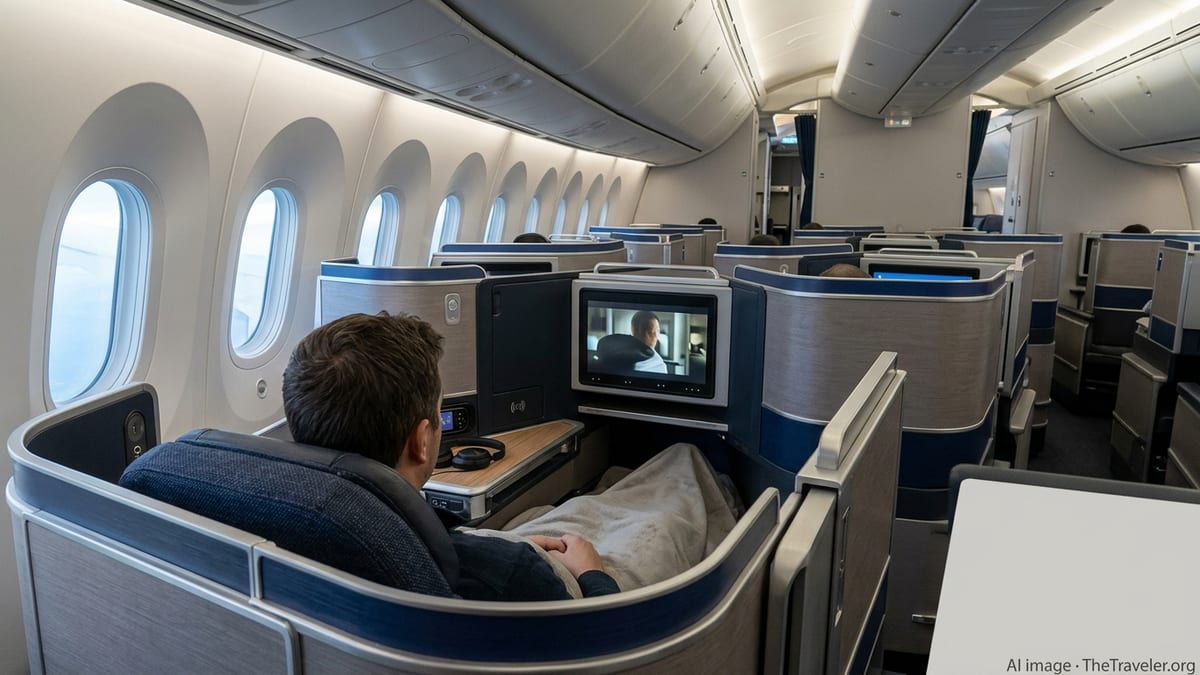
A More Luxurious 787 Built Around Premium Seats
United’s latest Boeing 787-9 interior, marketed as the United Elevated cabin, represents a major shift in the carrier’s approach to long-haul comfort. Publicly available information shows that the new layout pushes premium seating to nearly half of all seats on board, aiming squarely at high-yield business and leisure travelers on flagship international routes.
Industry coverage of the program indicates that the refreshed 787-9 will feature 99 premium seats in total, including two tiers of business class: eight larger “studio” suites and 56 standard business suites, all in lie-flat, all-aisle-access configurations. Behind them sit 35 seats in premium economy, reinforcing United’s strategy of layering multiple paid-comfort options before reaching traditional economy.
The first of these aircraft are expected to enter service on marquee long-haul routes such as San Francisco to Singapore, before rolling out to other premium-heavy markets like London. Reports indicate that the airline plans to base early frames at its San Francisco hub and gradually grow the subfleet through the latter half of the decade as additional 787-9 deliveries arrive.
Cabin-wide upgrades extend beyond seat count and layout. The Elevated interior introduces refined finishes, updated lighting, and significantly larger 4K OLED seatback screens, with sizes up to 27 inches in the front-row studio suites. Combined with expanded storage, wireless charging and Bluetooth connectivity, the package is positioned as United’s most luxurious 787 product to date.
Doors, High Walls and the “Open Seating Environment”
What makes this 787 particularly notable is its embrace of fully enclosed business-class spaces at the exact moment regulators are updating how such designs are certified. United’s new Polaris suites and studio suites include sliding privacy doors and high surrounding walls, aligning the carrier with a broader industry move toward mini-suites in the premium cabin.
At the same time, the Federal Aviation Administration has been publishing special conditions for Boeing 787 family aircraft equipped with high-walled, door-fitted single-passenger suites. Recent rulemaking for the 787-9 refers to these configurations as “novel or unusual” features that were not contemplated when existing airworthiness standards were written for conventional cabins, which typically relied on open sightlines and low partitions.
The special conditions emphasize that, even with doors and tall suite walls, the cabin must still function as an open seating environment. That means emergency procedures, visual awareness for both crew and passengers, and evacuation routes cannot be compromised by the added privacy. Regulators have focused on issues such as how quickly doors can be opened, whether occupants can perceive commands and cues, and how crew can visually scan the cabin during critical phases of flight or in low visibility.
This added regulatory focus explains why, across the industry, carriers introducing door-equipped seats on widebody aircraft have faced additional certification steps that do not apply to more traditional open business-class designs. While the seats themselves may be structurally certified, the integration of doors, latches, and associated procedures often falls under these special conditions, creating a distinct certification twist for airlines chasing ever-greater onboard privacy.
How United’s Suites Fit Into a Wider Certification Trend
United is not the only airline navigating this evolving regulatory landscape for premium cabins. Public filings show that other U.S. carriers have pursued exemptions and special conditions to allow sliding doors and high partitions in business-class mini-suites on Boeing 787-9 aircraft, illustrating how widespread the desire for enclosed seating has become.
Documents related to exemption requests highlight the tension between passenger comfort and legacy safety rules that once prohibited doors between passenger compartments. Airlines have argued that suite doors can be safely integrated with appropriate design measures, operational procedures and crew training, while regulators have responded with detailed conditions covering everything from door height and latching mechanisms to how crews must manage the doors during taxi, takeoff and landing.
Recent Federal Register publications concerning 787-9 models with high-walled suites describe the need for additional standards to ensure that occupants remain aware of their surroundings and can quickly exit in an emergency. These standards effectively codify how “open” a cabin must remain, even when each passenger is seated within an enclosed mini-suite. Privacy is permitted, but not at the expense of evacuation efficiency or crew oversight.
For United’s new 787-9, this means that while the elevated cabin offers a step-change in privacy and comfort, it must also conform to these newer regulatory expectations. Design choices such as door height, transparency elements, and the way doors are secured for takeoff and landing are shaped as much by the special conditions as by branding or competitive positioning.
Passenger Experience: An Elevated, Yet Conditional, Luxury
For travelers, the most visible result of this interplay between design ambition and regulatory oversight will be the physical suite itself. United’s studio suites in the first row of each business cabin are larger than standard Polaris seats and include companion ottomans, enhanced dining options and expanded storage, all enclosed within high walls and a sliding door intended to create a cocoon-like space.
The standard Polaris suites behind them gain their own privacy doors and upgraded 4K screens, narrowing the experiential gap between the front-row studios and the rest of the business cabin. Reports indicate that amenities will be further elevated through new amenity kits, premium dining touches such as caviar amuse-bouche offerings, and high-speed connectivity via satellite internet service.
However, passengers may notice that door usage is not entirely at their discretion. Based on how similar suites have entered service elsewhere, doors are often required to remain open during taxi, takeoff and landing, and in some cases crew may need to open or latch doors for safety checks, announcements or turbulence procedures. These operational details flow directly from the certification conditions that treat the cabin as an open environment during safety-critical phases.
The net effect is a hybrid experience: more privacy and a greater sense of personal space in cruise, layered on top of traditional widebody safety practices. For many travelers, the presence of a door and taller suite walls will nonetheless mark a noticeable upgrade over United’s current 787 Polaris layout, particularly on ultra-long-haul flights where sleep and seclusion are at a premium.
Competitive Stakes on Key Long-Haul Routes
United’s move to introduce its most luxurious 787 cabins on routes such as San Francisco to Singapore and later high-demand transatlantic services underlines how central premium products have become to long-haul network strategy. These flights compete directly with carriers offering their own door-equipped suites and high-end soft products, from Asian and Middle Eastern airlines to European rivals that have been rolling out new-generation business cabins.
By fitting more than 40 percent of seats in the new 787-9 configuration as premium, United is betting that high-spend travelers will reward higher-density premium layouts, even as certification rules impose some limits on how private the suites can be in practice. Industry analysis suggests that similar high-premium widebodies can materially improve route economics when cabin loads are strong, supporting the business case for a costly nose-to-tail refit and new aircraft deliveries.
The convergence of enhanced luxury and stricter oversight on doors and high-walled suites reflects a broader maturation of the premium-cabin trend. Airlines such as United are no longer simply adding larger seats; they are rethinking the entire interiors of long-haul aircraft, while regulators refine the rulebook needed to keep safety aligned with rapidly evolving design.
As United’s first Elevated 787-9s enter service, passengers will be among the earliest to experience how the new generation of door-equipped suites translates from marketing promise to real-world flying. The open-door policy now taking shape in certification terms ensures that, even inside the airline’s most exclusive mini-suites, privacy remains carefully balanced with the need for a cabin that still behaves like a shared space when it matters most.