

More news on this day
United Airlines has turned an unspoken etiquette rule into a high-stakes requirement for 2026 travelers, updating its contract of carriage to say that passengers who listen to audio or video without headphones can be removed from a flight or even banned from future travel with the airline.
Get the latest news straight to your inbox!
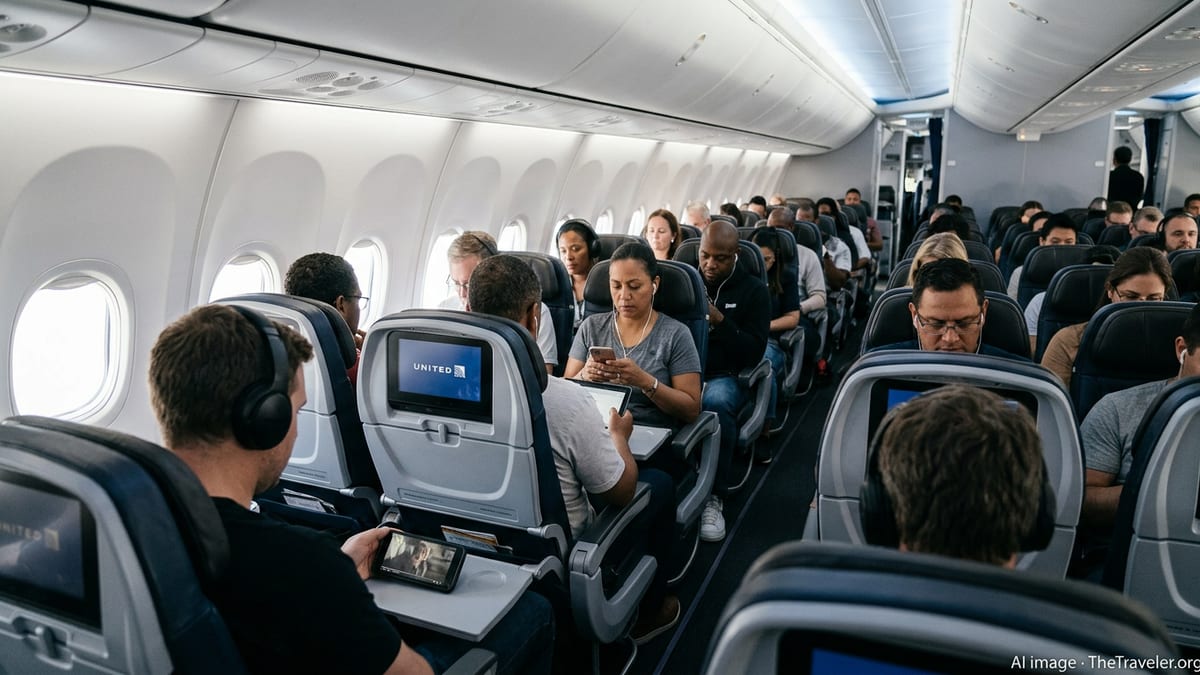
From Courtesy to Contract: How the Rule Changed
For years, most airlines have urged passengers to use headphones when watching videos or listening to music, framing it as a matter of courtesy rather than compliance. In late February 2026, United Airlines went a step further and embedded that expectation directly into its contract of carriage, the legal terms every customer accepts when buying a ticket.
Publicly available information shows that the updated document now lists “passengers who fail to use headphones while listening to audio or video content” among the grounds on which United may refuse transport or remove a traveler from a flight. The rule sits alongside other disruptive behaviors such as smoking, making voice or video calls after the aircraft doors close, or wearing offensive clothing.
Reports indicate that the change, effective from February 27, 2026, makes United one of the first major United States carriers to treat headphone use as an enforceable condition of travel rather than a cabin announcement. The move follows years of mounting frustration over loud personal devices in increasingly crowded cabins.
Coverage in mainstream travel and consumer outlets characterizes the shift as part of a broader tightening of onboard behavior standards, as airlines try to balance packed schedules and full planes with growing sensitivity to noise and personal space in flight.
What “No Headphones, No Flight” Really Means
Despite dramatic headlines, the new language does not mean every traveler without earbuds will automatically be turned away at the gate. Instead, the policy gives United explicit authority to act when a passenger insists on playing audio through speakers and refuses to comply with crew instructions to stop or plug in headphones.
According to published summaries of the contract, United may deny boarding or remove a passenger for failing to use headphones once they have been asked to do so, and it can do so on either a temporary or permanent basis. In practical terms, that could range from being taken off a single flight to being banned from the airline entirely in serious or repeated cases.
Coverage of the rule highlights that travelers may be eligible to request a refund for the unused portion of their ticket if they are refused transport under this provision, although standard fare rules and fees can still apply. That means someone removed on the first leg of a round-trip itinerary might only receive a partial refund for onward and return segments, not for the flight already completed.
Consumer advocates quoted in news analyses suggest the rule essentially formalizes powers airlines have long held under general disruptive passenger clauses, but narrows the focus to a specific behavior: using personal devices without headphones and disturbing nearby travelers.
How United’s Policy Compares With Other Airlines
United’s decision to write headphone use directly into its contract distinguishes it from many competitors, even though the underlying expectation is widely shared across the industry. Public policy pages for other large U.S. carriers typically ask or urge passengers to use earbuds or headphones with personal devices, but do not always spell out explicit enforcement measures in contractual language.
According to recent coverage in national and regional outlets, airlines such as Delta and Southwest reference “quiet cabin” expectations or require headphones in onboard announcements and customer guidance, yet stop short of codifying a headphone rule as a specific basis for denying travel. In those cases, crews may still rely on broader disruptive conduct or failure-to-follow-instructions provisions when dealing with loud devices.
Travel experts quoted in analyses describe United’s step as a potential turning point that other carriers could follow, especially if the policy proves popular with frequent flyers tired of hearing streaming videos, games, and social media clips from neighboring seats. Some commentators also note that the move aligns with a wider trend of transportation operators, from rail services to long-distance buses, tightening enforcement around noise in shared spaces.
The update also underscores the growing role of digital etiquette in modern travel. As more passengers rely on personal phones and tablets rather than airline seatback screens, disputes over volume and audio have become a regular feature of in-flight complaint logs and social media posts about disruptive behavior.
Practical Implications for Passengers in 2026
For travelers, the clearest takeaway is simple: if you plan to use your own device for entertainment on a United flight in 2026, you should pack a pair of wired or wireless headphones in your carry-on. Reports indicate that United still distributes complimentary headsets on many routes, particularly those with seatback entertainment, but availability can vary and should not be assumed.
Passengers who forget headphones are not banned from watching silent content on their screens or using captions, but any audio must be muted or routed through a listening device. Cabin crew may first issue a reminder or request before escalating the situation, but the updated contract means they now have clearer backing if a traveler refuses to comply.
Industry coverage suggests that travelers who find themselves removed from a flight over headphone-related issues should document the incident, review the latest version of United’s contract of carriage, and contact customer service to inquire about possible refunds for unused segments. However, nonrefundable tickets and additional fees can limit how much money is recovered.
For families, the policy may require some advance preparation, especially when flying with children who rely on tablets for entertainment. Child-sized headphones, volume-limiting headsets, or pre-downloaded shows with captions can help avoid last-minute conflicts at 35,000 feet and keep screens from becoming a flashpoint in crowded cabins.
What the Rule Signals About the Future of Air Travel Etiquette
United’s headphone requirement is landing at a moment when debates over passenger behavior are increasingly visible, from arguments over seat reclining and armrests to viral disputes about clothing and personal grooming on board. Analysts examining the policy say it reflects a broader post-pandemic recalibration of what airlines are willing to tolerate in tightly packed cabins.
Recent commentary in major newspapers and travel magazines frames the rule as part of a quiet push toward more codified “civility norms” in shared travel spaces, where behaviors once left to social pressure are now written into enforceable policy. By singling out loud personal devices, United is betting that many customers will welcome a firmer stance on cabin noise, even if it adds another layer of rules to keep track of before takeoff.
At the same time, some observers caution that stricter behavior policies can raise questions about consistency and fairness in enforcement. Scenarios involving cultural differences, disabilities, or language barriers may require careful handling by airline staff to avoid escalating minor issues into major disruptions.
For now, the updated headphone clause stands as one of the clearest examples of how digital habits are reshaping the fine print of air travel. As 2026’s busy travel seasons approach, passengers flying United are being given a straightforward message: if your device makes noise, headphones are no longer just polite, they are a condition of getting where you are going.