

More news on this day
United Airlines has quietly turned what many passengers saw as simple cabin courtesy into a hard rule, updating its contract of carriage so travelers who refuse to use headphones for audio or video on their devices can now be denied boarding, removed from a flight, or even banned from the airline.
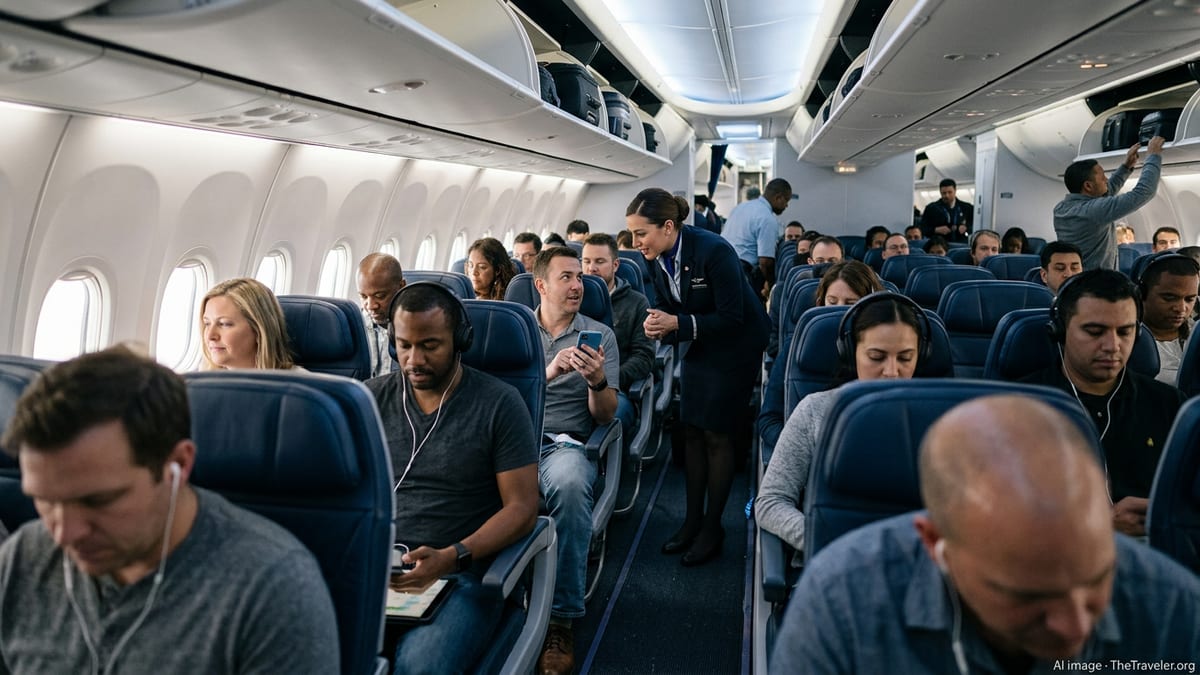
From Etiquette to Enforceable Rule Overnight
The change, implemented in a February 27 update to United’s contract of carriage, moves the use of headphones from an informal norm into the airline’s official “Refusal of Transport” section. That is the same part of the agreement that covers disruptive behavior, smoking violations, and other grounds for denying service. In practical terms, it gives crews clear authority to act when a traveler blasts sound into the cabin and refuses to stop.
The new clause specifies that passengers who “fail to use headphones while listening to audio or video content” may be refused transport, including on a permanent basis. While flight attendants have long asked passengers to keep audio to themselves, this is the first time a major U.S. carrier has framed the issue as a formal condition of carriage rather than a request.
United has described the move as an extension of standard courtesy rather than a crackdown, but the wording places the headphone requirement alongside behaviors that can trigger immediate removal. That framing has surprised many travelers, who are only learning of the update as it filters through news reports and social media.
For now, there is no separate preflight announcement dedicated solely to the headphone rule, and the policy lives primarily in the fine print. But industry observers note that once a condition is written into a contract of carriage, it can quickly shape how crews manage conflicts in the cabin.
What “No Headphones, No Flight” Really Means in Practice
Despite the dramatic headlines, United is not demanding that every passenger wear headphones for the entire journey or during safety briefings. The rule applies specifically to situations where a traveler is playing audible sound from a personal device and declines to use headphones or lower the volume when asked. Quietly scrolling social media, reading, or using a device with the sound muted is unaffected.
In day-to-day operations, enforcement will rest heavily on crew discretion. Flight attendants can first issue a polite request, then a firmer warning, and only escalate to removal or a report to corporate security if a passenger refuses to comply. United has stressed that removal or a permanent ban is reserved for more serious or repeated noncompliance, not a single moment of confusion.
Travelers concerned about being caught out without earbuds have a small safety net: United says passengers may ask flight attendants for complimentary disposable headphones, subject to availability. That option is intended to reduce the risk that a forgotten pair at home turns into a confrontation at 35,000 feet, though there is no guarantee that every flight will have enough spares.
The policy also intersects with other rules already in place. United, like many airlines, bars voice and video calls after the aircraft doors are closed and during flight. A passenger conducting a loud video chat without headphones could now violate two clauses at once, giving crews additional grounds to insist the behavior stop or to remove the traveler.
Why United Is Tightening the Sound Rules Now
The timing of the update is not accidental. United is in the midst of rolling out high-speed Starlink satellite internet across its fleet, a move expected to spur more streaming, social media scrolling, and real-time messaging onboard. With more people online at once, the potential for a noisy cabin grows, especially as short-form video platforms often default to autoplay with sound.
Airline executives and cabin crews have also been grappling with a broader surge in in-flight disruptions since 2021, a trend documented by regulators and industry groups. Many of those incidents start with relatively small etiquette issues, like seat reclining or armrest disputes, and then escalate. By clarifying that audible device use is not optional, United is betting it can curb a frequent source of tension before it spirals.
There is a competitive angle as well. Other U.S. carriers strongly encourage headphone use, and some reference it in their policies, but none have framed it as explicitly as United has. For travelers tired of enduring hours of other people’s videos and music, the airline’s move may serve as a selling point, signaling a commitment to quieter cabins on increasingly full flights.
At the same time, privacy and personal freedom advocates are watching closely to see how broadly the rule is applied. If crews use it primarily to curb repeated, loud disruptions, it may be welcomed. If it is invoked inconsistently or perceived as heavy-handed, it could become the next flashpoint in the fraught relationship between airlines and their customers.
How to Stay on the Right Side of the New Rule
For travelers, avoiding trouble under United’s headphone policy is straightforward but requires a bit of planning. The most obvious step is to pack reliable wired or wireless earbuds in an easily accessible pocket, rather than buried in a checked bag. Boarding with devices already set to low volume or mute until headphones are connected can also prevent accidental blasts of sound during takeoff or in tight boarding queues.
Passengers who rely on Bluetooth headphones should be aware that some aircraft entertainment systems still require a wired connection. If you plan to stream from your own phone, tablet, or laptop instead of using the seatback screen, your wireless earbuds should work normally, but it is wise to carry a backup wired pair or an adapter in case of connectivity issues that tempt you to switch to speakers.
If a crew member approaches about your device volume, treating the interaction as a safety and comfort issue rather than a personal criticism can go a long way. Lowering the sound, plugging in headphones, or muting the device when asked is usually sufficient. Under the new contract language, refusing a reasonable request could quickly escalate from a minor etiquette correction into a matter of documented noncompliance.
Families traveling with young children may want to plan ahead as well. Child-sized headphones can help kids watch cartoons or play games without disturbing nearby passengers. Many travel experts suggest testing volume-limiting models at home, both for comfort and to ensure the sound is audible enough for the child without requiring unsafe levels.
What This Signals for Air Travel Etiquette
United’s headphone rule is part of a wider shift in how airlines encode etiquette into enforceable policy. Behaviors that were once policed informally by “the stink eye” from fellow travelers, like barefoot walks down the aisle or loud speakerphone calls, are increasingly being written into contracts and cabin announcements as specific do’s and don’ts.
For frequent flyers, the policy may feel like formal recognition of a norm already in place. Many passengers already travel with noise-canceling headphones, and complaints about loud videos and music have long been a staple of online discussion forums. Turning that expectation into a rule simply gives crews clearer backing when they intervene.
For occasional travelers, especially those who are not used to reading lengthy contracts of carriage, the risk lies in being surprised at the gate or on board. As United’s update gains attention, other airlines will be watching traveler reaction closely, weighing whether to follow suit with similarly explicit language or to stick with gentler reminders.
What is clear is that the battle for a quieter cabin has moved from social norms to written rules. For passengers, the simplest takeaway is also the most practical: if you plan to watch, listen, or scroll with sound on your next United flight, make sure a pair of headphones is in your carry-on, ready to go.