

More news on this day
United Airlines’ nonstop flights between Newark Liberty International Airport and St. Thomas are giving U.S. Virgin Islands tourism a fresh lift, tightening the link between the New York metro area and one of the Caribbean’s most in-demand island escapes.
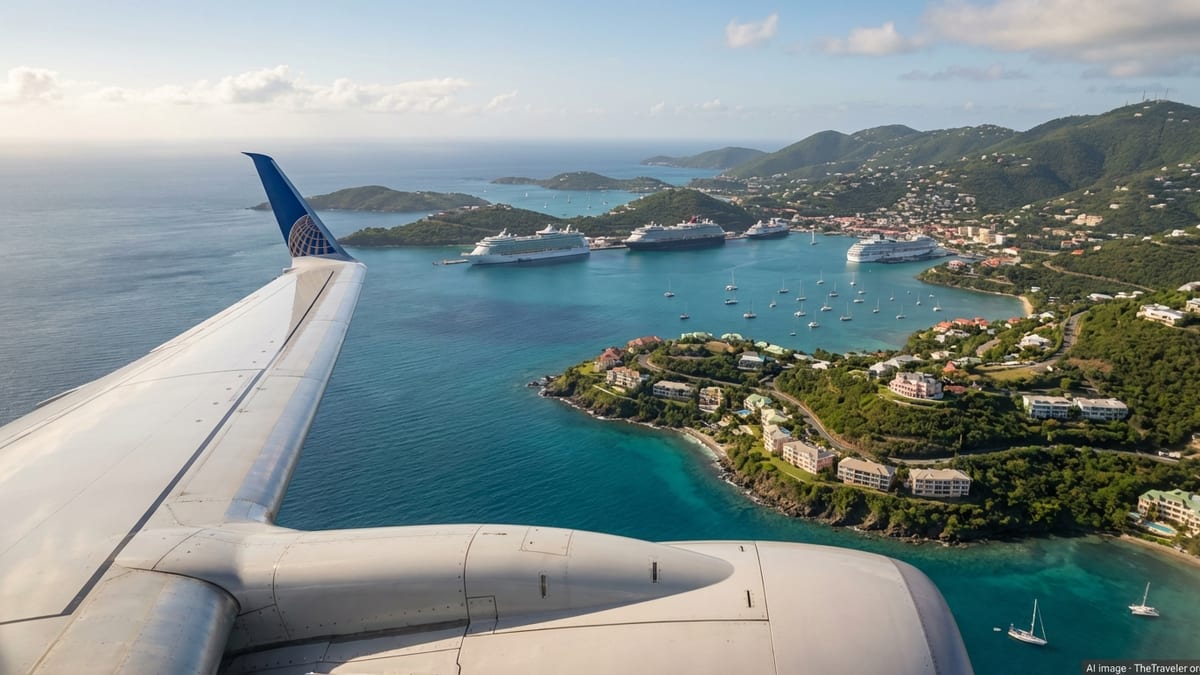
Stronger Airlift to a High‑Demand Caribbean Destination
United now operates a regular nonstop schedule between Newark Liberty International Airport and St. Thomas’ Cyril E. King Airport, putting one of the Caribbean’s busiest leisure hubs within about four hours of the New York metropolitan area. Flight timetables show a daily pattern on the route, with block times of roughly four hours and eight minutes and service operated by single‑aisle Boeing 737 MAX 8 aircraft configured with both premium and standard economy cabins.
The route forms part of a broader push by the U.S. Virgin Islands Department of Tourism to secure record air access across the territory. For the winter 2025 to 2026 season, officials project overall capacity to St. Thomas to rise by about 9 percent year over year, with a 15 percent increase in seats from the continental United States and an even steeper jump in international capacity. United’s added lift from key mainland gateways, including Newark, contributes to that 14 percent growth in seats attributed to the carrier.
Tourism data underscore why airlines are adding capacity. The territory saw record air arrivals in 2024, with more than 900,000 passengers flying into the islands, and policymakers expect both air and cruise segments to keep expanding into 2025 and 2026. St. Thomas remains the primary gateway and tourism workhorse, hosting the bulk of cruise traffic as well as serving as the air hub for visitors continuing to St. John and, increasingly, St. Croix.
Against that backdrop, nonstop access from a major Northeast hub matters. Newark is a key node in United’s network, drawing travelers from New York, New Jersey, Pennsylvania and beyond. A one‑seat ride to St. Thomas cuts out connections through Florida or San Juan, making weekend and long‑weekend trips more practical for time‑pressed travelers.
What Travelers Can Expect on the Newark–St. Thomas Route
Schedule data for United’s Newark–St. Thomas service indicate an early‑morning departure from Newark, arriving on St. Thomas late morning or around midday, depending on time of year. That timing allows North American travelers to wake up in the New York region and be on the beach or at their resort by early afternoon, a selling point for both leisure visitors and Caribbean cruise guests beginning or ending sailings in the harbor.
The route is typically flown with Boeing 737 MAX 8 aircraft offering around 166 seats, including 16 seats in a premium cabin and about 150 in standard economy. For travelers, that means familiar domestic narrow‑body comfort with the option to book extra legroom or premium seating, rather than the wide‑body jets usually reserved for transatlantic services. Flight times sit just above four hours, comparable to flying from the Northeast to south Florida plus a short island hop.
Because the U.S. Virgin Islands are an unincorporated territory of the United States, U.S. citizens can travel to St. Thomas from Newark using standard domestic security screening and identification, with no passport required for direct travel between the mainland and the territory. That regulatory simplicity, combined with nonstop flying, significantly lowers barriers for travelers who might otherwise look to Florida or Puerto Rico for short warm‑weather breaks.
Onboard, United’s product mirrors its broader domestic mainline offering, with in‑seat power on most aircraft, streaming entertainment to personal devices and options to purchase snacks and beverages. Given the leisure focus of the route, loads can be particularly heavy around peak holiday periods and school vacations, making advance booking advisable for those seeking specific dates, cabin classes or group seating.
Boosting USVI Tourism Access and Regional Connectivity
For the U.S. Virgin Islands, United’s nonstop from Newark is not just an additional flight but part of a deliberate strategy to deepen the territory’s reach into high‑yield source markets. Tourism planners have been courting airlines at industry events to extend and expand airlift, highlighting strong demand patterns and hotel growth across the islands. St. Thomas, in particular, has been flagged for record seat growth, with United, Delta and American all adding capacity or upgauging aircraft for the winter high season.
More seats translate into more flexibility for visitors. Travelers from the Northeast can now match flight schedules to villa check‑in times on St. John, align with ferry timetables and cruise embarkations, or plan multi‑island itineraries that combine St. Thomas with St. Croix or neighboring Caribbean destinations. Improved northbound connectivity is just as important, giving local residents and business travelers more options for medical visits, study and commerce on the mainland.
The route also contributes to a shift in the territory’s visitor mix. With better air access and a growing portfolio of resorts and boutique accommodations, officials are aiming to balance high‑volume cruise arrivals with a steady stream of overnight guests who typically spend more on dining, excursions and local culture. By plugging St. Thomas directly into Newark’s network, United helps funnel higher‑spend leisure travelers and loyalty program members into the islands.
At the same time, increased airlift brings infrastructure and sustainability questions to the fore. Tourism leaders have publicly acknowledged that while record visitor numbers are welcome, they must be managed carefully to protect beaches, marine life and historic neighborhoods. Airlines, hotels, tour operators and government agencies are being pushed into closer coordination on capacity planning, visitor dispersal and responsible tourism messaging.
Planning Your Trip: Timing, Fares and Booking Tips
From a traveler’s perspective, the Newark–St. Thomas link is especially powerful during the U.S. winter and early spring, when demand for Caribbean sunshine is highest and schedules are densest. Peak months typically run from late December through Easter, overlapping with school holidays and Northeast cold snaps. During this window, United’s nonstop flight can command higher fares and fill quickly, so flexible dates and early planning are key.
Outside core winter, the route continues to serve a mix of leisure travelers, destination wedding groups and shoulder‑season vacationers looking for quieter beaches and better hotel deals. Some schedule adjustments occur in late summer and early autumn around hurricane season, when carriers may trim frequencies or temporarily adjust times based on demand and operational considerations. Travelers should monitor schedules closely in these months and remain alert to weather‑related advisories.
Given Newark’s role as a connecting hub, many passengers will start their journeys in other U.S. or Canadian cities and link through to the St. Thomas flight on a single ticket. Booking through United or partner carriers allows checked bags to be tagged to St. Thomas and provides protection in case of delays. Travelers coming from smaller regional airports can sometimes find competitive total prices by pairing a short hop into Newark with the nonstop southbound leg, particularly when promotional sales target Caribbean routes.
Experienced visitors also weigh the timing of arrival into St. Thomas against onward connections to St. John by ferry or to St. Croix by inter‑island flight. A late‑morning landing from Newark often aligns well with early afternoon ferries from Red Hook or Charlotte Amalie, allowing travelers to complete the journey in daylight. Those heading straight to hotels on St. Thomas itself benefit from being able to check in, settle at the pool or beach and still have time to explore the island’s dining and nightlife.
What This Means for the Future of USVI Air Service
United’s Newark–St. Thomas operation is one piece of a wider competitive picture. Other carriers are also eyeing or launching additional service into the U.S. Virgin Islands from key mainland cities, and new routes announced for 2026 are set to further expand the airlift portfolio. For travelers, this competition typically yields more choice in schedules, aircraft and price points.
For the territory, the presence of multiple U.S. carriers with robust schedules to St. Thomas and St. Croix strengthens resilience. Should economic conditions or airline strategies shift in one part of the network, diversified air access helps cushion potential shocks. Officials have emphasized the importance of locking in long‑term partnerships with airlines, including United, to maintain and grow lift even as global travel patterns evolve.
Over the coming seasons, tourism stakeholders will be watching how consistently United can fill the Newark flights and whether demand justifies additional frequencies or extended operating periods beyond the core winter months. Strong load factors, rising visitor spending and positive traveler feedback could encourage the airline to deepen its commitment on the route, much as it has done in other leisure markets.
For now, the message to travelers is straightforward: a nonstop connection from a major Northeast hub has made reaching St. Thomas and the broader U.S. Virgin Islands easier than ever. With careful planning and awareness of seasonal patterns, visitors can leverage United’s Newark service to tap into one of the Caribbean’s most accessible and steadily growing island destinations.