

More news on this day
United Airlines is preparing to introduce its new Polaris Studio business-class suites on Boeing 787-9 Dreamliners operating the long-haul route between San Francisco and Singapore, marking the first scheduled deployment of the carrier’s latest premium cabin on an international service.
Get the latest news straight to your inbox!
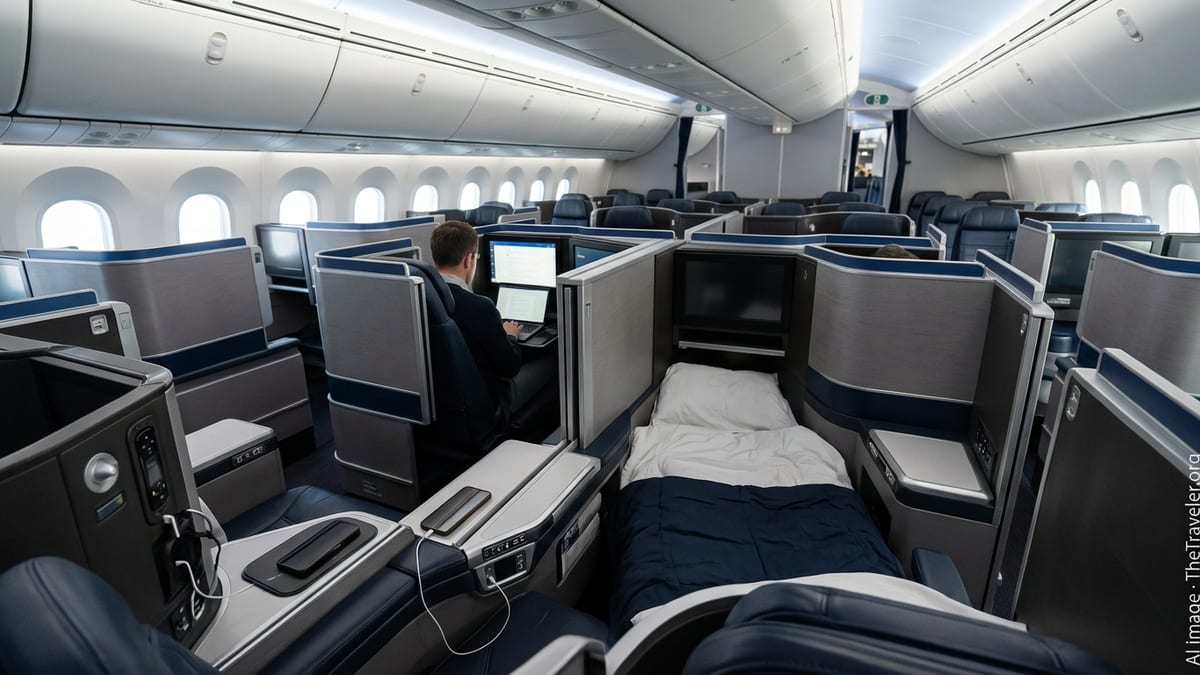
New Flagship Cabin on a Key Transpacific Route
The San Francisco to Singapore service has long been one of United’s flagship ultra long haul routes, linking two major technology and financial hubs with a flight time that can exceed 16 hours. Publicly available fleet and schedule information indicates that this route has been selected as one of the first to showcase the airline’s new “Elevated” 787-9 interior, including the Polaris Studio suites positioned at the front of the business-class cabin.
Industry reports describe the elevated interior as part of a broader strategy to increase the share of premium seats across United’s long-haul network. The updated 787-9 layout is expected to add more business and premium economy seats compared with the current configuration, while maintaining overall capacity suitable for high-yield routes such as San Francisco to Singapore.
Operational timelines shared in fleet-tracking and aviation forums suggest that the first 787-9 with the new interior is due to enter international service from San Francisco in 2026, with Singapore among the launch destinations alongside London. The airline’s choice of these markets reflects strong corporate demand and a competitive landscape where lie-flat suites and privacy doors have become increasingly common.
The deployment also aligns with United’s broader plan to grow its Dreamliner fleet through the end of the decade. New deliveries equipped from the factory with the elevated interior are expected to join the schedule first, with eventual retrofit plans for existing 787-9s discussed but not yet formalized in public documentation.
What Makes Polaris Studio Different
Polaris Studio represents a new tier within United’s international business-class product. According to product descriptions summarized in aviation trade publications and airline communications, the Studio seats are located in the first row of each Polaris cabin section, for a total of eight suites on the 787-9. Each suite is described as roughly 25 percent larger than a standard Polaris seat, preserving direct aisle access while adding more personal space.
The Studio layout incorporates sliding privacy doors, an expanded side surface and an additional ottoman-style seat that allows a companion to join during meals or conversation at cruising altitude. The overall design builds on the Adient Ascent seat platform that underpins the rest of the updated Polaris cabin, but with enhanced dimensions and finishes intended to differentiate the first row from the remaining business-class seats.
Soft-product upgrades are a key part of the Studio concept. Publicly available materials indicate that Studio passengers will have access to an expanded main course selection compared with the broader cabin, as well as a dedicated amuse-bouche service featuring Ossetra caviar. New amenity kits featuring higher-end skincare brands are also highlighted as part of the elevated experience.
From a design standpoint, the Polaris Studio suites are framed by warmer, brighter finishes than earlier Polaris cabins, with accent lighting and textured materials that aim to create a more residential, less industrial feel. The change follows a wider trend among global airlines that are repositioning long-haul business class as a quasi-first-class space on routes where separate first-class cabins have largely disappeared.
Technology and Comfort Features on the 787-9
Beyond the additional space, technology is a central element of the Polaris Studio rollout. United has promoted a 27-inch 4K OLED screen in each Studio suite, which product literature identifies as the largest seatback screen currently offered by a United States-based carrier. The display is paired with Bluetooth connectivity, allowing passengers to use their own noise-cancelling headphones without an adapter.
Wireless charging pads integrated into the side console aim to reduce cable clutter in the suite, complementing traditional AC and USB power outlets. The large monitor, personal reading lights and customizable ambient lighting are all intended to support both productivity and rest on the long overnight segments commonly flown between San Francisco and Singapore.
The underlying seat structure still converts into a fully flat bed, in line with the rest of the Polaris cabin. The extended surface area of the Studio suite, including the extra ottoman, is expected to provide a more spacious sleeping space, which could be particularly valuable on one of the world’s longest regularly scheduled routes.
Cabin-wide enhancements also form part of the elevated interior package. Descriptions from aviation-focused publications reference an updated self-service snack bar available to Polaris passengers, offering a rotating selection of packaged snacks and light bites between meals. The aim is to give business-class travelers more control over their in-flight dining cadence, especially on ultra long haul sectors such as San Francisco to Singapore.
Implications for Premium Travel Between San Francisco and Singapore
The decision to debut Polaris Studio on San Francisco to Singapore highlights the importance of this corridor for premium travel. The route serves a mix of technology, finance and consulting traffic, along with a growing number of leisure travelers who view Singapore as a gateway to Southeast Asia. In this environment, seat design, privacy and connectivity have become central competitive factors.
Rival carriers on similar transpacific routes have introduced next-generation suites with doors and upgraded entertainment systems in recent years. By installing a more spacious subset of suites at the front of the business cabin, United is positioning Polaris Studio as a step above its own existing product while responding to evolving expectations in the long-haul premium market.
Travel management companies and corporate travel newsletters have framed the elevated 787-9 interior as part of a wider shift toward higher premium-seat density. For companies with significant travel volume between the West Coast of the United States and Asia, the arrival of Studio-equipped aircraft may influence policy decisions around cabin eligibility and carrier preference, especially on flights that stretch well beyond 14 hours.
For individual travelers, the introduction of Polaris Studio adds a new paid seat-selection tier to consider. Early seat maps and booking references indicate that access to the Studio section is treated separately from standard Polaris seating, which may lead to new upgrade and redemption strategies among frequent flyers focused on the San Francisco to Singapore route.
Rollout Timeline and What Travelers Can Expect Next
While specific flight numbers and dates are subject to operational changes, information shared across fleet-tracking communities, schedule filings and industry coverage points to 2026 as the year when the first 787-9 with Polaris Studio will regularly operate between San Francisco and Singapore. Initial aircraft will likely be newly delivered Dreamliners, already fitted with the elevated interior before entering service.
Industry observers expect additional elevated 787-9s to be phased in over the following months, gradually increasing the share of San Francisco to Singapore frequencies featuring Polaris Studio. However, mixed-fleet operations are likely for some time, meaning travelers may see a combination of current and new interiors on the route depending on the travel date.
United has publicly indicated that all future 787 deliveries will feature the elevated interior, suggesting that the number of Studio-equipped aircraft on long-haul routes will grow steadily through the decade. Discussion in enthusiast and corporate travel circles continues around whether and when existing 787-9s and other widebodies might be retrofitted, but no detailed retrofit schedule has been formally published.
For now, travelers planning trips between San Francisco and Singapore in 2026 and beyond can expect the route to be at the forefront of United’s latest premium-cabin strategy. As additional elevated 787-9s enter service, the presence of Polaris Studio suites on this high-profile transpacific link is set to become a defining feature of the carrier’s long-haul offering.