

More news on this day
Surging demand for premium cabins at United Airlines is colliding with record visitor numbers in France, Spain and major U.S. cities, setting the stage for an intense contest for high-spending travelers and a potentially tight hotel market in 2026.
Get the latest news straight to your inbox!
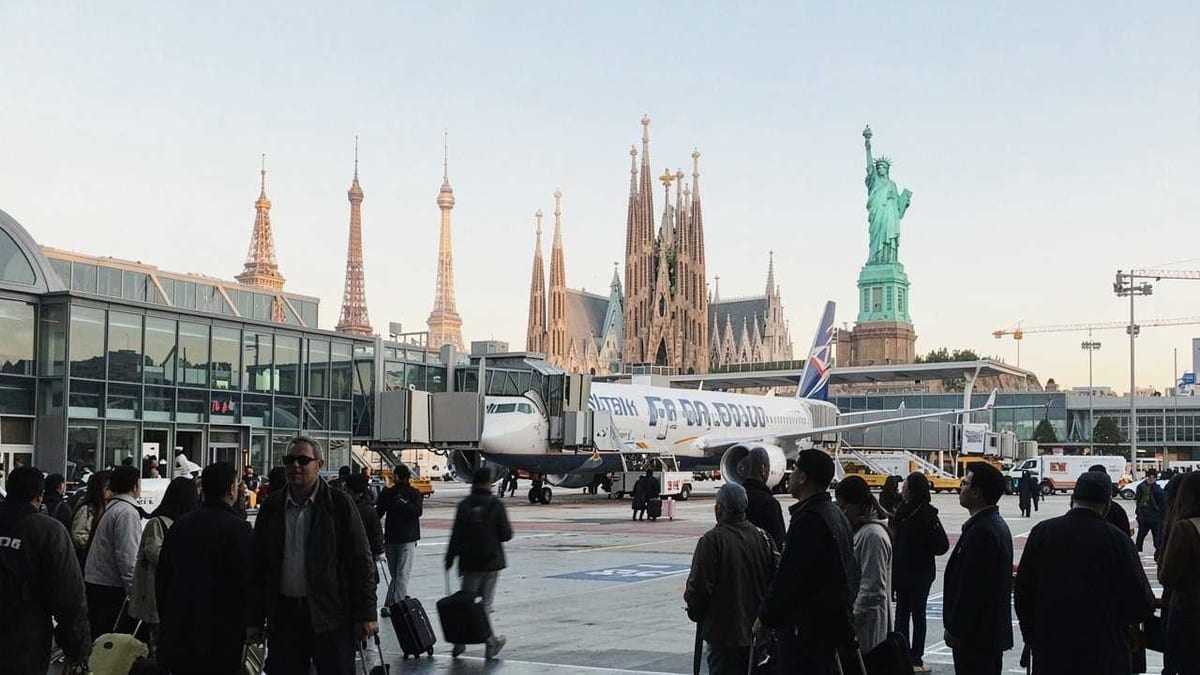
Image by Travel And Tour World
Premium Cabins Power United’s Long-Haul Strategy
Publicly available financial disclosures and media coverage show that United Airlines exited 2025 with premium travel as a central profit engine. The carrier reported record volumes of passengers buying business class, premium economy and extra-legroom seats, helping to underpin a confident earnings outlook despite uneven mass-market demand.
Coverage of United’s 2025 results indicates that the airline flew more than 27 million premium customers during the year, an all-time high for the company. Management commentary highlighted corporate travel, small and midsize business accounts and affluent leisure passengers as the strongest segments, particularly on long-haul international routes.
United is responding by adding more high-yield seats across its widebody fleet. Industry reports describe new cabin layouts on incoming Boeing 787 aircraft that concentrate a larger share of the plane’s space in business and premium economy, supported by upgraded onboard dining and connectivity planned to roll out from late 2025 into 2026. These moves are designed to capture travelers who are willing to pay more for comfort while still being sensitive to overall capacity in standard economy.
Route planning has followed the same logic. Network announcements and airport partnership updates point to increased focus on international gateways such as San Francisco, Newark and Washington, where United can funnel premium passengers into Europe and transatlantic business centers. That strategy places France and Spain squarely in the airline’s sights for the next phase of recovery.
France Extends Tourism Lead With High-Spend Visitors
France enters 2026 with tourism indicators near or at record levels. International organization data and French government statistics show the country welcoming close to 100 million visitors in 2024 and 2025, preserving its position as the world’s most visited destination. At the same time, revenue from foreign tourists has grown faster than raw arrival numbers, with 2025 receipts estimated at more than 77 billion euros.
Analysts note that upscale accommodation has been one of the clearest winners. Reporting from French and international outlets describes a strong 2025 for four and five star properties, with revenue per available room in top categories rising by mid-single-digit percentages. Campgrounds and alternative lodging also expanded their higher-end offerings, but the biggest pricing power has remained in urban luxury hotels and resort properties along the Côte d’Azur and in the Alps.
The 2024 Paris Olympic Games provided a powerful demand surge and helped reposition Paris as a year-round city break destination for affluent Americans and other long-haul visitors. Tourism agencies now see opportunity in sustaining that demand into 2026 by promoting art exhibitions, gastronomy and river cruising that appeal to premium travelers. Hotel groups have responded with renovation programs and new boutique openings centered on suites and experiential stays rather than budget capacity.
Forward-looking commentary from French tourism officials and trade associations points to continued growth in higher-value segments rather than a simple chase for more volume. With international air arrivals still climbing and average spend per visitor increasing, hotels in France are preparing for another busy year in 2026, particularly if airlines such as United keep restoring and expanding long-haul premium capacity.
Spain Approaches 100 Million Visitors as Hotels Reprice
Spain is on the brink of its own milestone. Official data released in early 2026 show that the country welcomed roughly 96 to 97 million international visitors in 2025, the highest figure on record and the third consecutive record-setting year. Tourism now accounts for more than 12 percent of Spanish gross domestic product, making the sector a critical pillar of economic growth.
Spending is rising even faster than arrivals. Government figures and international coverage indicate that foreign tourists generated about 135 billion euros in revenue in 2025, up nearly 7 percent from the previous year. Analysts attribute part of that jump to long-haul markets such as the United States, where visitor numbers have grown strongly and travelers tend to stay longer and spend more on hotels and dining.
Spanish hotel performance has reflected this shift toward value over volume. Industry research reports that national occupancy rates have climbed into the mid-70 percent range, while average daily rates and revenue per available room have reached new highs. Major urban destinations such as Madrid and Barcelona, along with coastal regions including the Balearic and Canary Islands, are emphasizing upscale product, lifestyle hotels and resort complexes aimed at higher-spend guests.
At the same time, local debates around overtourism and housing affordability are reshaping the market. Regional governments are tightening regulations on short-term rentals and discussing higher tourist taxes, particularly for top-category hotels and holiday properties. Hotel associations argue that these measures could constrain new investment, but most forecasts still point to another year of robust international demand in 2026, bringing Spain closer to the symbolic threshold of 100 million annual visitors.
United States Hotel Markets Position for International Upswing
While domestic U.S. travel experienced periods of softness in 2025, international inbound tourism is poised to play a larger role in 2026. Data from the National Travel and Tourism Office indicate that overall foreign arrivals continued to rebuild toward pre-pandemic levels, with strong contributions from Europe and Latin America. Cities with major international gateways, including New York, Miami, San Francisco and Los Angeles, have emerged as focal points for hotel recovery.
Industry analysts describe a two-speed U.S. lodging landscape. Budget and midscale properties that rely heavily on domestic road trips have faced more pressure, while full-service and luxury hotels in gateway markets have benefited from returning business travel, meetings and international leisure visitors. Forecasts from hotel consultancies point to higher occupancy and room rates in these segments through 2026, especially if economic conditions remain stable.
United’s premium strategy aligns closely with these trends. By concentrating international capacity at hubs with dense hotel inventories, the airline effectively channels higher-spend passengers into markets that can support premium pricing on the ground. Airport-area hotels, convention center properties and downtown lifestyle brands are expected to benefit as corporate events and long-haul city breaks regain momentum.
However, inflation in operating costs and construction expenses continues to weigh on U.S. hotel margins. Developers are proceeding cautiously with new projects, suggesting that supply growth in many major markets will remain modest. That dynamic could tighten conditions for travelers in 2026, particularly on peak dates and in districts favored by transatlantic visitors.
2026 Outlook: Competition Intensifies for High-Value Travelers
Across the Atlantic, a common theme is emerging for 2026. Airlines such as United are betting heavily on premium cabins and long-haul networks, while hotel sectors in France, Spain and the United States are chasing the same pool of high-spending guests. With capacity still constrained in some markets and new environmental and tax policies shaping supply, competition for these travelers is set to intensify.
Destination strategies in Europe increasingly emphasize quality over quantity, with national tourism plans in both France and Spain calling for more sustainable, higher-value growth. In practice, that means courting visitors who book longer stays in hotels, dine in local restaurants and participate in cultural experiences, rather than day-trippers or short-break crowds that strain infrastructure without delivering equivalent economic returns.
For travelers, the convergence of these trends could mean more comfortable journeys and more curated on-the-ground experiences, but also higher prices and tighter availability in popular neighborhoods. Travel management companies are already advising corporate clients to book premium seats and preferred hotels earlier than in previous years, especially for major events and summer travel to Europe.
If global economic conditions remain supportive, 2026 is shaping up as a year in which premium-focused airlines and hotel groups in France, Spain and the United States will test how far they can push both price and product. The results will help define the next phase of the tourism rebound and determine which destinations succeed in capturing the most lucrative segment of the market.