

More news on this day
Thousands of federal aviation and airport security workers are now working without pay as the United States grapples with a historic government shutdown, prompting blunt warnings from the travel industry that aviation safety, security and the broader tourism economy are at growing risk.
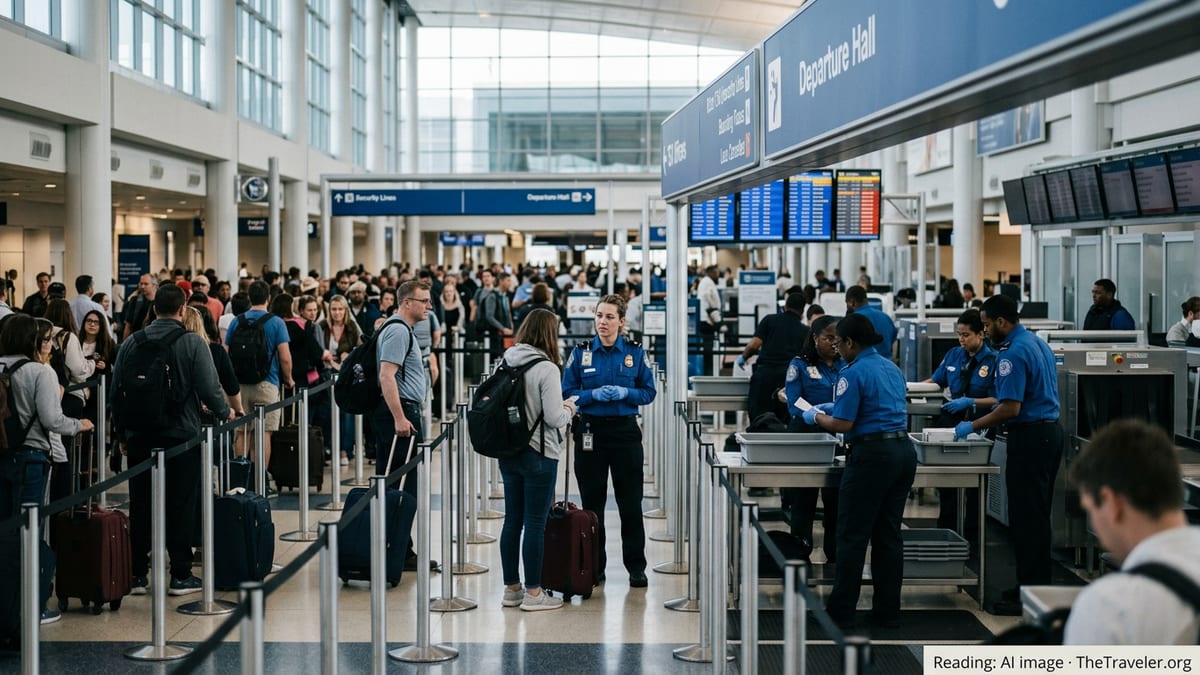
Mounting Strain on Essential Airport Staff
From air traffic control centers to security checkpoints, federal workers deemed essential are still required to report to duty even as paychecks stop arriving. Air traffic controllers and Transportation Security Administration officers are among those keeping the system running while facing rent, mortgage and grocery bills with no clear end in sight to the funding standoff.
Union leaders say fatigue, financial stress and low morale are spreading across control rooms and screening lines. Many controllers are working six days a week with mandatory overtime, while TSA officers juggle second jobs or community food drives as they wait for back pay. Supervisors report an uptick in sick calls and staff turnover at some airports, warning that the system is being pushed toward its limits.
The Federal Aviation Administration has already taken the rare step of cutting scheduled traffic at dozens of major airports to reduce pressure on unpaid controllers and technicians. Officials insist that core safety protocols remain intact, but acknowledge they are operating with thinner staffing margins and less flexibility to absorb weather or technical disruptions.
For front line workers, the shutdown has turned what is normally a high-stress profession into an existential financial crisis. Many describe the strain of monitoring crowded skies or screening passengers while worrying about missed car payments and childcare, raising concerns that prolonged hardship could eventually erode the experienced workforce the system depends on.
Travel Industry Warns of Safety and Economic Risks
Airlines, airports, hotel groups and travel associations are issuing unusually unified and urgent appeals to Congress and the White House to restore funding and pay protections for federal aviation workers. Industry groups argue that asking critical safety and security personnel to work indefinitely without pay is unsustainable and ultimately dangerous.
Executives note that the shutdown arrives during a period of near-record demand for air travel, with spring and summer bookings strong across domestic and international routes. Any significant degradation in the reliability of the air system, they warn, could quickly ripple through the broader travel economy, from airport concessions and rental cars to tour operators and destination marketing organizations.
Analysts estimate that the U.S. travel sector is already losing hundreds of millions of dollars as airlines trim schedules, passengers delay trips and business travelers hedge against potential disruptions. Extended reductions in flight capacity, longer security lines and recurring delays could, they say, dampen consumer confidence well beyond the official end of the shutdown.
Industry leaders stress that their immediate concern is not short-term profits but the integrity of an aviation system that relies on highly trained federal professionals. Their message to lawmakers is that safety and security are non-negotiable, and that airport workers should not be collateral damage in a political impasse.
‘Pay Federal Aviation Workers’ Campaign Gains Momentum
In response to the crisis, a coalition of major travel and hospitality organizations has launched a national campaign under the banner “Pay Federal Aviation Workers.” The initiative, backed by airline trade groups, airport executives, hotel associations and travel advisors, is pressing Congress to guarantee pay for essential federal aviation staff during any current or future shutdown.
The campaign includes a coordinated public outreach effort, with member companies encouraging travelers, employees and local business leaders to contact lawmakers. Template messages emphasize the central role that TSA officers, air traffic controllers, aviation safety inspectors and customs officers play in keeping passengers safe and the travel economy functioning.
Industry groups are also rallying behind proposed legislation that would insulate critical aviation workers from the immediate financial impact of funding lapses. Supporters argue that just as passengers expect uninterrupted safety oversight, the people who provide that protection should not face sudden loss of income whenever budget negotiations falter.
While similar efforts have followed past shutdowns, advocates say the current impasse has highlighted more starkly than ever how vulnerable the aviation workforce is to political brinkmanship. They contend that without structural reforms, each new funding crisis will again place unpaid workers at the center of the storm.
Travelers Confront Longer Lines and Uncertain Itineraries
For passengers, the most visible consequences of the shutdown are unfolding at airport terminals across the country. Security lines at some hubs have periodically stretched far beyond normal peak levels as unpaid TSA officers call out or transfer to other work, forcing managers to consolidate screening lanes and shift staff between checkpoints.
Reduced air traffic capacity, imposed to maintain safety with fewer rested controllers, has led to scattered flight cancellations and extended delays at major airports. Carriers have been adjusting schedules on short notice, warning travelers to monitor apps and airport announcements closely in the days leading up to their trips.
Business travelers report building extra time into itineraries, booking earlier connections and scheduling critical meetings a day after arrival to hedge against disruptions. Leisure travelers, particularly those planning family vacations around school breaks, are increasingly anxious about whether flights will operate as ticketed or be rescheduled at the last minute.
Despite the uncertainty, federal officials and industry leaders continue to emphasize that there has been no relaxation of security standards or air safety rules. TSA and FAA leaders insist they will slow traffic and accept longer lines rather than compromise on the checks and procedures that protect the flying public.
Calls Grow for Long-Term Fixes to Aviation Funding
Beyond the immediate crisis, the shutdown has reignited debate over whether critical aviation and homeland security functions should be shielded from partisan budget battles. Policy experts, unions and trade groups are urging Congress to craft mechanisms that would keep dedicated funding flowing to aviation safety and security personnel even when broader government appropriations lapse.
Proposals under discussion include creating multi-year funding streams for the FAA and key security agencies, as well as automatic pay protections for designated essential workers. Supporters say such measures would preserve leverage for elected officials over discretionary programs while ensuring that core safety operations and paychecks are not suddenly cut off.
Some lawmakers have signaled openness to reforms after hearing from constituents stranded by delays or from federal employees in their districts visiting food banks. Others remain wary of changes they fear could weaken Congress’s power of the purse. For now, negotiations remain focused on ending the current shutdown, leaving structural fixes for another day.
For the thousands of unpaid federal aviation workers keeping planes moving and passengers screened, relief cannot come soon enough. With each missed paycheck and each incremental cut in service, pressure grows on Washington to break the deadlock and deliver both immediate compensation and longer-term assurances that the system entrusted with U.S. air travel will not again be pushed to the brink.