

More news on this day
Passengers on an American Airlines flight bound for Chicago O’Hare International Airport faced an unexpected detour and tense hours on the tarmac after the aircraft diverted to Detroit because of an unruly passenger, according to published coverage and flight-tracking data.
Get the latest news straight to your inbox!
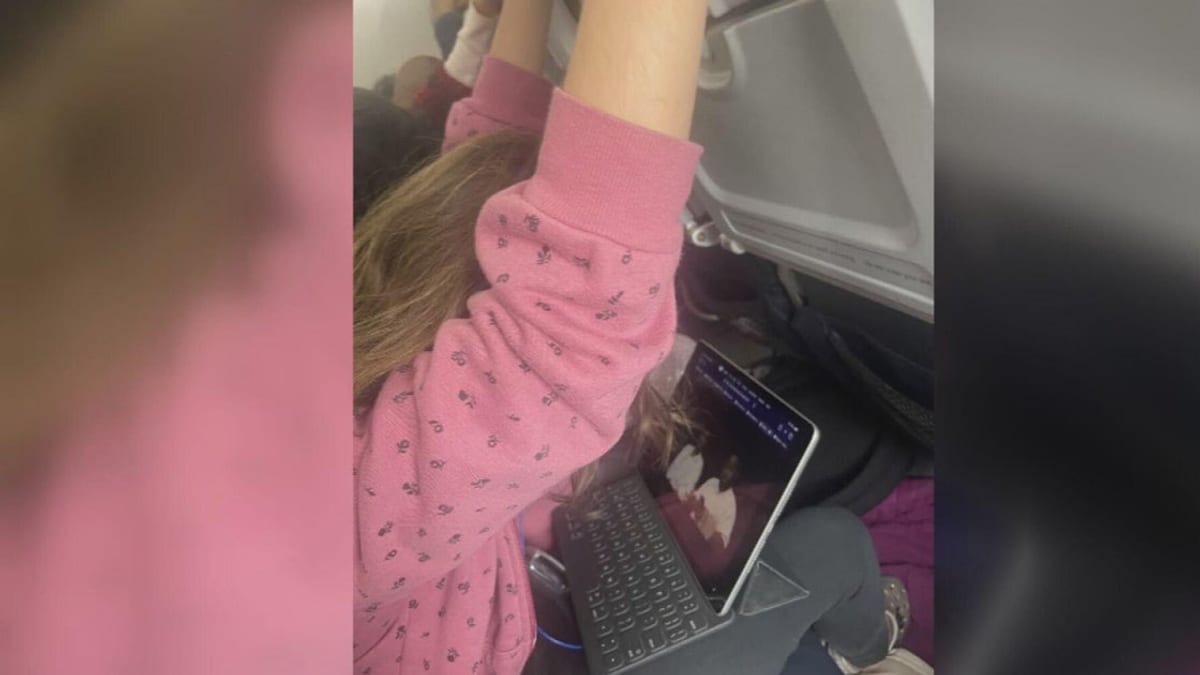
Image by CBS News
Routine New York–Chicago Flight Turns Into Midwestern Detour
Publicly available information shows that American Airlines Flight 2819 departed New York’s John F. Kennedy International Airport on the morning of March 29, 2026, scheduled to arrive at Chicago O’Hare. Midway through the journey, the flight diverted to Detroit Metropolitan Wayne County Airport following what airline representatives described in public statements as a “disruptive customer” on board.
Flight-tracking services indicate the Airbus aircraft turned toward Detroit shortly after 11 a.m. Eastern Time, cutting short its planned westbound path to Chicago. The flight then landed at Detroit Metro, where it taxied to a remote area of the airfield in line with standard procedures for onboard disturbances.
Reports from regional media in Michigan describe the scene as the aircraft was met at Detroit by federal and local airport personnel. The plane remained isolated while a security assessment and search of the cabin were carried out out of what has been described in coverage as an abundance of caution.
According to airline updates shared with news outlets, passengers were asked to deplane in Detroit and wait in the terminal while the investigation continued. The carrier later indicated the aircraft was cleared and that the flight was expected to continue to Chicago the same afternoon.
Travelers Describe Hours of Disruption and Uncertainty
While detailed accounts from individual passengers have not been widely published, the diversion added hours of disruption to what is normally a short hop between New York and Chicago. Instead of arriving at O’Hare late morning, travelers faced an unplanned stop in Detroit, additional security checks, and a rolling series of revised departure estimates.
Published reports note that passengers were eventually moved off the aircraft and into the terminal, where they awaited updates on the status of both the individual involved in the disturbance and the continuation of their flight. For many, the diversion meant missed connections from O’Hare to destinations across the Midwest and beyond, compounding the frustration and logistical challenges.
The incident unfolded at a time when major hubs such as Chicago O’Hare and Detroit Metro are already under strain from heavy spring travel volumes, weather-related disruptions, and staffing pressures. Recent coverage has highlighted long security lines, crowded concourses, and elevated levels of delays at both airports, factors that can intensify passenger anxiety when unexpected events occur in flight.
For those heading specifically to Chicago, the diversion meant navigating additional rebooking requests and revised arrival times in a system already contending with earlier storms and operational bottlenecks. Some travelers arriving late into O’Hare faced the added complication of reorganizing ground transport and accommodations at the end of an unexpectedly long travel day.
FBI and Airport Police Respond, No Ongoing Threat Reported
News outlets in the Detroit area report that both the Federal Bureau of Investigation and Detroit Metro airport police responded after the aircraft landed. Images carried in regional coverage show multiple law enforcement vehicles positioned around the plane while personnel conducted their checks.
According to publicly available statements cited in media reports, a search of the aircraft found no broader threat to the traveling public. The incident has been characterized as limited to the conduct of a single disruptive passenger rather than part of any coordinated security concern.
While further details about the individual’s behavior and potential legal consequences were not immediately released in full, similar events in recent years have typically led to interviews with federal agents and, in some cases, criminal charges or civil penalties. Information from government records and prior cases indicates that individuals accused of seriously disruptive or violent behavior on aircraft can face substantial fines and potential prosecution.
Security analysts note in published commentary that such diversions are costly but remain a critical safety tool. When cabin crews report serious disturbances, diverting to the nearest suitable airport allows trained responders to meet the aircraft and assess the situation in a controlled environment, reducing risks for passengers and crew.
O’Hare Travelers Already Facing a Season of Disruptions
The diversion from O’Hare’s arrivals board came against a backdrop of wider operational turbulence at the Chicago hub. In recent days, O’Hare has seen hundreds of cancellations and delays linked to late-winter storms moving through the Midwest and Northeast, according to airline and airport data cited in industry and local media coverage.
Separate reporting from Chicago outlets has documented periodic ground delay programs, staffing-related slowdowns, and dense security lines at O’Hare as spring break demand collides with weather and air traffic control constraints. On several peak days this month, O’Hare has ranked among the U.S. airports with the highest number of disruptions, with knock-on effects for connections across the country.
The diverted American Airlines flight therefore joined a long list of itineraries altered by factors ranging from storms to staffing shortages. However, unlike many schedule changes driven by weather systems or equipment availability, this disruption stemmed from behavior in the cabin, a reminder that individual actions can ripple through an already fragile aviation network.
Travel-industry commentators point out that even a single unruly-passenger event can force airlines to reshuffle aircraft and crew at multiple airports, influencing departure times for flights far removed from the original disturbance. At heavily trafficked hubs such as O’Hare, a mid-morning diversion can contribute to cascading delays well into the evening.
Unruly Passenger Cases Remain a Concern for Airlines
Federal data and prior-year summaries show that reported cases of unruly passengers surged during the early 2020s, particularly in connection with disputes over public health rules. While the number of investigations has since declined from those peaks, the problem has not disappeared, and regulators continue to track dozens of new incidents each year.
Airlines and aviation regulators have repeatedly emphasized their zero-tolerance stance in public statements, highlighting the potential for serious safety risks when passengers refuse crew instructions, attempt to move toward restricted areas of the aircraft, or threaten others on board. In response, carriers have expanded training for flight attendants, strengthened reporting procedures, and in some cases pursued lifetime bans for individuals involved in severe misconduct.
Travelers on routes such as New York to Chicago, which are heavily used by business passengers, students, and connecting international travelers, may be particularly sensitive to such disruptions. A mid-route diversion not only extends journey times but also raises concerns about personal safety and the reliability of the broader system.
Aviation experts cited in earlier analyses underscore that diversions due to passenger behavior remain relatively rare compared with the total number of daily flights. Even so, this latest incident on the JFK–O’Hare route serves as a timely reminder of how quickly a routine flight can become a prolonged ordeal when problems arise in the cabin, especially during a season when airports like O’Hare and Detroit Metro are already stretched by weather, crowds, and operational stress.