

More news on this day
A Delta Air Lines service from Houston to Atlanta was forced to make an emergency U-turn and land back at William P. Hobby Airport early Wednesday after crew reported an unruly passenger on board, prompting a brief scare for travelers on the busy domestic route.
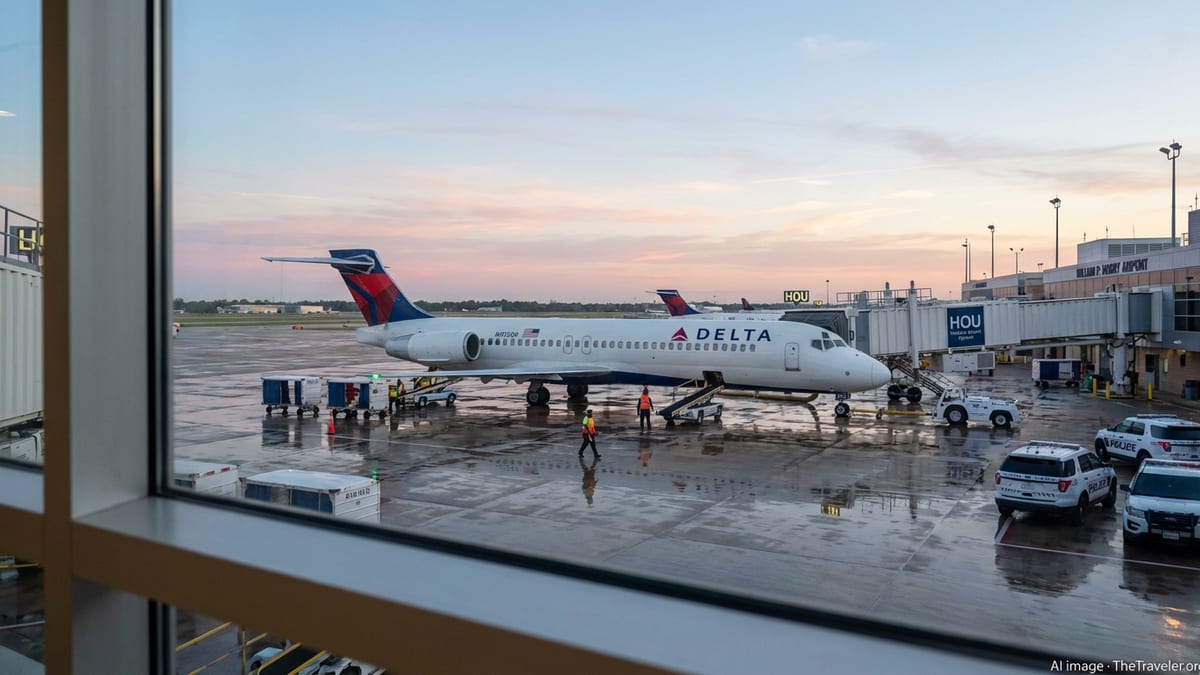
Early-Morning Flight Disrupted Minutes After Takeoff
Delta Flight DL2557 departed Houston’s William P. Hobby Airport shortly after 5:25 a.m. local time on Wednesday, February 18, bound for Hartsfield-Jackson Atlanta International Airport with 85 passengers and five crew members aboard a Boeing 717 aircraft. What was scheduled to be a routine one-and-a-half-hour hop between two of the carrier’s key hubs quickly turned into an in-flight incident that cut the journey short.
According to flight-tracking data and airline statements, the jet climbed to only about 6,000 feet before pilots halted the ascent and turned the aircraft back toward Houston. Within roughly 10 to 15 minutes of takeoff, the crew declared an emergency as a precaution and advised air traffic controllers they needed to return to Hobby due to a passenger disturbance in the cabin.
The aircraft received priority handling on its way back to the airport and landed safely at approximately 5:40 a.m. No injuries were reported among passengers or crew, and the aircraft taxied under its own power back to the gate, where law enforcement officers were waiting.
Confusion Over Reports of a Cockpit Breach
Initial accounts of the incident fueled alarm on social media and some local outlets, with early dispatch information suggesting that a male passenger might have attempted to breach the cockpit. Such claims are particularly sensitive in an era of heightened flight-deck security and strict post-9/11 protocols designed to prevent unauthorized access to the flight deck.
Later in the morning, Delta Air Lines moved to clarify that, while the passenger’s behavior was serious enough to warrant an emergency return, there had been no attempt to enter the cockpit. In background statements to multiple news organizations, the airline said the individual had approached both customers and crew, exhibiting what it described as “unruly and unlawful behavior,” but did not make contact with or try to access the flight deck.
The clarification helped tamp down speculation about a potential security breach, but underscored how quickly incomplete early reports can circulate when unusual activity takes place at a commercial airport. The incident nevertheless prompted a standard review by federal authorities, as is customary when a diversion or emergency return is tied to disruptive behavior on board.
Law Enforcement Response at Hobby Airport
Upon landing, the Boeing 717 was met at the gate by officers from the Houston Police Department and personnel from federal agencies, including Homeland Security partners who routinely assist with aviation-related incidents. Authorities boarded the aircraft after it parked and detained a male passenger believed to be at the center of the disturbance.
Houston Police officials confirmed that officers had been dispatched to Hobby Airport around 5:38 a.m. following reports that someone on Flight DL2557 was behaving aggressively. While the nature of the conduct has not been fully detailed, law enforcement sources indicated that the behavior was serious enough for the crew to request police presence and declare an in-flight emergency.
By mid-morning, authorities said no injuries had been reported in connection with the episode, and there was no indication of a broader security threat to the airport or to the national airspace system. Officials have not yet released the passenger’s identity or any potential charges, saying the case remains under investigation.
Delta Cites Zero Tolerance for Unruly Behavior
In statements released after the incident, Delta Air Lines emphasized that the safety of customers and crew remains its highest priority and reiterated a zero-tolerance stance toward disruptive conduct on board its aircraft. The carrier apologized to passengers for the interruption to their travel plans and for the stress caused by the emergency return to Houston.
Delta noted that the crew acted in accordance with company procedures, which empower pilots and flight attendants to take decisive action when they observe behavior that could compromise safety or escalate into a more serious incident. That can include reseating passengers, requesting law enforcement to meet the aircraft, or diverting or returning a flight when necessary.
The airline’s handling of the situation reflects a broader industry trend toward firmer responses to cabin disturbances. Major carriers across the United States have adopted strict policies following a rise in reports of physical altercations, harassment of crew members, and other forms of noncompliance with safety instructions in recent years.
Flight Resumes Journey to Atlanta After Delay
After the disruptive passenger was removed and authorities completed initial interviews with crew members, Flight DL2557 was cleared to continue its journey. The same aircraft later departed Houston once more for Atlanta, arriving at Hartsfield-Jackson roughly 80 to 90 minutes behind its original schedule.
For most travelers on board, the diversion translated into an unexpectedly long start to the day, with missed or tight connections for some onward itineraries from Atlanta, Delta’s busiest hub. The airline said affected customers were assisted with rebooking and onward travel arrangements where necessary.
Data from flight-status services showed that Wednesday’s incident was out of character for DL2557, a regularly scheduled morning departure between Houston and Atlanta that typically boasts strong on-time performance. In the days leading up to the event, the flight had operated without major disruption.
Growing Scrutiny of In-Flight Disruptions
The emergency U-turn of DL2557 comes against the backdrop of intensifying scrutiny of passenger behavior in the United States aviation system. Federal regulators have documented a sharp increase in reports of unruly travelers since 2019, ranging from verbal abuse and refusal to follow crew instructions to more serious physical confrontations.
The Federal Aviation Administration has adopted a “zero-tolerance” enforcement posture toward such incidents, bypassing traditional warning letters in favor of immediate investigations and potential civil penalties. The agency has pursued substantial fines against individuals accused of interfering with crew duties or jeopardizing safety on board.
Transportation officials have paired enforcement with public messaging campaigns urging civility in the skies, reminding passengers that airlines and regulators have wide latitude to remove and ban disruptive customers. Events like the one aboard DL2557 highlight how even behavior that stops short of physical violence can trigger major operational and legal consequences.
Passenger Experience Inside the Cabin
While detailed first-person accounts from Flight DL2557 are still emerging, early descriptions from travelers and airport officials suggest a brief but unsettling episode in the cabin. Passengers reported seeing crew members move quickly to address the situation as it unfolded, with some noticing a change in the aircraft’s climb and heading soon after takeoff.
Standard safety protocols mean that when a passenger becomes severely disruptive, flight attendants work to de-escalate the situation while keeping other travelers seated and calm. At the same time, the cockpit crew communicates with air traffic control to evaluate whether continuing to the destination, diverting to an alternate airport, or returning to the point of departure best serves safety.
On DL2557, the decision to head back to Houston minimized the time the crew and passengers were exposed to the disturbance, while ensuring the aircraft could be met by law enforcement on the ground. Once at the gate, customers remained onboard until officers had safely removed the individual at the center of the incident.
Operational Impact at Houston and Atlanta
Despite the early-morning disruption, operations at William P. Hobby Airport continued largely as normal, with no widespread delays or heightened visible security beyond the immediate response around the affected gate. Other departures and arrivals proceeded according to schedule, underscoring how airports are structured to absorb isolated incidents without bringing traffic to a halt.
At Atlanta, the nation’s busiest passenger airport, the impact was felt primarily in the form of a delayed arrival for DL2557 and potential knock-on delays for connecting travelers. However, there were no significant reports of widespread schedule disruptions attributable to the event.
For Delta, which runs a dense network of flights through Atlanta, such interruptions are typically managed through a combination of rebooking, standby lists, and, when necessary, rolling delays to reconnect passengers with their itineraries. Wednesday’s incident appears to have been contained to a relatively modest schedule ripple compared with more extensive disruptions caused by weather or system outages.
What Comes Next in the Investigation
The Federal Aviation Administration confirmed that it will investigate the circumstances surrounding Flight DL2557’s emergency return, focusing on the behavior reported by the crew and any potential interference with their duties. Such reviews generally examine crew statements, cockpit and cabin reports, and, when available, passenger testimony.
Separately, local and federal law enforcement will determine whether criminal charges are warranted. Depending on the findings, the detained passenger could face counts related to interfering with a flight crew, disorderly conduct, or other offenses tied to conduct on a commercial aircraft.
For travelers, the incident serves as a reminder of the strict legal environment that governs behavior at altitude. Even on short domestic sectors like Houston to Atlanta, disruptive acts can quickly transform a routine flight into an emergency, involving multiple agencies and resulting in long-term consequences for those responsible.