

More news on this day
Unusually heavy rainfall has swept across parts of the United Arab Emirates in recent days, inundating streets in Ajman, Abu Dhabi and the Al Dhafra region and prompting widespread travel disruption for residents and visitors.
Get the latest news straight to your inbox!
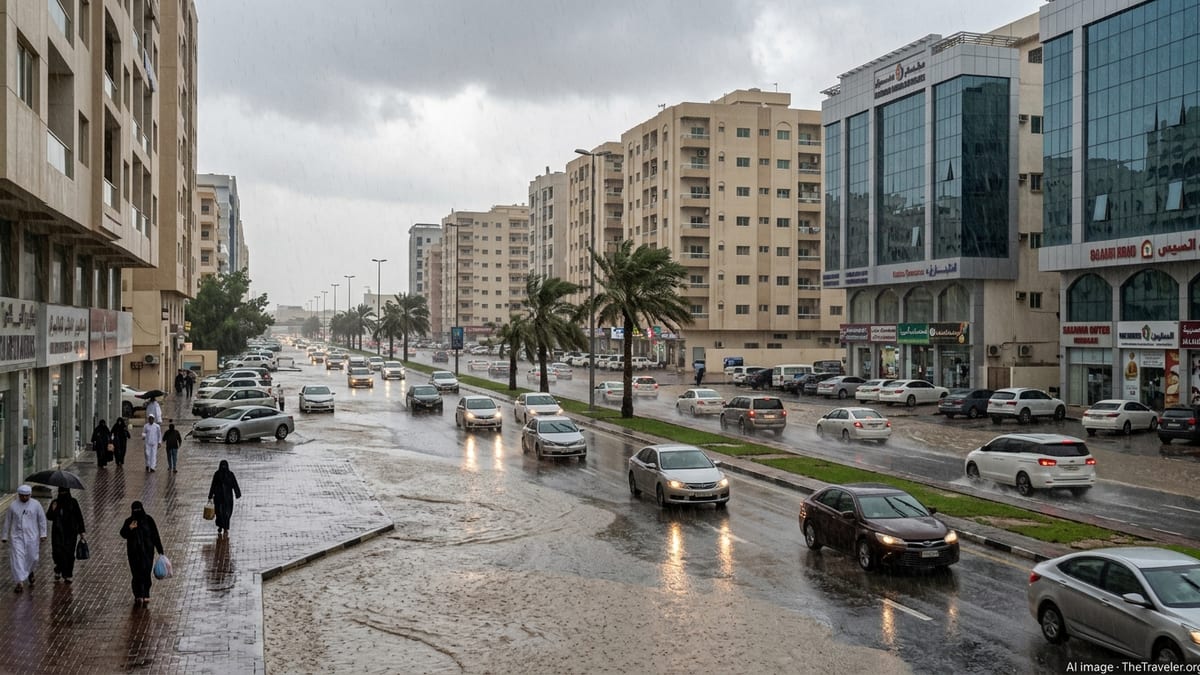
Unseasonal Downpours Put Pressure on Urban Infrastructure
The latest spell of intense rain has arrived outside the UAE’s typical wettest periods, catching many communities off guard and placing renewed pressure on drainage and road networks. Publicly available information and social media updates describe persistent downpours over multiple days, with some areas experiencing rainfall that locals compare to the exceptional storms of 2024.
Across Ajman and parts of the Northern Emirates, residents have reported streets turning into shallow waterways, with parked cars surrounded by standing water and low-lying neighborhoods struggling to channel runoff. Similar scenes have been noted on the outskirts of Abu Dhabi and in communities across the Al Dhafra region, where desert highways are particularly vulnerable to pooling water and debris washed across carriageways.
While the UAE has invested heavily in flood mitigation and stormwater systems, the concentration of rainfall in short bursts continues to expose weak points, particularly at busy junctions, older residential areas and road sections that rely on open drainage channels. Observers note that the current episode is part of a broader pattern of more frequent and intense rainfall events affecting the wider Gulf region in recent years.
Ajman Streets Flooded as Commuters Battle Blocked Routes
Ajman has seen some of the most visible urban impacts, with local accounts describing large sections of the city “on water” as rainwater accumulated faster than it could drain away. Images and videos shared on public platforms show inner-city roads with brown, standing water, forcing vehicles to inch through flooded stretches or divert via higher ground.
Reports from motorists indicate that several internal roads have become difficult or impossible to use during peak downpours, including routes around residential districts such as Al Nuaimiya and areas near popular shopping centers. Some drivers have opted for coastal routes along the corniche, where slightly higher elevations and better drainage have kept main arteries more passable, even as side streets remain submerged.
Residents exchanging information online have warned one another against attempting to drive through deeper sections, noting incidents of vehicles stalling and requiring recovery. Others have advised allowing additional travel time or postponing nonessential journeys altogether until water levels subside and municipal crews can clear blocked drains.
Abu Dhabi Sees Heavy Rain, Airport Access and Highways Affected
In the capital, heavy showers have swept across multiple districts, including suburbs that connect directly to key intercity highways and airport access roads. Publicly available updates from travelers suggest that rainfall intensity in parts of Abu Dhabi has rivaled some of the strongest recent storms, temporarily slowing traffic on major approaches into the city.
Motorists have described slow-moving queues on multi-lane roads where surface water collects in dips and underpasses, forcing drivers to bunch into fewer lanes. Standing water has been reported near key junctions used by commuters heading toward the central business district and industrial areas, increasing journey times during already busy periods.
Travelers heading for Abu Dhabi’s main airport corridors have been advised through various channels to leave earlier than usual, as reduced visibility and spray from heavy traffic contribute to delays. While core infrastructure remains operational, the combination of intense rain, cautious driving speeds and localized flooding has added strain to the capital’s normally fluid road network.
Al Dhafra Highways and Desert Towns Confront Flash-Flood Risks
Further west, the Al Dhafra region has confronted a different sort of challenge, with desert landscapes channeling rainwater into wadis and low-lying stretches of road. Short but intense bursts of rainfall can quickly transform otherwise dry terrain into fast-moving runoff that cuts across highways and rural access tracks.
Published coverage and regional weather monitoring indicate that drivers heading toward key oil, gas and industrial hubs in Al Dhafra have faced intermittent closures or diversions where waterlogged sections have become unsafe. Some secondary roads serving small communities and agricultural areas have been partially submerged, isolating pockets of residents until water recedes.
Authorities in the wider region have historically emphasized the dangers of entering flooded wadis and underpasses, and recent images shared online show warning signs and barriers in place at known risk points. In Al Dhafra, where distances are long and services sparse, travelers have been encouraged via public advisories and community channels to check conditions before setting out and to carry extra supplies in case journeys take longer than planned.
Travelers Urged to Monitor Updates and Build in Extra Time
Across Ajman, Abu Dhabi and Al Dhafra, the latest rains have highlighted how quickly conditions can change, even on routes that are usually straightforward. Publicly available information shows that many residents are turning to official weather bulletins, navigation apps and community forums to track flooded segments and choose safer alternatives.
Transport operators and travel advisories have similarly urged people to allow additional time for airport transfers, intercity journeys and school runs, particularly when further showers are in the forecast. In some workplaces and schools, flexible arrangements and remote options have been implemented to reduce congestion during the worst of the weather and to minimize the number of vehicles on already saturated roads.
Climate and infrastructure analysts note that the current episode adds to growing evidence that the Arabian Peninsula is experiencing more frequent periods of intense rainfall, placing new demands on urban planning and emergency preparedness. For travelers and residents alike, the latest disruption serves as a reminder that even brief storms can have outsized effects on movement across the UAE’s rapidly growing cities and desert highways.