

More news on this day
Nicosia is preparing to welcome hundreds of urban innovators for the URBACT City Festival, a flagship European gathering spotlighting new ideas, local actions and emerging trends in sustainable city-making.
Get the latest news straight to your inbox!
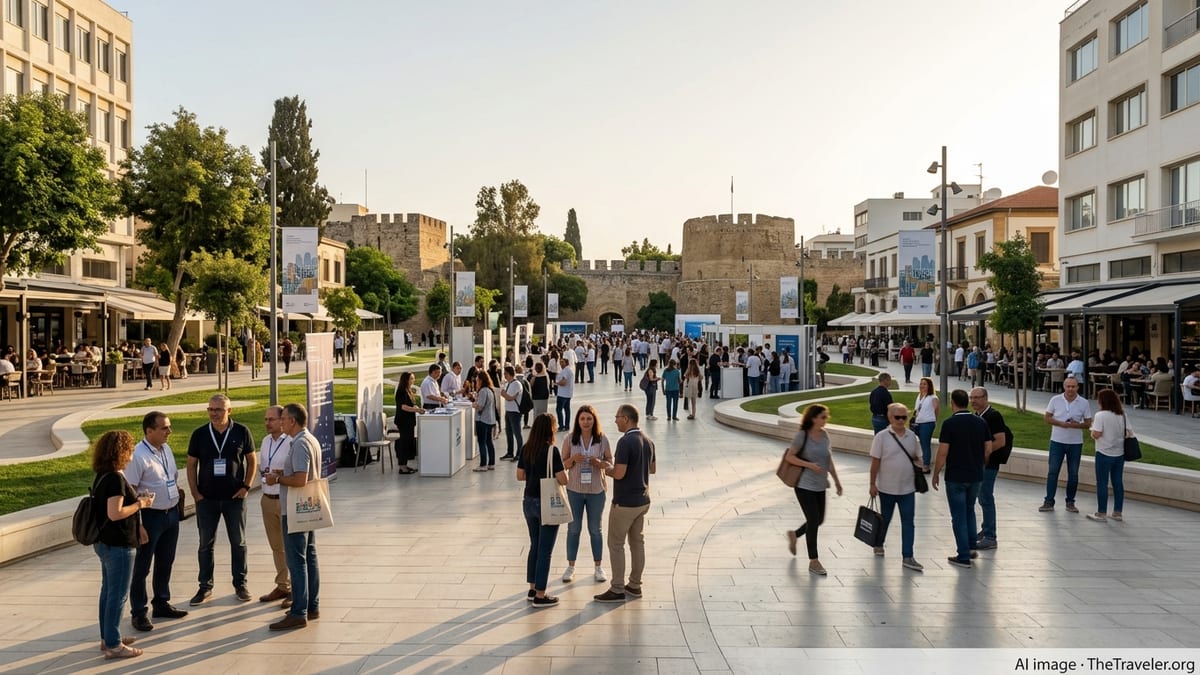
A Flagship Urban Event Comes to Cyprus
The 2026 edition of the URBACT City Festival is set to place Nicosia firmly on Europe’s urban innovation map, with the Cypriot capital named as host city for the gathering originally scheduled for 31 March to 1 April 2026. The event is designed as a celebration of cities and practices that are reshaping how Europeans live, move and work in urban areas.
According to publicly available information from the URBACT programme, the festival is expected to bring together around 500 participants, including city representatives, urban practitioners, researchers and stakeholders from across Europe. The focus is on sharing lessons from URBACT’s Action Planning Networks and showcasing how cities are translating cooperation projects into concrete local actions.
The festival is planned under the patronage of the 2026 Cypriot Presidency of the Council of the European Union and the City of Nicosia, underlining its strategic role in wider European debates on sustainable urban development. Communications from the organisers indicate that the event has been postponed from its original late March and early April dates to the second half of 2026 as a precaution linked to the evolving situation in the wider region, but the host city and overall format remain unchanged.
For visitors and delegates, the choice of Nicosia places the festival at the crossroads of Europe, the Middle East and the eastern Mediterranean. The city’s layered history, divided urban core and emerging innovation scene provide a distinctive backdrop for discussions about urban resilience, inclusion and future-ready planning.
What Participants Can Expect in Nicosia
Programme details shared by the URBACT network outline a two day event built around thematic sessions, outdoor exhibits and city-based experiences. Participants are expected to explore a curated marketplace and open-air exhibition, where cities involved in URBACT networks present their stories, tools and tested solutions on issues ranging from mobility and climate action to health, social inclusion and digital transformation.
Alongside the exhibition spaces, the festival is slated to feature parallel thematic discussions, workshops and networking sessions. These will enable city-makers to delve into specific topics such as green local economies, integrated urban planning, night-time economies and citizen participation, drawing on tested practices from across the continent.
Reports indicate that the festival is also closely linked to URBACT’s next call for city networks. The gathering is expected to act as a launchpad for new partnerships, helping municipalities and metropolitan authorities identify potential collaborators and shape joint project ideas aligned with European cohesion and regional development goals.
Beyond the formal programme, the event aims to foster informal exchanges between participants, European institutions and organisations funded by the European Union that work on urban policy and territorial cooperation. The format is designed to encourage cross-border collaboration while keeping local realities and community impacts at the forefront.
Showcasing 273 Local Actions from Across Europe
One of the defining features of the 2026 URBACT City Festival is the scale of local experience on display. Organisers state that 273 European cities will share the local actions they have developed through 30 Action Planning Networks, spanning a wide spectrum of themes and geographies.
These actions represent several years of collaboration within the URBACT IV programme, during which cities have co-designed strategies, tested pilot initiatives and refined implementation roadmaps. Examples span mobility improvements, climate adaptation and mitigation, support for local businesses, cultural and creative industries, urban health initiatives and tools to strengthen social inclusion in neighbourhoods.
The festival format is expected to give each city a platform to present its journey, from initial diagnosis to co-created solutions and early outcomes. For visiting city officials and practitioners, this offers a concentrated overview of what has worked in different contexts, as well as candid insights into challenges, trade-offs and lessons learned.
By positioning these stories at the centre of the event, URBACT aims to reinforce the idea that European cooperation is most meaningful when it leads to tangible improvements in everyday urban life. The Nicosia gathering is set up as a space where those results can be explored, questioned and adapted for new local realities.
Nicosia’s Urban Landscape as a Living Classroom
The festival will be woven into some of Nicosia’s most recognisable public spaces. Information published by the organisers highlights three main hubs: the Royal Hall, Eleftheria Square and the Old GSP Square in the historic centre. Together, these locations will serve as venues for plenary moments, exhibitions, networking areas and site-based activities.
Eleftheria Square, redesigned in recent years as a major civic space, is expected to play a prominent role as both a meeting point and a showcase of contemporary urban design. Its elevated walkways, open plaza and views over the city’s Venetian walls offer a visible example of how Nicosia has been rethinking public space in its core.
Complementing the square, the Royal Hall and Old GSP Square are set to host indoor and semi-outdoor activities that blend formal sessions with more informal encounters. For participants unfamiliar with the Cypriot capital, moving between these venues will provide an immersive introduction to Nicosia’s compact centre, its mix of architectural styles and its position as a divided city with ongoing efforts to connect communities across the buffer zone.
In recent years, Nicosia has taken part in several European initiatives focused on topics such as night-time economies, temporary uses of public space and culture-led regeneration. Public documentation on these projects suggests that the city increasingly functions as a laboratory for policies that balance livability, economic vitality and heritage protection. The URBACT City Festival is expected to build on this trajectory by inviting visitors to experience real-life examples on guided walks and site visits.
A Meeting Point for Europe’s Next Wave of Urban Collaboration
Beyond its role as a showcase, the URBACT City Festival in Nicosia is positioned as a crucial bridge between the current cycle of cooperation projects and the networks that will take shape in the coming years. With the next URBACT call for city networks on the horizon, the event is expected to serve as a matchmaking arena where municipalities can identify shared priorities and potential partners.
Publicly available material on the festival underlines that participation is primarily targeted at European cities, whether or not they are already part of URBACT networks. Places are also foreseen for regional and metropolitan authorities, urban experts and representatives of European institutions, reflecting the multi-level nature of urban policy-making in the European Union.
For Nicosia and Cyprus more broadly, hosting the festival during the country’s EU Council Presidency year offers a platform to highlight national and local approaches to urban challenges, from climate adaptation and energy transition to mobility, housing and cultural programming. The event is also expected to contribute to the visibility of Cyprus as a destination for professional gatherings that connect policy, practice and on-the-ground experience.
As the festival’s rescheduled dates in the second half of 2026 draw closer, further programme details, speaker announcements and logistical information are likely to be released. For now, Nicosia’s selection as host underscores how smaller and medium-sized capitals are increasingly central to Europe’s conversations about the future of cities.