

More news on this day
Americans planning trips to Turkey’s beaches, cultural hubs, and historic cities in 2026 are being urged to reassess routes and safety plans as new security advisories highlight rising regional tensions and localized risks, even as most major tourist areas remain open and operating.
Get the latest news straight to your inbox!
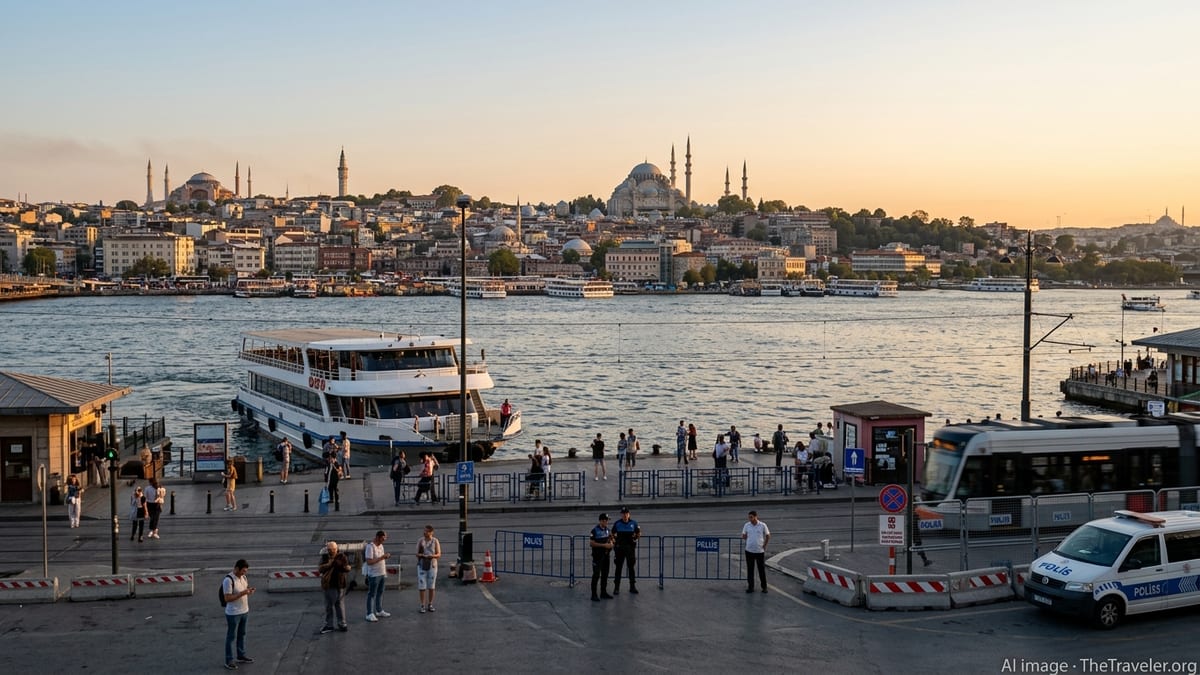
New U.S. Travel Advisory: What Has Changed in March 2026
The latest U.S. travel advisory for Turkey, updated on March 8, 2026, maintains an overall Level 2 rating, signaling that travelers should exercise increased caution. Publicly available information shows that this countrywide guidance reflects concerns about terrorism, the potential for sudden unrest, and the broader fallout from conflict elsewhere in the region, rather than a blanket warning against tourism.
However, separate alerts indicate a sharper warning for parts of the southeast. Coverage of the State Department’s recent actions reports that the advisory for southeastern Turkey has been raised to Level 4, categorized as “Do Not Travel,” primarily due to security risks linked to the wider Middle East confrontation. At the same time, non‑emergency U.S. government personnel and their family members have reportedly been ordered to leave the U.S. Consulate in Adana, a key diplomatic post serving the southern region.
Other governments are also flagging a more volatile environment. Australia’s Smartraveller service, in guidance current as of March 2026, notes the possibility of rapid deterioration in local security conditions, including demonstrations and potential reprisal incidents connected to developments in the Middle East. Comparable advice from European governments underscores that the overall risk remains manageable for most visitors, but demands closer attention to local conditions than in previous years.
For American travelers, the practical takeaway is that Turkey is not off limits, but official messaging has become noticeably sharper about where to go, where to avoid, and how quickly the situation could shift, particularly in the country’s south and along its borders.
Hotspots Under Scrutiny: Southeast and Border Regions
While Istanbul, Cappadocia, Antalya, Bodrum, Izmir, and other core tourist centers continue to welcome international visitors, several regions are now clearly marked as high risk. Travel analyses summarizing official advisories highlight that Sirnak and Hakkari provinces, as well as areas within roughly 10 kilometers of the Syrian border, carry “Do Not Travel” classifications similar to active conflict zones.
Recent reporting on the regional fallout from the 2026 Iran conflict, coupled with earlier cross‑border tensions involving Syria and Iraq, indicates that southeastern Turkey is particularly exposed to spillover risks. Analysts note that these areas have long been more militarized and politically sensitive than the country’s main tourist corridors, but the current climate has sharpened concerns about potential attacks on security forces, infrastructure, or symbolic targets.
Independent risk maps published in early 2026 by security and insurance providers show Turkey as a patchwork: relatively lower‑risk coastal and central provinces contrasted with elevated‑risk districts in the southeast and near conflict‑adjacent frontiers. These tools, often drawing on the same data that informs government advisories, are being used by airlines, tour operators, and corporate travel managers to reroute itineraries away from the highest‑risk zones.
For American leisure travelers, this effectively means avoiding any plans that involve overland trips close to the Syrian or Iraqi borders, skipping off‑the‑beaten‑path southeastern provinces, and confirming that domestic flights or buses do not transit through restricted areas.
Security Incidents, Protests, and Urban Crowd Risks
Turkey has faced periodic security incidents in recent years, including attacks and plots attributed to extremist groups. International news coverage in late 2025 described operations in Istanbul and elsewhere that disrupted alleged plans targeting Christmas and New Year celebrations, illustrating the continued interest of militant networks in crowded, high‑profile events.
Major cities have also seen waves of political protest. Large‑scale demonstrations that began in 2025 over domestic political issues continued into 2026 in some form, particularly in Istanbul and Ankara. Travel advisories from the United Kingdom and other governments stress that while many gatherings remain peaceful, they can escalate quickly, disrupt transportation, or prompt a heavy security response.
Recent guidance for foreign visitors emphasizes that public squares, government buildings, university areas, and central transport hubs are the most likely flashpoints. Travelers are urged to steer clear of any demonstrations, avoid photographing protests, and move away immediately if they encounter unexpected crowds, police convoys, or barricades.
Despite these concerns, tourism experts note that the impact on day‑to‑day sightseeing has so far been uneven. Reports focused on Istanbul’s tourism market in early 2026 point to reduced demand and some localized disruptions, such as temporarily closed metro stations or rerouted buses around protest zones, but do not describe a generalized threat to tourists who avoid political gatherings and follow local instructions.
Popular Tourist Zones: What Remains Open and Relatively Stable
Against this backdrop of heightened alerts, much of Turkey’s tourism infrastructure continues to function normally. Data from international travel and tourism analysis in late 2025 and early 2026 indicates that Turkey has remained one of the region’s key beneficiaries as travelers redirect trips away from more directly affected conflict areas, particularly in the eastern Mediterranean.
Coastal destinations such as Antalya, Alanya, Bodrum, and Marmaris, along with cultural centers like Istanbul’s historic peninsula and the fairy‑chimney landscapes of Cappadocia, are still receiving significant numbers of European and regional visitors. Industry reports describe hotels, resorts, and tour operators working to reassure guests, emphasizing on‑site security, airport screening standards, and long experience operating amid regional tensions.
Foreign travel advisories generally distinguish clearly between these established tourist corridors and the border provinces. For Istanbul and the main Mediterranean resorts, advice typically centers on standard urban‑travel precautions, vigilance in crowded areas, and awareness of pickpocketing or routine scams, rather than specific conflict‑related threats. This layered picture helps explain why airlines and cruise lines have, for now, kept many Turkey routes in their schedules even as they reevaluate some eastern Mediterranean ports.
Nevertheless, analysts tracking the economic impact of the 2026 Iran conflict note that tourism across the wider region is under pressure, with forecasted visitor numbers for the year revised sharply downward. Turkey’s ability to maintain open tourist hotspots does not eliminate risk; instead, it underscores the importance of travelers doing more homework and preparing more robust contingency plans than they might have in previous years.
How Americans Can Reduce Risk While Still Visiting
Security specialists and official advisories converge on a series of practical steps for Americans who decide to continue with Turkey travel plans in 2026. One of the most consistent recommendations is to stay closely aligned with official guidance by monitoring updated advisories in the weeks and days before departure, paying attention not just to the nationwide level, but also to regional notes that may affect specific provinces or border areas.
Travel‑risk assessments published in March 2026 stress the value of flexible bookings and well‑defined backup plans. This can include choosing flight options that allow easy rerouting, reserving hotels with clear cancellation policies, and avoiding nonrefundable excursions in areas that may be affected by demonstrations or security operations. Travelers are also encouraged to share itineraries with family or friends, maintain regular check‑ins, and keep copies of key documents offline.
Advisories from several governments emphasize that visitors should remain situationally aware in busy locations such as markets, transport hubs, and major tourist sites. That includes minimizing time spent in security queues or dense crowds when possible, noting emergency exits, and promptly leaving any area where the atmosphere feels tense or abnormal. Travelers are also urged to comply fully with local security procedures, including bag checks and metal detectors at malls, museums, and transport terminals.
Finally, many governments recommend that their citizens enroll in travel‑registration systems that provide security updates and emergency contact pathways while abroad. For Americans, publicly available guidance points to digital enrollment options that allow consular officials to issue alerts tailored to specific locations inside Turkey if conditions worsen. Combined with careful route planning that keeps trips well away from the southeast and border zones, these measures can significantly reduce risk for those determined to experience Turkey’s cultural and natural attractions amid a turbulent regional backdrop.