

More news on this day
British holidaymakers eyeing escapes to Dubai and Abu Dhabi are being urged to rethink their plans after the UK government issued an urgent warning against all but essential travel to the United Arab Emirates, citing missile attacks, mounting regional tensions and serious implications for travel insurance cover.
Get the latest news straight to your inbox!
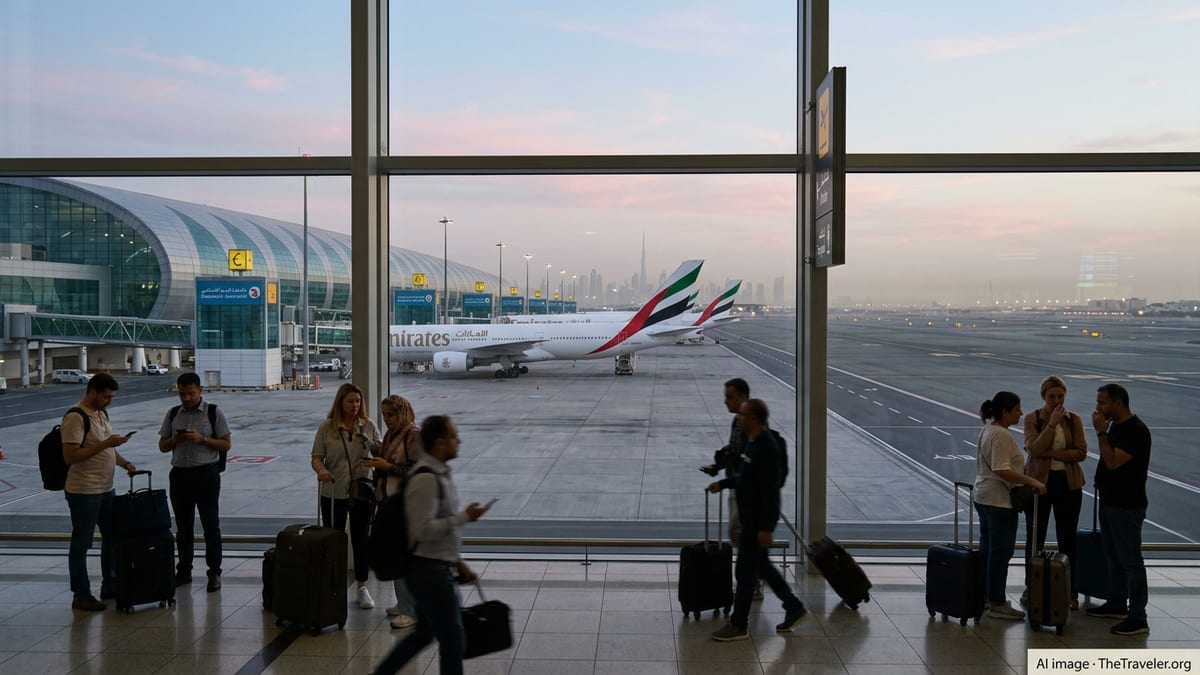
FCDO Raises Alarm as Regional Conflict Reaches the UAE
The Foreign, Commonwealth and Development Office has sharply upgraded its travel advice for the United Arab Emirates in response to the widening Iran conflict and a series of missile and drone attacks that have directly targeted the country. The move marks one of the most significant warnings issued for the UAE in years and signals how quickly a usually stable Gulf hub has been drawn into the regional crisis.
According to the latest government guidance, British nationals are advised against all but essential travel to the UAE. Officials warn that regional escalation poses significant security risks, with air defence systems intercepting incoming missiles and drones and debris occasionally falling on or near populated areas. Authorities in Abu Dhabi and Dubai remain on a heightened security footing.
The warning follows multiple waves of Iranian strikes across the Gulf since late February, which have hit or threatened infrastructure in and around the UAE. Local authorities have activated emergency alert systems, and residents and visitors have been instructed to seek immediate shelter in the nearest building if sirens sound or official alerts are issued.
While the UAE’s defences have intercepted the vast majority of projectiles, the UK government stresses that the risk to civilians from falling debris, misfires or further escalation cannot be ruled out. British nationals already in the country are being urged to monitor official channels closely and follow the instructions of local authorities.
Flight Disruption and Evacuation Efforts From a Key Global Hub
The security crisis has upended air travel in and out of the UAE, one of the world’s busiest aviation crossroads. Following the initial strikes, commercial flights at major airports including Dubai International and Abu Dhabi were suspended or sharply reduced as authorities assessed the threat and inspected runways and facilities.
A limited number of outbound services have since resumed, with priority given to evacuation-style flights and carefully controlled commercial departures. News agencies report that travelers have faced days-long delays, rapidly changing schedules and last-minute cancellations, with many tourists and business visitors stranded in hotels and at airports while airlines adjust operations.
The UK government has opened a registration portal for British nationals in the UAE, particularly in Dubai, to help authorities assess demand for seats on available commercial flights and to communicate directly about emerging options. Officials stress that this is not a mass airlift but a mechanism to support those who wish to leave while routes remain open.
Travel analysts say the UAE’s role as a global transit hub has magnified the disruption, with knock-on effects across Europe, Asia and Africa as long-haul carriers reroute or cancel services. Passengers are being advised to expect short-notice schedule changes and to stay in close contact with their airline and tour operator.
Insurance Pitfalls: When Your Policy Stops Protecting You
For British travelers, the FCDO’s shift to advising against all but essential travel to the UAE carries immediate and often underappreciated consequences for insurance. Most UK travel insurance policies contain clear exclusions when a traveler chooses to visit or remain in a destination that the Foreign Office has formally warned against.
Insurers and specialist brokers have begun issuing their own alerts explaining that, where trips were booked after the latest escalation, disruption and cancellation directly linked to the conflict may not be covered at all. Some providers note that policies purchased before the first strikes may still respond under standard terms, but only up to the limits set out in the small print.
Industry briefings highlight a further complication: many standard travel policies exclude war, invasion and hostilities as insured events, even before any government warning is issued. That means losses caused by missile attacks, airspace closures ordered for military reasons or government evacuations may fall entirely outside normal cover, leaving travelers to absorb the costs themselves.
Experts are urging British travelers to check the exact wording of their policy, focus on clauses referring to government advice, “acts of war” and regional conflict, and contact their insurer in writing before making any decision to travel against FCDO guidance. Without explicit written confirmation of cover, a trip to the UAE could effectively be uninsured.
What British Travelers in the UAE Should Do Now
For those already in the UAE, officials and security consultants are stressing calm but decisive action. The FCDO is advising British nationals to register their presence via its dedicated portal, enabling direct updates on security developments, transport options and any changes to consular services. Registration also helps authorities account for citizens in the event of a major incident.
Travel security firms recommend that visitors keep passports, visas and essential documents within easy reach, maintain charged mobile phones with roaming enabled, and identify at least two routes to the nearest shelter or secure indoor location from their hotel or accommodation. Tourists are also being advised to follow building management instructions during alerts, avoid gathering at windows and refrain from filming or photographing military sites or missile interceptions.
Those with upcoming flights are encouraged to speak directly with airlines before travelling to the airport, as schedules remain fluid and check-in cut-off times may be altered at short notice. Many carriers are allowing fee-free date changes or route alterations, particularly for passengers who booked before the crisis escalated, although full refunds are often subject to standard fare rules.
British nationals who feel unsafe or whose presence in the UAE is non-essential are being strongly encouraged to take opportunities to leave while commercial options remain available. At the same time, officials acknowledge that some long-term residents and essential business travelers may need to stay, and emphasize the importance of closely following local guidance and UK travel alerts.
Planning Future Trips: Rethinking Gulf Travel in a Volatile Moment
The FCDO’s latest warning has cast a long shadow over future leisure and business travel to the UAE, a destination that has marketed itself for years as a safe, high-end escape for British holidaymakers. Tour operators report a surge in calls from customers asking whether to pay upcoming balances or postpone trips scheduled for the Easter and early summer seasons.
Consumer advocates say the answer will often depend on the exact terms of package holiday contracts and the timing of the FCDO’s advice. Where a package includes flights and accommodation to a country under a government warning, many operators will eventually cancel and offer refunds or rebooking, but travelers may need to be patient as companies wait to see how the situation develops.
Independent travelers who booked flights and hotels separately face a more complex picture. Airlines are not automatically obliged to refund tickets simply because government advice has changed, particularly if flights still operate, while hotels in the UAE may adhere to standard cancellation penalties. In such cases, any hope of recouping costs typically rests with travel insurance, which is precisely where the current warning and conflict-related exclusions create serious gaps.
Analysts say the crisis around the UAE offers a stark lesson in how quickly regional tensions can transform a seemingly routine city break into a high-risk journey. For now, British travelers are being told to treat the FCDO’s advice as a hard line: if a trip is not clearly essential, it may be safer and financially wiser to stay home and wait for the security picture in the Gulf to stabilize.