

More news on this day
British and other international travellers heading to the United States this spring and summer are being warned to brace for longer queues, sudden flight disruption and tougher visa hurdles as security crackdowns and policy shifts collide at already stretched American airports.
Get the latest news straight to your inbox!
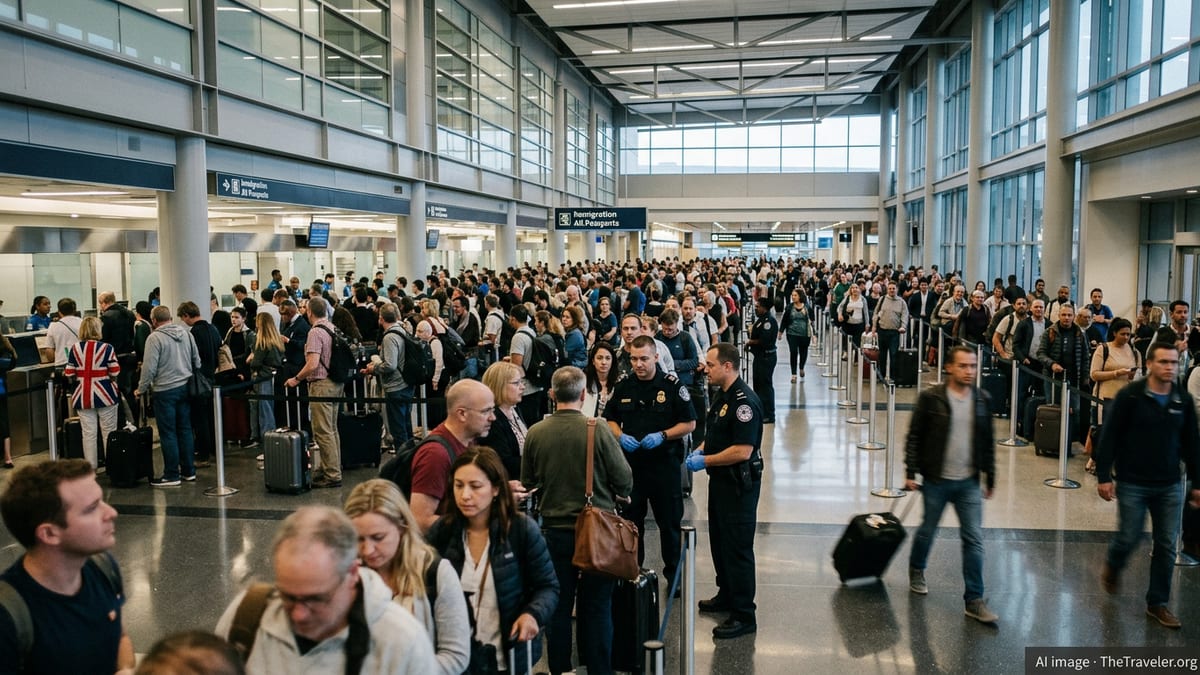
Strained US Airports Face Fresh Wave of Delays
Major US gateways are entering one of the busiest travel periods of the year just as security, staffing and infrastructure pressures intensify. From New York JFK and Newark to Chicago O’Hare, Atlanta, Los Angeles and Miami, analysts report that immigration halls and security lanes are again approaching the bottlenecks last seen during the post‑pandemic rebound, with British and European visitors among the most affected.
Recent reporting from US and international outlets highlights a pattern of rolling disruption rather than a single nationwide shutdown. Severe congestion at peak times, sporadic closures of fast‑track or automated lanes and slower clearance for non‑US nationals are combining to produce multi‑hour waits for arriving passengers on busy days. Travel specialists say the strains are being felt most acutely at transatlantic hubs handling a high volume of long‑haul wide‑body flights that tend to arrive in overlapping banks.
At the same time, airlines are warning that a volatile global security environment is feeding directly into airport operations. The United States has joined other governments in reiterating a worldwide security caution in recent weeks, and carriers continue to divert or cancel flights linked to Middle East airspace and connecting hubs. Even where US airports remain fully open, knock‑on effects from disrupted inbound rotations can quickly cascade into delayed departures, tighter aircraft turnarounds and missed connections for travellers heading onward across North America.
Insiders say the practical result for British visitors is a higher risk of last‑minute gate changes, extended time on the tarmac while ground slots free up and growing pressure on customer service teams already dealing with packed spring break and early summer schedules. Passengers connecting from UK or European flights to domestic US services are being urged to build in extra buffer time and to avoid the tightest legal minimum connections wherever possible.
Visa Crackdown and New Fees Hit Foreign Visitors
Behind the scenes at airports, a more assertive stance on immigration and security vetting is reshaping the experience for many inbound travellers. Over the past year, Washington has rolled out a series of measures that increase both the cost and complexity of visiting the United States, from higher application fees to additional screening obligations at consulates and ports of entry.
For short‑term visitors, a new non‑immigrant "visa integrity" deposit and higher processing charges have pushed up the headline cost of certain visas, while the Electronic System for Travel Authorization used by British and other visa‑waiver nationals has also become more expensive. Immigration lawyers say these changes are part of a broader strategy to deter overstays and tighten control over who is allowed to board US‑bound aircraft, but warn that the financial shock is already deterring price‑sensitive tourists and students.
More stringent background checks and documentation requests are likewise feeding into longer lead times for visa appointments and approvals. Embassies and consulates in several regions have been forced to curtail services or temporarily close at short notice in response to security alerts, leaving thousands of would‑be visitors in limbo as interviews are cancelled and passports remain stuck in processing queues. Corporate mobility teams report particular concern for employees on work trips and conferences who risk being stranded abroad if they do not secure new visa stamps before travelling.
Even travellers who remain eligible for the visa‑waiver scheme face closer scrutiny. Proposals to expand the collection of personal data, including social media histories, and the growing use of biometric systems at border checkpoints mean that British and European passengers should now assume their digital footprint is part of the assessment when they seek permission to board a US‑bound flight.
Biometric Borders and Layered Checks Slow British Travellers
For British visitors, the US clampdown comes on top of significant changes on the European side of the journey. The rollout of biometric border technology at both UK and European Union airports, including the EU’s new Entry/Exit System, is creating additional friction for passengers on multi‑leg itineraries that combine Europe and North America.
Under the emerging regime, a typical British holidaymaker heading to the United States via a European hub may now pass through several separate permission layers: UK outbound checks, EU biometric registration at Schengen entry, airline document screening at the gate and finally US security and immigration upon arrival. Each stage is designed to bolster security but also introduces new possibilities for technical glitches, unfamiliar procedures and queues that quickly snowball when systems slow down.
Industry experts note that the technology itself is still bedding in. Facial recognition kiosks and fingerprint scanners have been installed at many airports, yet travellers regularly encounter out‑of‑service machines, inconsistent instructions and staff still adapting to the new workflows. When combined with fuller flights and aircraft operating close to capacity, even a modest slowdown at one checkpoint can result in missed connections for those with tight layovers before a transatlantic departure.
Travel organisations are advising British tourists to treat their journey as a single chain rather than a series of separate flights. That means allowing more generous connection times, avoiding last‑flight‑of‑the‑day options where possible and being realistic about what is feasible when connecting from regional UK airports through busy European hubs to the United States.
What Travellers Should Do Before Flying to the United States
Specialists stress that, despite the headlines, most trips to the United States are still proceeding without incident, but the margin for error has narrowed. The combination of tighter visa rules, elevated global security concerns and airport congestion leaves less room for spontaneous, last‑minute travel, particularly for those who do not hold powerful passports or who have complex personal histories that may prompt extra questioning at the border.
British and other international visitors are being urged to treat entry formalities as seriously as flight bookings and hotel reservations. That means applying for visas or travel authorisations well in advance, double‑checking that passport details and personal data are entered correctly and keeping digital and paper copies of key documents to hand. Travellers should also monitor airline notifications closely in the days before departure, as schedule changes and aircraft swaps are now common even on flagship transatlantic routes.
Security analysts recommend that visitors build contingency plans into their itineraries. This can include allowing a longer first night buffer in the arrival city before time‑sensitive events, having alternative routings in mind in case of missed connections and understanding the basic rights and limitations that apply during secondary screening at US ports of entry. Those with onward domestic flights may want to consider leaving extra time to reclaim and recheck baggage, as staffing shortages and rescreening procedures can slow the process.
For now, experts say the most effective response to the current turbulence is preparation rather than panic. By accepting that lines will be longer, questioning may be more detailed and schedule changes more frequent, British and global visitors can adjust their plans accordingly and reduce the risk that airport chaos or a last‑minute paperwork problem derails their long‑anticipated trip to the United States.