

More news on this day
Air travelers across the United States faced mounting frustration today as widespread delays at major hubs in Miami, Phoenix, Charlotte, and Philadelphia climbed past 650 flights, with at least six cancellations reported and knock-on effects for American Airlines, Southwest Airlines, and several other carriers.
Get the latest news straight to your inbox!
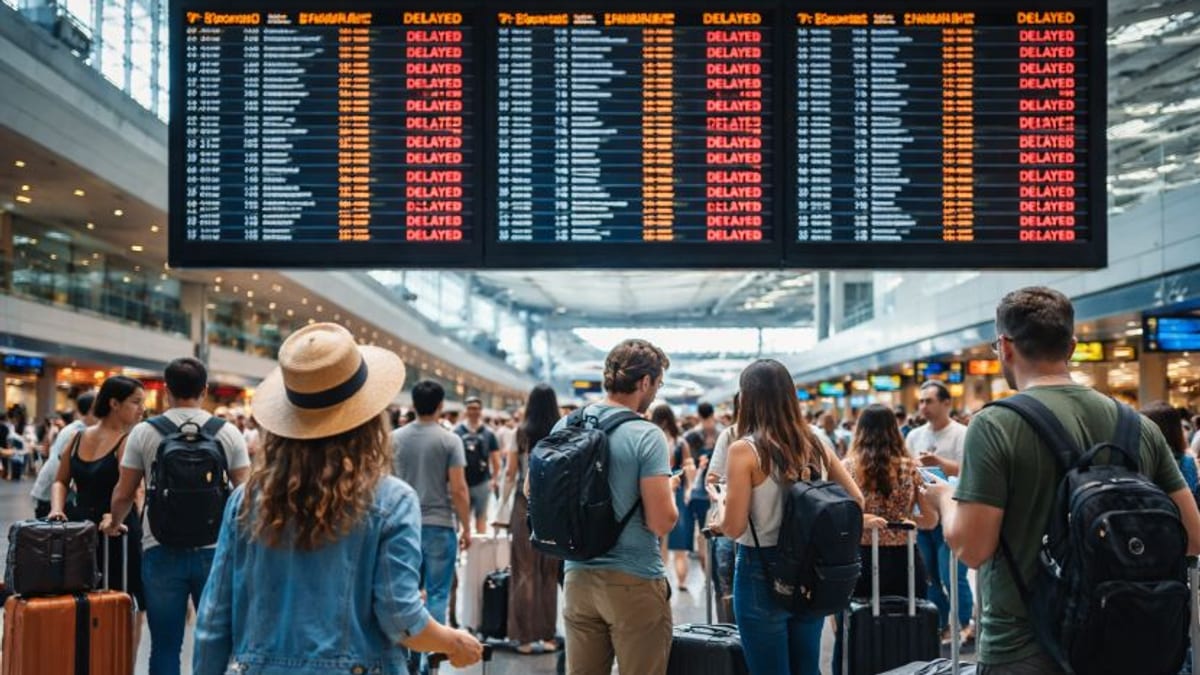
Image by Travel And Tour World
Major Hubs Buckle Under Mounting Delays
Real-time tracking data and published operational dashboards show a sharp spike in disruptions concentrated at four of the country’s busiest passenger gateways: Miami International Airport, Phoenix Sky Harbor International Airport, Charlotte Douglas International Airport, and Philadelphia International Airport. Combined, the four hubs recorded more than 650 delayed departures and arrivals, alongside at least six flight cancellations, disrupting itineraries across domestic and international networks.
At Miami and Charlotte, both key hubs for American Airlines, delay tallies reached into the triple digits as aircraft arriving late from earlier legs created a cascading backlog. Philadelphia, another important American Airlines station, reported average arrival delays approaching half an hour on some boards, while Phoenix saw rolling hold times that pushed back afternoon and evening departures.
Operational summaries indicate that while only a small fraction of scheduled flights were formally canceled, the sheer number of delays created a form of “soft chaos” throughout terminals. Passengers faced repeated gate changes, rolling departure times, and longer waits on tarmacs and jet bridges as ground crews worked to reposition aircraft and crews.
Industry trackers note that even a modest number of cancellations at major hubs can generate ripple effects across smaller cities, where aircraft and crews are tightly scheduled. With multiple hubs affected at the same time, the system-wide impact became far more visible to travelers.
American Airlines, Southwest and Others Struggle to Stay on Schedule
American Airlines, which operates large connecting complexes at Miami, Charlotte, and Philadelphia, appeared among the most heavily affected carriers as late-arriving aircraft and crew rotations fueled downstream holdups. Publicly available performance snapshots show American leading or near the top of national delay counts by mid-afternoon, with dozens of its departures from those hubs leaving behind schedule.
Southwest Airlines, a major presence in Phoenix, also experienced elevated delays, particularly on dense domestic routes linking the Southwest and East Coast. Scheduling experts note that point-to-point networks can become stressed when multiple focus cities see even moderate weather or airspace constraints, forcing rolling schedule adjustments as the day progresses.
Other large U.S. carriers, including low-cost competitors and regional affiliates, reported scattered disruptions as shared airspace, runway congestion, and gate availability narrowed the margin for on-time performance. In many cases, aircraft were ready to depart but held in queues awaiting departure slots, contributing to mounting frustration for passengers already on board.
Published industry analyses in recent months have highlighted a narrow operating cushion across many U.S. airlines, with lean spare aircraft pools and tight crew scheduling. On days like this one, when several hubs simultaneously encounter weather, traffic-management programs, or technical bottlenecks, delays can compound quickly despite relatively low cancellation figures.
Weather, Congested Airspace and Tight Schedules Converge
Preliminary explanations circulating in operational briefings and consumer-facing updates point to a familiar mix of factors: localized thunderstorms near key hubs, wider air-traffic flow restrictions in congested corridors, and lingering crew repositioning challenges from earlier in the week. Even short-lived storm cells near Miami, Charlotte, or Philadelphia can trigger temporary ground holds and reduced arrival rates, which then take hours to unwind.
In Phoenix, heat-related performance margins and busy afternoon departure banks added further strain. Aircraft may require additional time for loading, fueling, and performance checks when temperatures soar, and any slowdown at the gate can push departures into already crowded departure windows. That, in turn, can prompt air-traffic control to meter traffic more aggressively.
Analysts say that while each delay may have a specific cause, the broader pattern reflects a system operating close to capacity, particularly at large coastal and Sun Belt hubs that have seen strong demand growth. When several of those hubs are affected at once, recovery becomes more difficult, and routine afternoon delays can stretch into the evening peak.
Travel data over the past two years shows that such multi-hub events are becoming more visible to the public, largely because travelers track flights in real time on mobile apps. As a result, what might previously have been perceived as an isolated inconvenience now appears as a nationwide disruption on users’ screens.
Travelers Face Missed Connections and Scramble for Alternatives
For passengers in Miami, Phoenix, Charlotte, and Philadelphia, the operational numbers translated into long customer-service lines, rebookings, and a wave of missed connections. Social media posts and anecdotal accounts described travelers racing between concourses to make tight connections, only to find their onward flights delayed, retimed, or departing from different gates entirely.
Those connecting through hub airports were particularly vulnerable. A 30 to 60 minute delay on an inbound leg can easily erase scheduled connection buffers, especially in sprawling facilities where reaching another concourse may take significant time. When multiple flights on the same routing bank are affected, options to reroute or stand by for later departures quickly shrink.
Passengers on American Airlines and Southwest flights reported a range of outcomes: some were automatically rebooked onto later departures, while others sought alternative routings through less affected hubs, often arriving at their final destinations many hours later than planned. In a number of cases, travelers opted to secure hotel rooms and continue their journeys the following day, effectively turning a moderate delay into an overnight disruption.
Consumer advocates note that while many of the day’s delays appear tied to weather and airspace issues, which typically limit compensation options, carriers still have discretion to provide meal vouchers, hotel discounts, or fee waivers during severe operational disruptions. Travelers were encouraged in public guidance to document delays carefully and review airline policies in the days ahead.
What Disrupted Travelers Can Do Next
With delays continuing into the evening and the possibility that aircraft and crew imbalances could spill into subsequent days, travel experts recommend that affected passengers act early to protect their itineraries. Public guidance widely shared by aviation analysts suggests monitoring flight-status tools closely, proactively requesting alternative routings, and considering earlier departures if seats are available.
For those with upcoming trips through Miami, Phoenix, Charlotte, or Philadelphia, checking flight status before leaving for the airport remains essential. If delay patterns persist, opting for longer connection windows or routing through less congested hubs may reduce the risk of missed flights, even if it adds time to the overall journey.
Industry observers also point out that travel insurance and credit card trip-interruption benefits can provide a financial cushion when disruptions cascade. Policies vary widely, but many products offer coverage for additional hotel nights, meals, and ground transportation once delays or missed connections reach specified thresholds.
While today’s wave of delays stops short of the mass cancellation events seen during previous holiday meltdowns, the disruption across four major U.S. hubs underscores how quickly the national air-travel network can seize up when weather, airspace constraints, and tight operational margins collide. With demand for spring and summer travel remaining strong, analysts expect more days like this unless additional resilience is built into airline schedules and infrastructure.