

More news on this day
As Americans look ahead to the busy 2026 travel season, experts are warning that the biggest threats to safe, predictable air travel may no longer be limited to weather or mechanical issues, but to a convergence of cyber risks, aging infrastructure and recurring disruptions across the nation’s aviation system.
Get the latest news straight to your inbox!
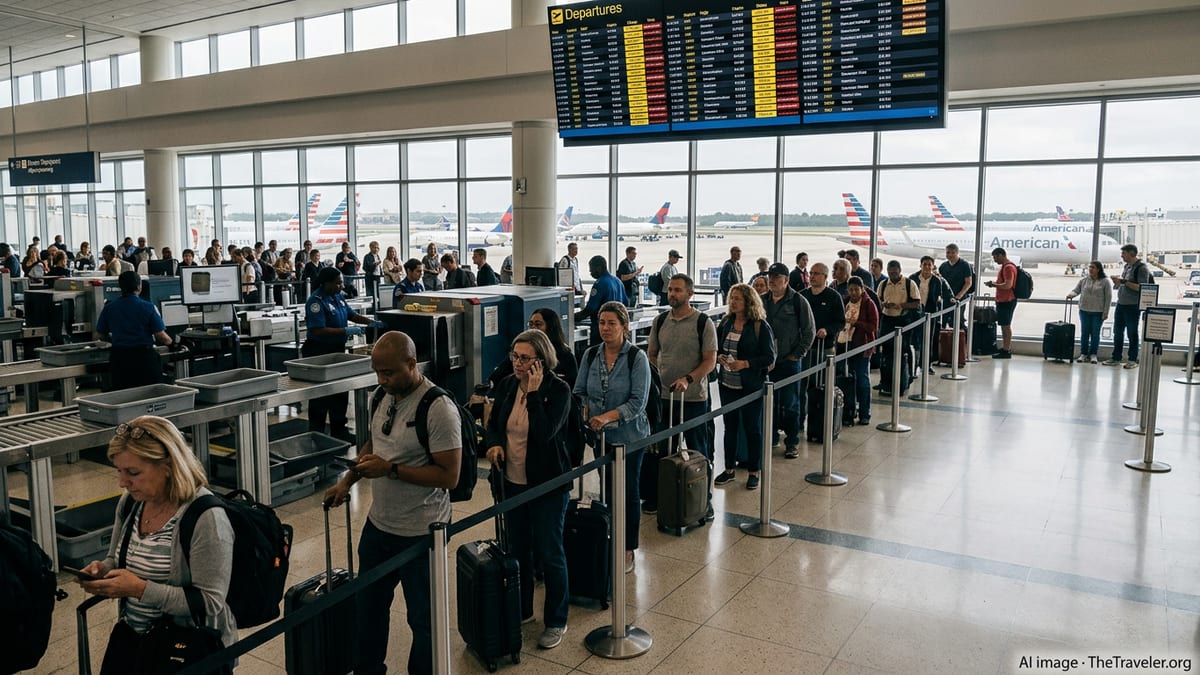
System Strain and a New Era of Mass Disruptions
Recent years have revealed how fragile the U.S. air travel ecosystem can be when critical systems fail. Technology outages at major carriers in 2024 and 2025 triggered cascading delays and cancellations, at times grounding fleets for hours and stranding passengers across hubs from New York to Los Angeles. Publicly available timelines of these events show that a single failed hardware component or software update can ripple through the national airspace system for days.
Industry analyses of disruption trends in 2025 describe a pattern of frequent ground stops, radar glitches and airline IT failures, often compounding ordinary weather-related congestion. Some assessments point to years of underinvestment in air traffic control technology and an ongoing shortage of fully trained controllers as factors that heighten the risk of large-scale operational breakdowns, even when underlying safety margins for individual flights remain strong.
Reports indicate that aviation authorities are working to modernize dozens of legacy systems and accelerate training pipelines for new controllers, with the goal of stabilizing operations by 2026 and beyond. Until those upgrades are fully in place, however, travel planners are being told to expect that localized outages or staffing shortfalls can still escalate quickly into nationwide disruptions.
Cybersecurity Moves to the Center of Aviation Risk
A growing body of research and policy work in 2025 and early 2026 highlights cyber threats as one of the most serious emerging risks to aviation safety and reliability. Studies on aviation and advanced air mobility security warn that systems used for navigation, communications and collision avoidance are increasingly exposed to interference, including GPS jamming or spoofing, data manipulation and attacks on cloud-based services that support airline operations.
Think tank assessments of aviation cybersecurity challenges published in 2025 note documented cases in which commercial flights experienced suspected GPS spoofing in international airspace, forcing crews to rely on backup procedures. While these incidents did not lead to accidents, experts argue they demonstrate how quickly confidence in key technologies can erode if adversaries target them more aggressively.
In response, federal budget requests and security strategies have called for expanded funding to harden transportation systems against cyber attacks, including additional resources for the Transportation Security Administration to set threat-informed policies and enforce cyber regulations across air carriers and airports. Analysts say that as airlines digitize more of their operations, from maintenance records to crew scheduling, the boundary between an “IT problem” and a safety concern grows thinner.
IT Outages, Safety Messaging and Passenger Confidence
High-profile breakdowns of information systems are no longer rare anomalies. In the past several years, major U.S. airlines have each faced large-scale IT outages that led to ground stops, while the federal safety notice system that alerts pilots to hazards has itself suffered disruptive failures. Coverage of these events has emphasized that even when aircraft remain mechanically sound, the loss of timely data or internal coordination can halt departures nationwide.
Analysts point to the 2023 outage of the federal notice system, which briefly grounded all domestic departures, and subsequent vulnerabilities that have continued to draw scrutiny. Policy papers published since then argue that modern aviation depends on complex, tightly coupled networks, where a single corrupted database or misconfigured software change can have safety implications if it disrupts the flow of critical information to flight crews.
Experts say these episodes do not necessarily indicate that flying has become less safe in absolute terms. Accident rates for commercial aviation in the United States remain historically low. The concern, rather, is that passengers face higher odds of severe disruption, and that the boundary conditions that protect safety depend increasingly on digital resilience as much as on physical aircraft reliability.
Physical Safety: From Aircraft Design to Crowded Skies
Alongside cyber and IT worries, several recent incidents have refocused attention on traditional safety questions about aircraft design, maintenance and airspace complexity. Investigations into structural failures and in-flight component separations on certain jet models in 2024 led to temporary groundings and renewed scrutiny of manufacturing and oversight processes. Public reports from safety agencies and airlines describe inspections that uncovered loose fasteners and other anomalies across fleets.
At the same time, dense airspace near major metropolitan areas has seen serious near misses and midair collisions involving smaller aircraft, as documented in 2025 events around Washington, D.C. Analysts say these cases underline how busy terminal areas can become, with commercial, business and general aviation traffic sharing constrained corridors. Although commercial airliners operate under robust procedures, any breakdown in separation standards in such environments can carry systemic implications.
Safety advocates argue that these developments justify continued investment in surveillance, automation and airspace redesign, particularly as new entrants such as drones and future electric air taxis seek access to already crowded skies. They warn that without careful integration, increased complexity could offset gains from improved technology.
Security Screening, Passenger Behavior and On-the-Ground Risks
Beyond the cockpit and control center, security on the ground remains a central concern in 2026. Congressional budget documents and airport industry briefings describe efforts to deploy more advanced checkpoint technologies, including computed tomography scanners for carry-on bags, which are intended to better detect evolving threats while keeping passenger throughput manageable.
Spending plans moving through Congress for the 2026 fiscal year include additional support for law enforcement at airports and funding for security personnel at exit lanes, reflecting a recognition that vulnerabilities exist not only at checkpoints but throughout terminal spaces. Analysts note that aviation security strategies have broadened to consider insider threats, cyber intrusions on airport systems and the potential misuse of consumer drones near runways.
Behavior in the cabin is another emerging focus. Airlines and regulators have tracked a rise in disruptive passenger incidents in recent years, ranging from noncompliance with crew instructions to aggressive confrontations. While most do not escalate to physical danger, experts caution that diverted attention and inflight conflicts can add a layer of operational risk, particularly on already stressful days marked by delays or cancellations.