

More news on this day
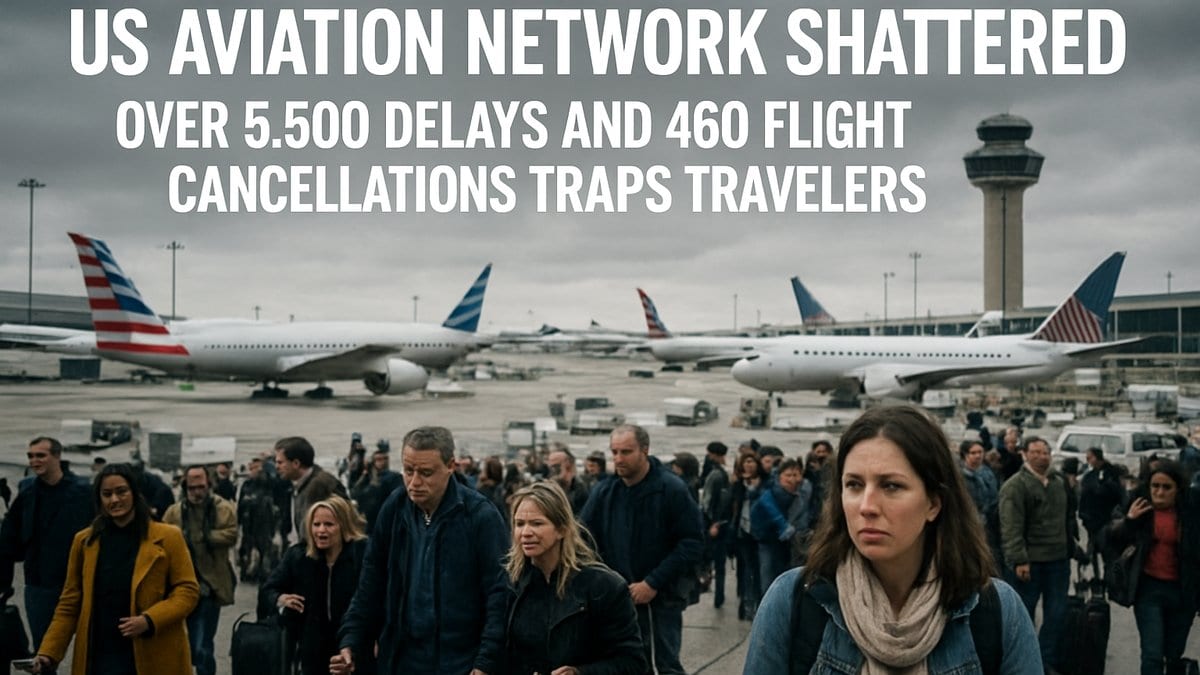
America’s aviation network endured another punishing day as tracking data showed more than 5,500 flight delays and at least 460 cancellations across the United States, stranding travelers at major hubs and rippling through airline schedules nationwide.
Get the latest news straight to your inbox!
Nationwide Disruptions Hit Major Hubs and Regional Gateways
The latest figures, drawn from publicly available flight-tracking tallies for the first days of April, point to a system under acute strain as spring travel intensifies. Delays and cancellations were concentrated at large connecting hubs such as Chicago, Dallas, New York and Atlanta, but smaller regional airports feeding those centers also reported knock-on schedule problems.
Coverage from multiple travel and aviation outlets indicates that the disruption has built over several days, with delay totals climbing into the thousands and cancellation counts rising into the hundreds. In many cases, travelers reported arriving to find departure boards heavily populated with red “delayed” notifications, followed by rolling schedule changes that pushed flights back by several hours.
At Chicago O’Hare, one of the country’s most important connecting airports, a wave of cancellations by major network carriers combined with late-arriving aircraft to disrupt departures to both domestic and long-haul international destinations. Reports describe long lines for customer-service desks, rebooking centers working through backlogs and gate areas filled with passengers waiting for updated departure times.
Further south, large Texas hubs and Florida’s tourism gateways experienced growing stacks of delayed departures as storms, congested airspace and earlier schedule slippage combined to slow the flow of aircraft in and out. Even airports that escaped the worst of the weather found themselves coping with aircraft and crews arriving late from troubled parts of the network.
Weather, Staffing Gaps and Network Complexity Drive the Chaos
Publicly available information shows that the causes of the disruption stretch far beyond a single storm or a single airline. A mix of spring weather systems, ongoing staffing constraints in certain parts of the aviation ecosystem and densely scheduled airline networks all contributed to the latest wave of delays and cancellations.
Recent analyses of 2026 performance trends describe airlines operating with high aircraft utilization and tight turn times as they aim to capture robust demand. That strategy leaves limited margin when early morning flights run late because of crew or maintenance issues, or when thunderstorms temporarily shut down departure or arrival corridors at major hubs. Once the first flights of the day slip, aircraft and pilots can fall out of position, and later services are left waiting for equipment and crews to arrive.
Staffing remains another pressure point. Industry summaries and prior government data have highlighted shortfalls among regional airline pilots, ground handlers and, in some cases, air traffic control facilities. When storms or congestion force reroutes and holding patterns, already-stretched workforces must handle additional complexity, which can lengthen delays or require flight cancellations when duty-time limits are reached.
Layered on top of these operational challenges is the sheer scale of demand. Travel coverage notes that many US airports are handling passenger volumes that meet or exceed pre-2020 levels. High loads mean fewer empty seats available for same-day reaccommodation when a flight is canceled, turning what might once have been a short delay into an overnight stay or a multi-day rebooking challenge for some passengers.
Travelers Face Missed Connections, Overnight Stays and Route Changes
For travelers caught inside the latest disruption, the statistics translate into very real headaches. With more than 5,500 flights running late, even relatively short delays of 45 to 90 minutes can cascade into missed connections at hub airports, particularly for those heading to international flights or last departures of the day to smaller cities.
Reports from affected hubs describe passengers sprinting between concourses as tight connections shrank further, only to find boarding doors already closed or onward flights themselves delayed. Those who missed connections often found that the next available departure was already close to full, forcing some to accept alternative routings through different hubs or to wait until the following day.
Hotel costs and disrupted plans are an additional burden. While many travelers were able to secure rebooking on later flights, limited same-day options in busy markets meant that some faced unplanned overnight stays near major airports. With multiple hubs simultaneously wrestling with operational challenges, nearby hotels reported surging demand from stranded passengers searching for last-minute rooms.
The impact stretched beyond leisure trips. Business travelers saw meetings postponed or shifted online at the last minute, while those flying for family events or time-sensitive commitments confronted difficult decisions about rerouting, canceling or attempting to drive when distances allowed. The widespread nature of the disruption left few regions entirely untouched.
What the Numbers Reveal About a Strained Aviation System
The scale of the latest disruption is striking even against a backdrop of elevated volatility in recent years. Flight-tracking platforms recorded more than 5,500 delays and at least 460 cancellations in a single broad disruption window, figures that compare with some of the more challenging non-holiday travel days in recent memory outside of major winter storms.
Government air travel consumer reports, although published with a lag, have documented a pattern in which late-arriving aircraft, air carrier delays and national aviation system constraints play an increasingly prominent role in schedule reliability. Analysts point to this mix as evidence that the US aviation network, while robust in overall capacity, is highly sensitive to relatively small shocks that arrive in quick succession.
Academic research into delay propagation similarly suggests that a handful of disrupted flights at key nodes can trigger outsized effects across the broader network. As aircraft rotate through multiple legs per day, a delay on an early-morning departure in one region can, by evening, translate into missed connections and cancellations hundreds or thousands of miles away.
The latest figures also highlight an uncomfortable reality for airlines and passengers alike. While new technology, updated scheduling practices and infrastructure investments have improved on-time performance in some respects, the combination of tight staffing, high demand and recurring weather volatility keeps the system close to its limits during peak periods. When those limits are breached, the resulting disruption can spread quickly and prove difficult to unwind before the next travel wave arrives.
Growing Focus on Passenger Rights and Planning for Future Trips
As delays and cancellations mount, attention is returning to what travelers can reasonably expect from airlines in terms of care and compensation. Public guidance from transportation regulators notes that when an airline cancels a flight and a customer chooses not to travel, passengers are generally entitled to a refund for the unused portion of their ticket, regardless of the cause of the cancellation.
Aviation advocates emphasize that policies on hotel vouchers, meal credits and rebooking assistance vary by carrier and by the specific reason for a disruption. Weather-related cancellations, for example, are often treated differently from those caused by maintenance or crew issues. Passengers are being urged by consumer groups and travel advisors to review airline contract-of-carriage documents and to keep records of expenses incurred during major disruptions.
The latest wave of delays is also prompting renewed advice about how to plan for trips during high-risk periods. Travel experts writing in consumer outlets commonly recommend booking the first flight of the day when possible, building in longer connection times at major hubs and being open to alternative routings through less congested airports if those options appear in booking tools.
With spring and summer peak travel seasons approaching, the current disruption serves as a reminder that even routine travel days can see significant operational stress across the US aviation network. For now, publicly available data indicates that airlines are working to restore schedules, but the figures from this latest episode underscore how quickly thousands of passengers can be affected when conditions align against the system.