

More news on this day
America’s already stressed aviation system has lurched into a new level of disruption in early 2026, as a tangle of record passenger volumes, severe winter storms, a partial federal government shutdown and fresh technology outages fuels widespread delays, cancellations and mounting anxiety among travelers.
Get the latest news straight to your inbox!
Record Demand Collides With a Fragile Air Travel System
Publicly available data show that U.S. air travel entered 2026 at record or near-record volumes after a surge in 2025, with Transportation Security Administration figures indicating that the system screened more passengers last year than ever before. Forecasts for this spring point to more than 170 million passengers flying on U.S. carriers, underscoring how demand has outpaced the pace of infrastructure and staffing improvements across major hubs.
Industry and government statistics indicate that much of the system’s capacity is being absorbed by routine weather and congestion. Federal Aviation Administration summaries for recent years suggest that the majority of delays are still triggered by weather, with volume and runway capacity close behind. That leaves little slack when storms, equipment failures or staffing gaps occur, turning localized problems into nationwide ripple effects felt over several days.
Travel analysts note that airlines entered 2026 still working through operational scars from earlier disruptions. Some large carriers reported that winter storms in late January were among the most severe weather events they had ever managed, leading to thousands of delayed flights and lingering crew-placement problems. By late February, published operational reports showed that delays at some hubs remained elevated even after cancellations eased, as aircraft and staff continued to be repositioned.
For passengers, the result has been more time in queues and on tarmacs just as leisure and business travel are rebounding. Consumer advocates report a rise in complaints related to missed connections, lost work time and extra costs for hotels and meals, adding to a sense that flying within the United States has become more unpredictable and emotionally draining.
Shutdown Fallout and Security Lines Stretching for Hours
The federal government shutdown that began earlier this year has sharply exposed vulnerabilities at airport security checkpoints. According to published coverage, hundreds of thousands of homeland security employees, including TSA staff and air traffic controllers, have been working or staying on duty through periods without pay. As the impasse dragged on, reports indicated that an increasing number of TSA officers called out or sought other work, leaving some checkpoints short staffed at the very moment spring break crowds began to build.
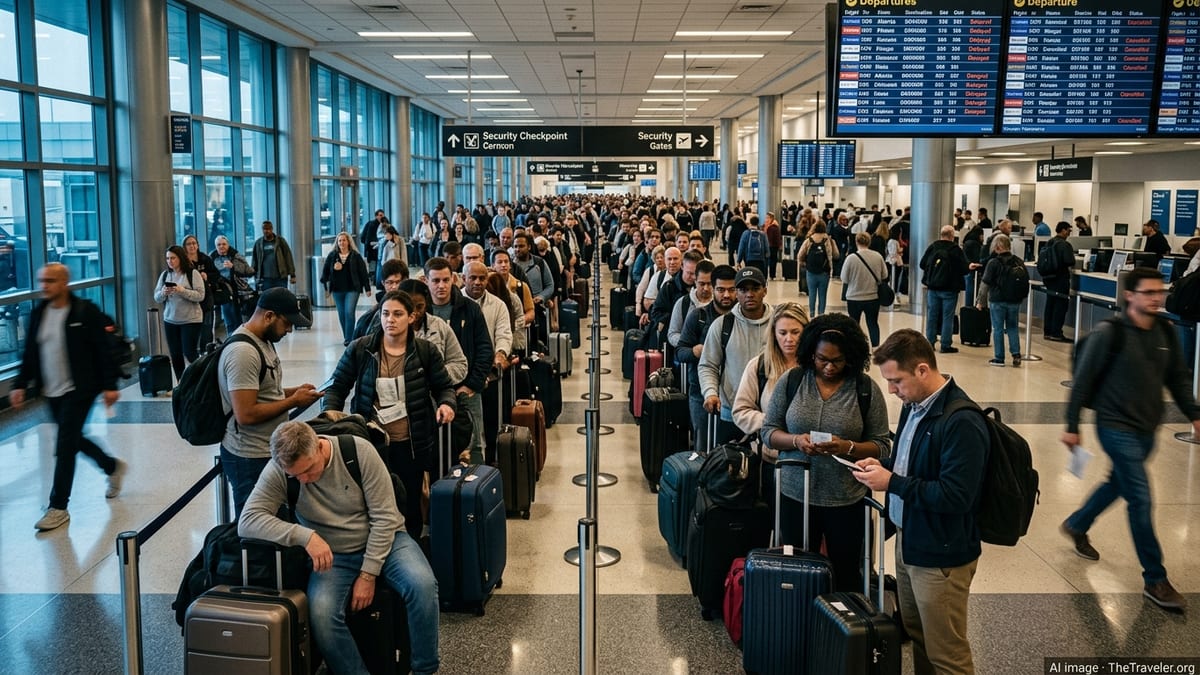
Travel reports from major hubs describe scenes of long, snaking lines and frustrated passengers, with security waits reaching two to three hours at busy times in cities such as Atlanta, New York and Washington. Social media posts and local news footage have shown travelers rushing through terminals after extended waits, while others simply abandoned trips when it became clear they would miss their flights. Airport authorities have advised passengers to arrive significantly earlier than usual, adding further strain to already long travel days.
In response to the growing bottlenecks, publicly reported plans from the administration call for redeploying federal immigration officers to airport security areas to assist with tasks such as monitoring exit lanes and checking identification. The stated goal is to free up trained TSA screeners to focus on baggage and passenger screening. However, coverage from multiple outlets notes that the unusual presence of immigration enforcement officers in crowded terminals has amplified unease among some travelers, especially those from immigrant communities, and raised questions about whether the move can meaningfully reduce delays.
Meanwhile, technology-driven initiatives that were billed as ways to ease checkpoint congestion are rolling out unevenly. TSA’s expansion of touchless identity verification and other biometric tools to dozens of U.S. airports is designed to speed low-risk travelers through security, but adoption remains patchy and many passengers say they are unsure how the new systems work. The gap between high-tech promises and on-the-ground reality has become another source of confusion for people already dealing with longer lines and unclear wait times.
Storms, Ground Stops and High-Profile Incidents Shake Confidence
On top of structural strains, a string of headline-grabbing events in 2026 has further eroded public confidence in the reliability of air travel. A powerful January bomb cyclone and a major blizzard in February forced mass cancellations and diversions across large swaths of the country, especially in the Northeast and Mid-Atlantic. Airlines struggled to restart operations once the skies cleared, as displaced passengers competed for limited seats and crews reached regulatory duty limits after marathon shifts.
More recently, a localized chemical odor over the Washington region prompted an hour-long ground stop at four major airports serving the U.S. capital. Federal aviation notices show that departures and arrivals at Washington National, Dulles, Baltimore-Washington and Richmond were halted while officials investigated the source of the smell, stranding thousands of passengers on planes and in terminals. Although the disruption was relatively brief, it highlighted how a single, unexpected incident can upend carefully choreographed schedules.
Technology glitches have added another layer of uncertainty. Earlier this month, the FAA briefly grounded all JetBlue flights nationwide at the carrier’s request while it addressed a system outage, an episode that echoed previous years’ nationwide ground stops linked to critical software problems. Travelers on other airlines have also reported scattered delays tied to airline technology upgrades, network outages and reservation-system issues, which can cascade into long days of rebooking and missed connections even when planes and weather are otherwise cooperative.
Safety-related events have kept nerves on edge as well. A recent collision between an Air Canada jet and an airport fire truck at New York’s LaGuardia Airport, widely covered by national and local media, underscored the pressures on already stretched air traffic control and ground operations. Investigators and aviation analysts have pointed to rising traffic levels and chronic staffing challenges as key factors increasing the complexity of decision-making in crowded airspace and on congested runways.
Airlines, Airports and Regulators Struggle to Reassure Travelers
Faced with growing public frustration, airlines, airports and regulators are promoting a range of measures aimed at stabilizing operations and calming passenger anxiety. Major U.S. carriers have highlighted recruitment drives for pilots, flight attendants and ground staff, as well as investments in new aircraft and upgraded crew-scheduling tools designed to improve resilience when storms or outages hit. Some carriers have updated their customer-service commitments, stressing rebooking flexibility and digital tools that provide more real-time flight information.
Airport operators are simultaneously pushing for infrastructure upgrades and more predictable funding. Trade groups argue that terminals and runways built for a smaller travel market are now straining under record volumes, leading to chronic crowding at security, boarding gates and baggage claim. Projects in cities such as New York, Los Angeles, Chicago and Atlanta aim to expand concourses, add security lanes and modernize baggage systems, but many of these efforts will take years to complete and require complex phasing to keep existing facilities operating.
Regulators, for their part, continue to emphasize that the U.S. aviation system remains one of the safest in the world, even as they acknowledge the growing impact of non-safety disruptions such as weather, congestion and security bottlenecks. Recent FAA communications have highlighted initiatives to improve air traffic control technology, expand controller hiring and adjust traffic management programs during peak weather events. Transportation agencies have also urged travelers to closely monitor flight status, enroll in pre-screening programs where eligible and build extra time into itineraries.
Despite these efforts, the lived experience for many travelers this year has been one of heightened stress. Mental health professionals interviewed in national media coverage have described a rise in clients who report anxiety not only about flying itself, but about the possibility of being stranded in unfamiliar cities, missing critical events or facing confrontations in crowded terminals. With the busy summer season still ahead, there is growing recognition that stabilizing U.S. air travel in 2026 will require more than incremental fixes, and that rebuilding passenger trust may take far longer than restarting a disrupted schedule.