

More news on this day
Travelers across the United States are confronting a new level of uncertainty as powerful storms, a partial government shutdown and a patchwork of airport and runway closures combine to upend flight schedules and raise the risk that upcoming trips could be delayed or canceled with little warning.
Get the latest news straight to your inbox!
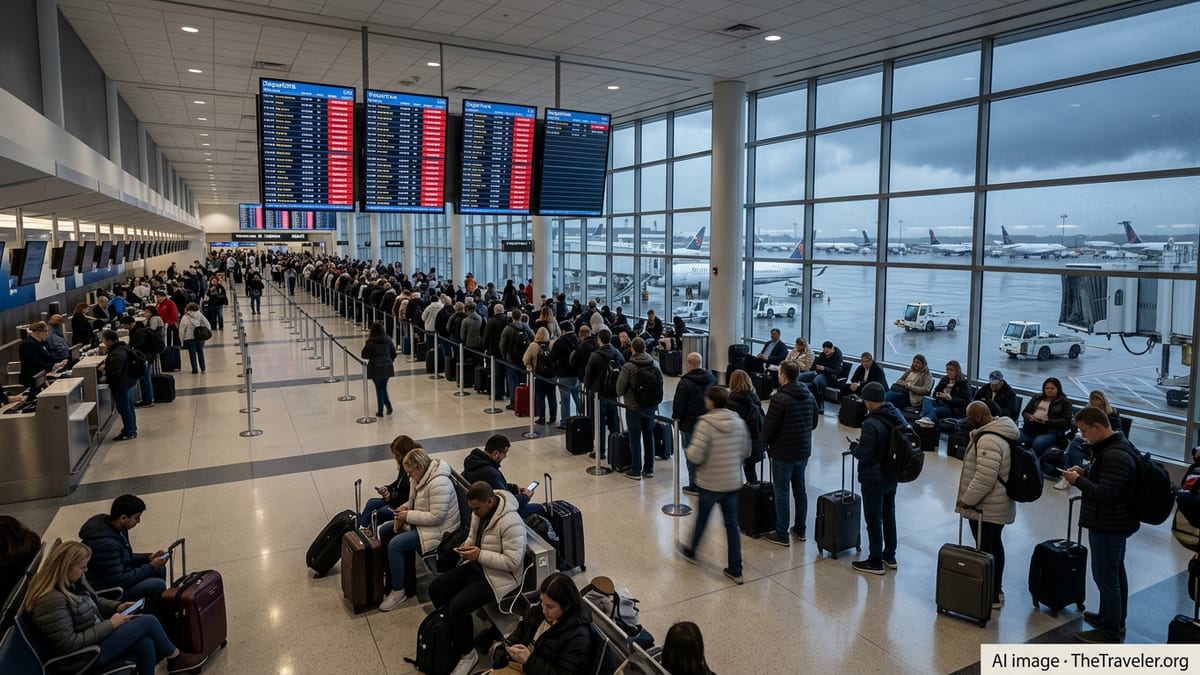
Storm Systems Trigger Rolling Ground Stops and Mass Cancellations
Severe late-winter weather is currently the most visible driver of air travel disruption. A large storm system that swept the Midwest and moved into the eastern United States between March 13 and March 17, 2026 brought heavy snow, ice and high winds to key aviation hubs, forcing airlines and air traffic managers to scale back operations. Publicly available tracking data on Tuesday, March 17 showed hundreds of cancellations and more than a thousand delays as carriers struggled to recover from the previous day’s turbulence.
Reports from major outlets describe widespread interruptions at airports in New York, Chicago and Atlanta, where thunderstorms, low visibility and wind shear have repeatedly triggered ground stops in recent days. Earlier in March, industry summaries noted single-day totals running into hundreds of canceled flights and several thousand delays nationwide as fast-moving storm cells crossed busy air corridors.
Industry analysts point out that this pattern of “rolling chaos” is different from a single, localized weather event. As storm fronts march from region to region, one day’s backups in the Midwest are followed by the next day’s gridlock along the East Coast, keeping planes and crews out of position and compounding disruption for days at a time.
Partial Government Shutdown Strains Security and Air Traffic Staffing
Layered on top of the bad weather is an ongoing partial shutdown of the federal government that began on February 14, 2026. Publicly available coverage indicates that the funding lapse is putting pressure on airport security checkpoints and the broader aviation workforce, including some air traffic control functions that are critical to keeping flights moving safely.
Reports from major news organizations describe longer security lines and sporadic staffing shortages at key hubs just as spring break and March basketball tournaments drive passenger numbers higher. Aviation commentators warn that even small staffing gaps at screening checkpoints or control centers can ripple across the network, slowing boarding, delaying pushbacks and forcing airlines to cancel flights when legal working-hour limits for crews are exceeded.
According to recent analyses of federal data, the Federal Aviation Administration has already been operating with a thinner margin of air traffic controllers than experts recommend. The shutdown has made it harder to train, certify and deploy new staff, leaving the system more vulnerable to sudden shocks such as severe weather or unexpected facility outages.
Shocking Facility Disruptions Highlight System Fragility
The fragility of the system was underscored on Friday, March 13, when four major airports serving Washington, D.C., Baltimore and Richmond halted flights for more than an hour because of a strong chemical smell at a key regional air traffic facility. Public reports indicate that the odor affected operations at the Potomac TRACON center in Virginia, which manages approach and departure traffic for Ronald Reagan Washington National, Washington Dulles, Baltimore-Washington International and Richmond International.
That one incident triggered a rapid spike in delays at some of the country’s most heavily used airports, with some travelers facing wait times of around two hours as controllers worked to restore normal operations. The event followed other recent ground stops tied to radar or communication issues at busy hubs, reinforcing concerns that a disruption at a single control center can quickly cascade across a wide geographic area.
Travel observers note that such facility-related shutdowns often arrive with little advance warning to the public. While airlines may receive operational alerts minutes or hours in advance, many passengers learn of a ground stop only at the departure gate, heightening perceptions of chaos and making it harder to rebook or reroute in time.
Planned Airport and Runway Closures Add to Capacity Squeeze
Alongside short-notice emergencies, a wave of planned closures for runway repairs and terminal rebuilds is gradually tightening capacity at several U.S. airports. Publicly available project documents and local coverage show that airports from California to Montana are taking key infrastructure offline for weeks at a time in 2026 to address long-delayed maintenance and modernization.
One example is Glacier Park International Airport in Montana, which is preparing to shut its main runway for four-day stretches each week in July 2026 to complete major repairs. Local business leaders have already raised concerns that the partial closure will sharply limit flights into a region heavily dependent on tourism. Similar work at other regional airports, along with terminal renovations at larger hubs like Los Angeles International Airport, is forcing airlines to compress schedules onto fewer gates and runways.
Airport planning documents and industry studies emphasize that these projects are necessary to address aging infrastructure, comply with updated safety standards and accommodate long-term growth in passenger numbers. In the short term, however, they reduce the margin for handling disruptions. When storms or staffing problems hit a network already operating close to capacity, carriers have less flexibility to reroute aircraft, which can translate to more outright cancellations.
Travelers Face a New Era of Unpredictability
Taken together, the storms, government funding standoff, facility incidents and planned construction closures are creating one of the most volatile operating environments U.S. airlines have faced in years. Publicly available flight statistics from recent weeks point to frequent spikes in cancellations and delays, often concentrated around a handful of overstressed hubs but quickly felt nationwide through missed connections and aircraft shortages.
Travel experts caution that the current turbulence is unlikely to subside immediately. The federal shutdown has no clear end date, additional late-season storms remain possible, and the most disruptive phase of some runway and terminal projects is yet to begin. As a result, even trips booked weeks in advance may be vulnerable to last-minute schedule changes.
Consumer advocates suggest that travelers build additional buffers into itineraries involving connections, important events or cruise departures, and that they monitor airline apps and flight-tracking tools closely in the 24 hours before departure. While technology and infrastructure investments are intended to make the system more resilient over time, the coming months are shaping up as a test of how much stress the U.S. air travel network can absorb before cancellations become the rule rather than the exception.