

More news on this day
Surging jet fuel prices driven by the widening Middle East conflict are starting to cascade through the global travel economy, with major US airlines facing sharply higher costs and leading hotel groups warning that room rates in key markets are likely to keep rising.
Get the latest news straight to your inbox!
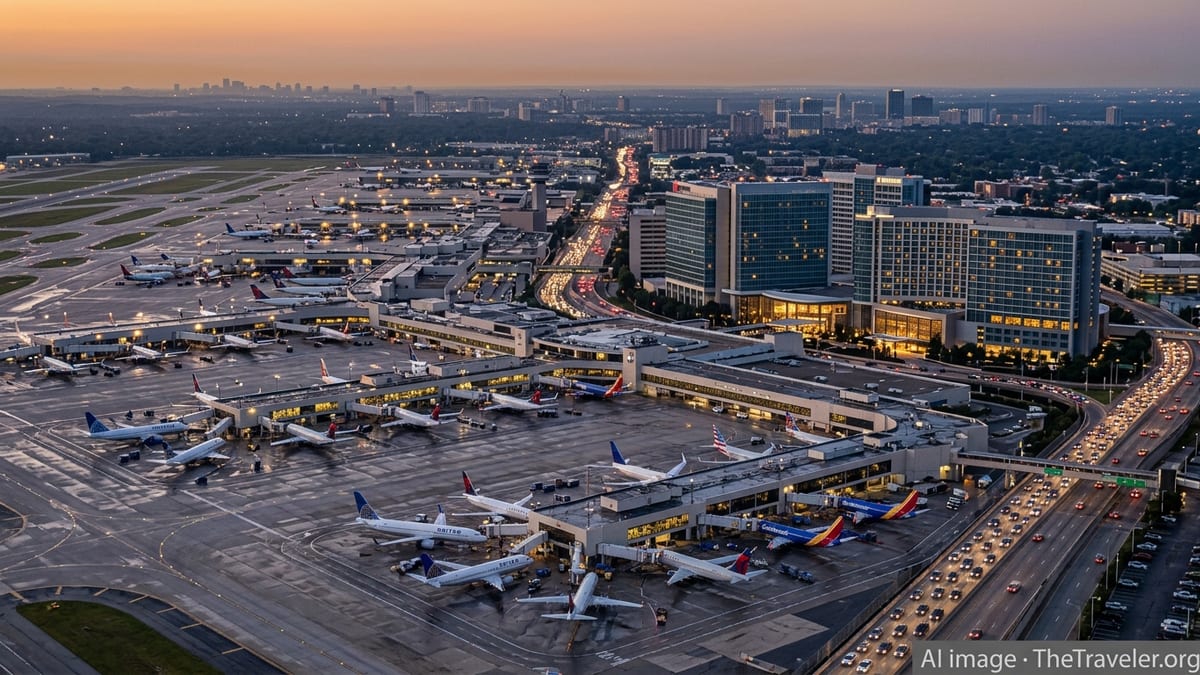
Jet Fuel Costs Surge as War Disrupts Energy Markets
Published coverage of the 2026 Iran war and the closure of the Strait of Hormuz indicates that global oil supplies have been severely disrupted in March, sending benchmark crude prices sharply higher and pushing jet fuel toward levels not seen in years. The International Air Transport Association has previously estimated that fuel typically represents around a quarter of airline operating costs, leaving carriers highly exposed when energy markets spike.
Recent reporting from US business and aviation outlets shows jet fuel prices jumping rapidly in mid March, with some accounts pointing to single day increases of more than a dollar per gallon as traders react to uncertainty around Gulf exports. Analysts note that even short lived spikes can add hundreds of millions of dollars in quarterly expenses for large network airlines because of the sheer scale of their fuel consumption.
Commentary from aviation economists suggests that while some airlines employ fuel hedging strategies, many US carriers reduced or abandoned large scale hedging during and after the pandemic period. That shift leaves a greater share of their fuel needs exposed to day to day market prices, amplifying the financial shock when geopolitical tensions hit key energy supply routes.
Industry forecasts compiled over recent months had pointed to a modest easing of fuel costs into 2026, but the sudden conflict related disruption has upended those assumptions. Market watchers now expect airlines to respond quickly through higher fares, capacity adjustments, and cost controls in other parts of their businesses.
United, Delta, American and Southwest Confront a New Fuel Crunch
United Airlines, Delta Air Lines, American Airlines and Southwest Airlines are at the center of the latest fuel driven squeeze on US aviation. Publicly available investor presentations and recent news coverage indicate that all four had been signaling higher non fuel costs and tight labor markets heading into 2026, even before the latest jump in energy prices.
Reports on recent investor calls describe executives at United, Delta and American highlighting record or near record booking trends, which are helping to offset rising fuel bills in the short term. At the same time, analysts tracking the sector note that sustained fuel prices above earlier planning assumptions could erode profit margins unless carriers accelerate fare increases or trim less profitable routes.
Southwest, long known for aggressive fuel hedging in past decades, has been recalibrating its approach, according to regulatory filings and financial commentary. Documents filed with US securities regulators show the airline outlining expected fuel cost ranges and warning that volatility or supply disruptions in energy markets remain a significant risk factor for its cost base and financial performance.
Across the big four US airlines, fuel and labor together now account for a majority of operating expenses. With wage agreements largely locked in for the near term, fuel has become the most flexible and immediate pressure point. As a result, fare structures, ancillary fees and capacity plans for the peak summer 2026 travel season are all being reassessed as carriers attempt to pass a portion of the added costs on to travelers.
Rising Air Costs Feed Through to Hotel Room Rates
The fuel shock is not confined to the skies. Global hotel groups with large US footprints report that higher airfares, compressed airline schedules and broader inflation in travel related goods and services are filtering into accommodation pricing strategies. Industry data providers tracking average daily rates show that hotel prices in major US business and leisure destinations have already been trending higher through late 2025 and early 2026.
According to recent hospitality sector analysis, hotels in gateway cities such as New York, Los Angeles, Miami and Chicago are seeing particularly firm pricing as both corporate and leisure travelers continue to book despite costlier flights. Strong demand, limited new room supply in some markets and higher operating expenses for hotels themselves, including energy, food and labor, are combining to keep rates elevated even as global economic growth shows signs of slowing.
Travel trade publications note that airlines are increasingly coordinating with large hotel chains on package pricing and distribution, with both sides aware that airfare spikes can alter destination choices, trip length and travelers willingness to pay for higher tier accommodation. When air tickets become materially more expensive, many travelers opt to shorten stays rather than cancel entirely, which can concentrate demand into fewer nights and push nightly room rates higher.
Analysts add that rising airline costs may also contribute to changes in travel patterns that benefit certain hotel markets. For example, if international fares rise faster than domestic prices, some US travelers may pivot from overseas vacations toward domestic city breaks or drive to regional destinations, shifting room demand but not necessarily easing pressure on overall hotel pricing.
Marriott, Hilton, Hyatt and Accor Flag Higher Operating Costs
Major global hotel operators including Marriott International, Hilton, Hyatt and Accor have been signaling to investors that elevated cost pressures are likely to persist into 2026. Recent earnings presentations and public commentary reviewed by hospitality analysts highlight rising wage bills, higher utility costs and more expensive food and beverage inputs across many of their portfolios.
Company disclosures indicate that these brands are leaning on revenue management tools and dynamic pricing to protect margins. With occupancy in many key markets back near or above pre pandemic levels, hotels have greater ability to raise rates without immediately dampening demand. Analysts following the sector report that, in practice, this has translated into new seasonal pricing bands and more frequent adjustments to nightly rates based on real time booking trends.
Higher airline ticket prices and fuel surcharges are adding another layer to this picture. Publicly available commentary from hotel and travel research firms suggests that when overall trip costs rise, travelers often shift down a category or choose limited service brands while continuing to travel, allowing large groups with portfolios across price points to capture demand even as they raise average rates.
For Marriott, Hilton, Hyatt and Accor, this environment presents both a challenge and an opportunity. On one hand, they face higher costs for everything from laundry services to airport shuttle contracts, many of which are themselves indexed to fuel or labor. On the other, strong pricing power in high demand destinations and the ability to steer guests across different brands and loyalty tiers give them tools to manage profitability despite the airline fuel shock.
What Travelers Can Expect in the Months Ahead
Travel industry researchers say the immediate outlook for both airfares and hotel rates is closely tied to the trajectory of the Iran war and its impact on global energy markets. If the disruption to Gulf oil and gas exports proves prolonged, elevated fuel prices could become a defining feature of the 2026 peak travel season, reinforcing current upward pressure on trip costs.
For now, publicly available booking and pricing data indicate that demand has remained resilient. Major airlines continue to report strong forward bookings for the summer, while hotel groups describe solid reservation pipelines for conferences, events and leisure travel. That dynamic gives both airlines and hotels latitude to keep testing higher prices, particularly on popular routes and in sought after destinations.
Travelers, meanwhile, are being encouraged by consumer advocates and fare tracking services to budget for higher overall trip costs, to book flights and accommodation earlier than usual, and to remain flexible on dates and destinations. While some discount opportunities are still emerging in off peak windows or secondary markets, the combination of a fuel driven airline cost shock and persistent hotel inflation means that headline bargains may be harder to find in the near term.
Unless energy markets stabilize quickly or global demand weakens significantly, the current fuel crisis facing United, Delta, American and Southwest is likely to keep rippling through the broader travel ecosystem. For hotel giants such as Marriott, Hilton, Hyatt and Accor, the message to travelers is increasingly clear: expect room rates to reflect a more expensive era for getting from point A to point B.