

More news on this day
Thousands of air travelers across the United States faced unexpected disruption today as 53 flights were canceled and more than 130 were delayed, with United Airlines, Alaska Airlines, PSA Airlines and Spirit Airlines accounting for the bulk of the schedule chaos at major hubs from Washington and Chicago to Miami and Honolulu.
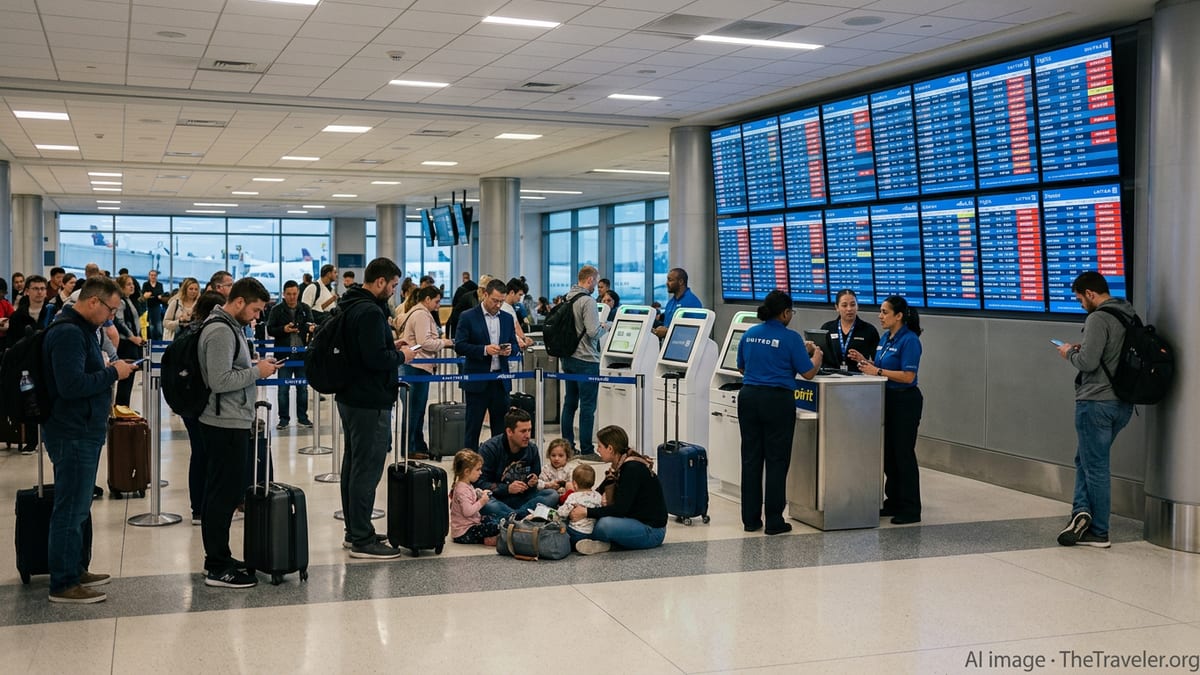
Major Hubs See Elevated Disruption Levels
The latest wave of cancellations and delays rippled through an already strained U.S. air travel system, hitting some of the country’s busiest airports particularly hard. Data compiled from airline status boards showed clusters of affected flights at Washington, Chicago, Miami, Orlando, Fort Lauderdale, Anchorage and Honolulu, underscoring how quickly local issues can cascade nationwide.
While the total of 53 canceled services is modest compared with peak holiday meltdowns, the concentration of more than 130 additional delays magnified the impact on travelers. Even short hold-ups on early morning departures triggered missed connections later in the day, forcing airlines to scramble for spare aircraft, crews and seats on remaining services.
At coastal gateways such as Miami and Fort Lauderdale, the knock-on effect was particularly acute for leisure travelers heading to and from Caribbean and Latin American destinations. In Chicago and Washington, frequent business routes and key domestic connections bore the brunt, complicating same-day round trips and corporate travel schedules.
Operations at some regional airports were also affected as aircraft and crews could not be repositioned on time from the hardest-hit hubs. That left passengers in smaller markets with fewer rebooking options and, in some cases, overnight stays while they waited for the system to reset.
United, Alaska, PSA and Spirit at the Center of the Turbulence
Industry data indicated that United Airlines, Alaska Airlines, regional carrier PSA Airlines and low-cost operator Spirit Airlines led today’s disruption in terms of the number of flights involved. The mix highlights the interconnected nature of the U.S. aviation network, where mainline, regional and ultra-low-cost carriers share airspace, airport infrastructure and, in some cases, code-share partnerships.
United, one of the country’s largest full-service airlines, operates dense schedules through major hubs such as Chicago O’Hare and Newark. Even a limited number of cancellations there can reverberate across its network as aircraft and crews run out of position. Once delays mount, recovery windows shrink and options to swap aircraft or reroute customers narrow.
Alaska Airlines, which runs a robust network along the West Coast and to Alaska and Hawaii, has also contended with weather-related challenges and tight aircraft utilization, factors that can turn minor schedule disruptions into longer delays. Regional carrier PSA, operating flights under the American Eagle brand, plays a pivotal role in feeding smaller cities into larger hubs, so cancellations on its routes can sever vital links for communities with limited service.
Spirit Airlines, known for its point-to-point model and high aircraft utilization, is especially vulnerable when disruptions strike a cluster of flights in quick succession. With fewer spare aircraft on hand, the carrier can face a longer runway to restore normal operations, and passengers may find alternative options more limited than on larger legacy competitors.
Weather, Congestion and Tight Capacity Behind Today’s Woes
Early indications from airline advisories and flight status updates point to a familiar mix of causes behind today’s cancellations and delays: localized weather systems, air traffic congestion and tight scheduling margins. Even when storms are not severe enough to shut down airports, low clouds, rain and shifting winds can slow arrivals and departures, forcing air traffic controllers to increase spacing between aircraft.
That reduced flow quickly translates into backups on heavily used routes, particularly along the busy Northeast and Mid-Atlantic corridors. When major hubs such as Washington and New York experience flow restrictions, knock-on effects are felt hundreds or even thousands of miles away, in cities that may be enjoying clear skies but rely on aircraft and crews coming from affected regions.
The current environment of high demand and limited spare capacity compounds the challenge. Airlines have packed schedules closely together to maximize aircraft usage, leaving little slack when something goes wrong. Once a plane is delayed early in the day, it can carry the delay into multiple subsequent legs, turning a 30-minute disruption into hours of frustration for later passengers.
Recent federal data show that, while overall cancellation rates remain relatively low compared with the worst years of the pandemic recovery, tarmac delays and schedule reliability continue to be pressure points for both airlines and regulators. The pattern seen today fits into a broader trend in which smaller but frequent disruption events are replacing the dramatic multi-day meltdowns of prior years.
Passengers Face Missed Connections, Overnight Stays and Added Costs
For passengers caught up in today’s problems, the immediate consequences were familiar: missed connections, long lines at customer service desks and last-minute scrambles for hotel rooms near crowded airports. Travelers with tightly timed itineraries, such as cruises, tours or special events, were especially vulnerable as delays ate into their buffer time.
Families traveling with children and older passengers reported extended waits in terminals as they sought rebooking options and meal vouchers. For those whose flights were canceled outright, finding seats on same-day alternatives proved challenging on busier routes, sometimes pushing re-accommodation to the following day or beyond.
Travelers also contended with additional out-of-pocket expenses, including meals, ground transportation and, in some cases, overnight accommodation where airline-provided hotel rooms were unavailable or limited. While some passengers will later pursue reimbursement or compensation where eligible, the immediate impact on budgets and schedules is often unavoidable.
Customer service channels were taxed, with airline call centers, apps and airport counters handling a spike in rebooking requests. Frequent flyers and travelers with elite status or co-branded credit cards generally had more options for assistance, while occasional travelers often faced longer waits and fewer alternatives.
What Flyers Can Do to Minimize Disruption Risk
Today’s events serve as another reminder that even on relatively routine travel days, U.S. flyers can be caught off guard by operational hiccups. Travel advisers recommend that passengers build flexibility into their plans, avoiding tight connections when possible and opting for earlier departures to allow more time for rebooking if something goes wrong.
Monitoring flight status through airline apps and airport displays remains essential, particularly in the 24 hours before departure. Many airlines allow travelers to switch to alternative flights when a disruption seems likely, sometimes at no extra cost, if they act before the original flight is significantly delayed or canceled.
Passengers are also encouraged to understand their rights and airline policies regarding cancellations and long delays, including when meal vouchers, hotel stays or refunds may be available. Purchasing travel insurance or using credit cards that offer trip interruption coverage can provide an additional layer of protection, especially for longer or more expensive journeys.
With demand for air travel expected to remain strong into the spring and summer, industry observers say days like today are likely to recur. For now, travelers affected by the 53 cancellations and more than 130 delays are focused on a more immediate goal: simply getting where they need to go, even if that means a longer and more complicated journey than planned.