

More news on this day
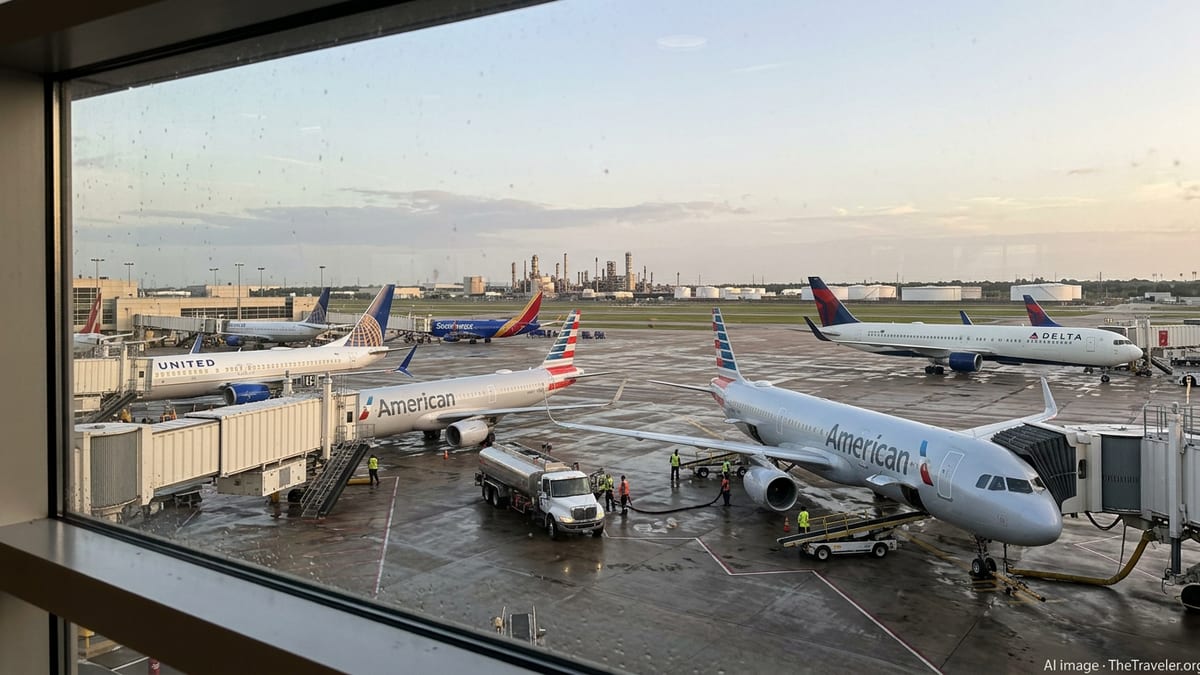
Major US airlines including American, United, Southwest and Delta are bracing for a sharp jump in fuel costs as oil prices surge to their highest levels in years following US–Israel strikes on Iran and widening instability around the Strait of Hormuz, raising the prospect of higher airfares and pressure on profit margins just as travel demand remains strong.
Oil Spike Follows US–Israel Strikes and Strait of Hormuz Disruption
Crude prices have jumped sharply in recent days as a US–Israeli military campaign against Iran rattles global energy markets and disrupts shipping in the Gulf, one of the world’s most vital oil corridors. Brent crude has pushed above the low-80 dollar range, its highest level since 2024, after strikes that included the targeting of Iranian energy infrastructure and tankers near the Strait of Hormuz.
The narrow waterway between Iran and Oman handles close to a fifth of global oil and liquefied natural gas flows. Reports of damaged tankers, halted sailings and heightened military risk have led major shippers and energy firms to pull back, effectively constricting supply and injecting fresh volatility into energy markets.
Analysts warn that if the conflict lingers or the perceived closure risk of the strait persists, oil could remain elevated or climb further, reversing the softer energy prices that had helped cool inflation in late 2025 and early 2026. That shift is already filtering through to refined products such as gasoline and jet fuel across the United States.
Retail fuel prices are beginning to rise in multiple US metro areas, reflecting both higher crude costs and expectations that replacement supplies will be more expensive. Economists say each sustained jump in oil not only squeezes household budgets but also raises input costs for fuel-intensive industries, with airlines among the most exposed.
Jet Fuel Costs Surge, Exposing Unhedged US Carriers
For US airlines, jet fuel is typically the second-largest operating expense after labor, often accounting for up to 25 to 30 percent of total costs. The latest spike in crude has already pushed jet fuel benchmarks sharply higher, especially along the Gulf Coast, a key refining and supply hub for the aviation sector.
Industry data show spot jet fuel prices in the Gulf region have leapt to their highest levels since mid-2022, mirroring the surge in crude. Nationwide, average jet fuel prices are now well above levels seen earlier this year, eroding the benefit carriers enjoyed from several quarters of relatively benign energy costs.
Unlike in the early 2000s and after the 2008 oil shock, most large US airlines no longer hedge fuel prices to lock in costs ahead of time. After years of paying hefty fees for hedges that often failed to pay off, carriers gradually dismantled those programs. That decision leaves them now more fully exposed to day-to-day market moves and to the risk that an extended Middle East conflict keeps prices elevated for months.
Analysts estimate that American Airlines, United Airlines, Delta Air Lines and Southwest Airlines together could face billions of dollars in additional annual fuel expenses if current jet fuel prices persist through 2026. With competition intense and many consumers already stretched by higher living costs, passing the full increase on to passengers may prove difficult.
Fares, Capacity and Routes Under Review
As fuel prices rise, airlines typically reach for a familiar toolkit: targeted fare increases, fuel surcharges on long-haul routes, capacity adjustments and renewed focus on higher-yield corporate and last-minute travel. Revenue management teams at the big four US carriers are expected to test modest fare hikes in coming weeks, especially on routes where demand is less price-sensitive.
Any broad-based spike in ticket prices could, however, collide with a leisure travel boom that has so far proven resilient but may be sensitive to renewed inflation. Industry observers say the most likely path is a series of incremental adjustments, with higher fares appearing first on transatlantic, transpacific and premium-heavy business markets before filtering through to domestic leisure routes.
Airlines are also reviewing schedules and fleet deployment for the second half of 2026. Less profitable routes with thin margins could see capacity reductions or seasonal cuts if fuel remains high, while carriers may prioritize larger, more fuel-efficient aircraft such as the Airbus A321neo and Boeing 737 MAX on trunk routes where they can spread costs over more seats.
Low-cost and ultra-low-cost carriers, which compete heavily on price and rely on high utilization of single-aisle fleets, may face particularly tough choices. With thinner cushions and customers who are highly sensitive to even small fare increases, these airlines could see profitability pressured unless they find additional revenue from ancillary fees, co-branded credit cards or other sources.
Financial Markets Signal Concern Over Airline Margins
Equity markets have already begun repricing the outlook for US carriers as oil climbs. Airline shares were among the worst performers on major US indexes this week, with investors quickly factoring in thinner profit margins and the risk that fuel costs will stay elevated if the Gulf crisis worsens or spreads.
Some analysts caution that airlines had been counting on moderating fuel prices and steady demand growth to support 2026 earnings guidance. The sudden reversal in energy markets introduces a significant new variable just as carriers ramp up capacity for the busy spring and summer travel seasons.
Higher fuel bills could also complicate ongoing fleet-renewal and debt-reduction plans. Many airlines took on substantial borrowings during the pandemic to survive the collapse in travel, then began paying down those obligations as demand rebounded. A sustained jump in operating costs may slow that progress or force carriers to defer some discretionary capital spending.
Credit markets are watching closely for signs of stress, though for now the largest US airlines remain far better capitalized than they were before the pandemic. Still, smaller regional operators and heavily indebted carriers could find it harder to absorb another prolonged period of cost pressure, especially if economic growth slows.
Travelers Face a New Wave of Uncertainty
For travelers, the immediate impact of the oil shock is likely to be subtle: modestly higher fares on certain routes and fewer rock-bottom promotional deals. Over time, however, a prolonged period of expensive fuel could reshape route networks, with airlines trimming marginal services and concentrating on the most profitable hubs and city pairs.
Industry experts say passengers should expect continued volatility in pricing through 2026, particularly on long-haul and peak-season itineraries. Flexible travelers willing to adjust dates, choose off-peak flights or connect through secondary hubs may still find value, even if headline fares creep higher.
Beyond prices, the broader geopolitical uncertainty in the Gulf region is rippling through aviation planning. Airlines are closely monitoring flight paths and overflight permissions across the Middle East, assessing potential diversions that could lengthen routes and consume more fuel if the conflict expands or airspace restrictions tighten.
While no major US carrier has yet signaled sweeping changes to its international network, executives acknowledge that “new things are coming up” as they model scenarios around oil prices, demand trends and geopolitical risk. The outcome of the US–Israel–Iran crisis and the stability of the Strait of Hormuz will be critical variables not just for energy markets, but for the cost, availability and reliability of air travel in the months ahead.