

More news on this day
Soaring jet fuel prices and sudden airspace closures linked to the escalating Iran conflict are rippling through the US airline industry, driving up costs, disrupting routes and leaving some American travelers scrambling to get home.
Oil Shock Pushes Jet Fuel Costs to Painful New Highs
The military confrontation involving the United States, Israel and Iran has driven crude oil sharply higher in early March 2026, pushing jet fuel costs up just as airlines head into the busy spring and summer travel seasons. Benchmark US crude has jumped from the low-$60s per barrel before the conflict to the low-$80s in a matter of days, a move analysts say translates into a multibillion-dollar annual cost shock for the US airline sector if sustained.
Jet fuel now averages close to or above 2.80 dollars per gallon in key US markets, according to industry price trackers, with some aviation indexes showing spot prices north of 3.20 dollars in major hubs such as Chicago, Houston, Los Angeles and New York. For an industry where fuel routinely represents up to 30 percent of operating expenses, each incremental dollar on a barrel of oil can mean the difference between a profitable quarter and slipping back into losses.
Market strategists estimate that every sustained 10 dollar increase in crude adds roughly 2 billion to 3 billion dollars to US airlines’ annual fuel bill. With oil up by nearly 20 dollars since the first strikes, that implies at least 3.6 billion to 5.4 billion dollars in extra yearly costs before any slowdown in demand is factored in. Investors have taken notice: shares of major carriers such as American Airlines, United Airlines and Delta Air Lines have all fallen in recent sessions as traders reprice earnings expectations.
The financial strain is particularly acute because most large US airlines have largely abandoned traditional fuel hedging strategies that once shielded them from sudden price spikes. Unlike some European and Asian rivals that still lock in future fuel costs through derivatives, carriers in the United States now buy most of their jet fuel at prevailing market prices, leaving them fully exposed as the conflict drags on.
Route Disruptions, Cancellations and Stranded Passengers
Even as fuel bills surge, US airlines are grappling with an operational shock brought on by widespread airspace closures across the Middle East. After joint US-Israeli strikes on Iran and retaliatory attacks on regional targets, several countries temporarily shut or restricted their skies, and key hub airports in the Gulf were hit or placed under tight security controls. The resulting shutdown of air corridors that link Europe, Africa and Asia has upended long-haul flight plans and stranded travelers far from home.
United Airlines has canceled multiple flights between the United States, Tel Aviv and Dubai, citing safety concerns and shifting airspace restrictions. American Airlines and other US carriers have issued travel waivers for passengers booked to or through major regional gateways including Dubai, Doha, Abu Dhabi, Amman and Bahrain, allowing rebooking without change fees within specified windows. While such waivers soften the financial blow for affected passengers, they do not solve the immediate problem for those stuck on the wrong side of a suddenly closed border or grounded airport.
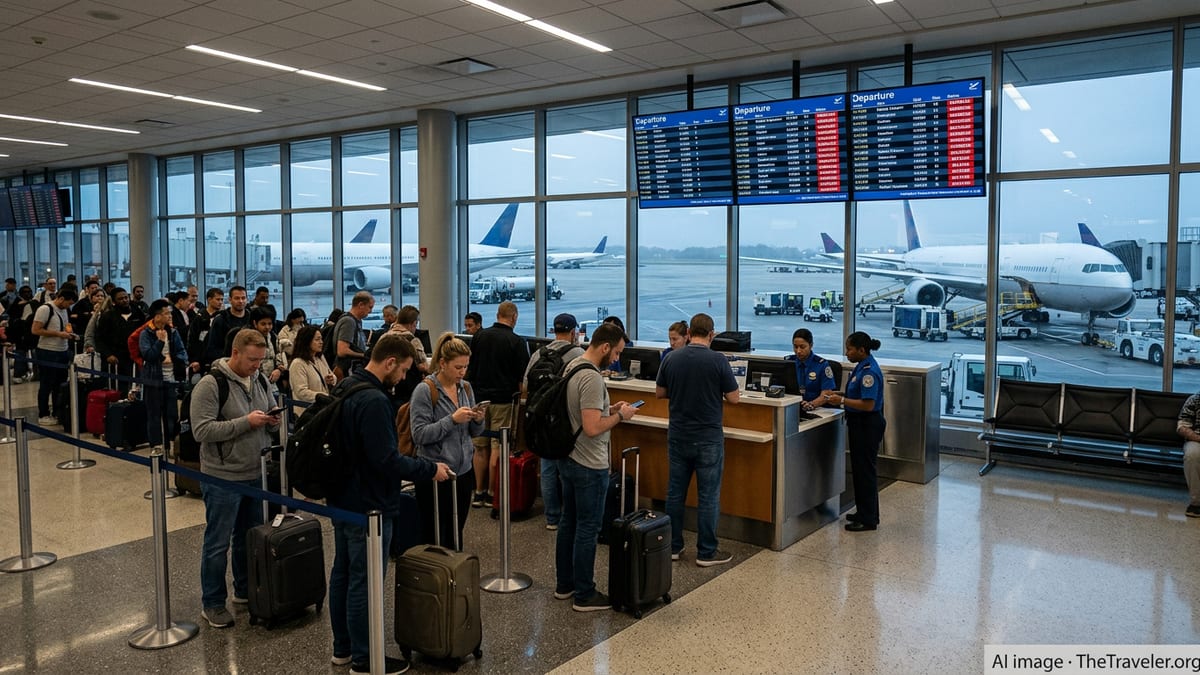
On the ground, scenes at major hubs tell the story: departure boards filled with cancellations, lines at airline service desks and families trying to cobble together alternative routes through Europe or South Asia. Some travelers have been routed thousands of miles out of their way as airlines swing north or south to skirt Iranian, Iraqi and adjacent airspace, while others remain in limbo as carriers await clearer security assessments from regulators.
Beyond the Middle East itself, the disruptions are rippling into US and European schedules. Because many long-haul aircraft and crews are now operating lengthier detours, they are returning late to their home bases, causing knock-on delays and selective cancellations on North American routes. Airlines are prioritizing the most profitable flights, which can leave secondary cities or less-busy departure times more vulnerable to last-minute schedule cuts.
Which US Airlines Are Most Exposed Financially
The fuel shock is not hitting all US carriers equally. Analysts point to American Airlines as among the most vulnerable, given its larger overall fuel consumption, higher debt levels and network exposure to transatlantic and Middle East-adjacent routes. Recent research notes that a modest five-cent increase in average fuel cost would have wiped out American’s 2025 pre-tax earnings, highlighting how thin its margin for error has become.
By contrast, Delta and United enter the crisis with somewhat stronger balance sheets and more diversified revenue streams, including lucrative corporate contracts and joint ventures with European partners. Still, both are highly sensitive to international demand and to the cost of keeping widebody fleets in the air on increasingly circuitous routes. Any prolonged period of elevated fuel prices, combined with softening premium demand from business travelers wary of flying through conflict zones, could quickly compress profits.
Low-cost and ultra-low-cost carriers face their own challenges. Many of these airlines rely on aggressive growth plans, high aircraft utilization and razor-thin margins to stay competitive. Industry experts warn that if jet fuel prices remain elevated into late 2026, some budget carriers, particularly those with ambitious expansion plans or newer transatlantic ventures, may be forced to trim capacity growth, delay aircraft deliveries or raise fares more sharply than planned.
Credit markets are watching closely. Bond investors and hedge funds have already flagged the sector as a potential weak link if the Iran conflict escalates or triggers a broader global slowdown. Some analysts suggest that further downgrades of airline debt and equity valuations are likely unless oil prices stabilize and geopolitical tensions ease in the coming months.
What Travelers Need to Know Right Now
For US passengers, the immediate question is whether it is still safe and practical to travel to or through the Middle East, and how the conflict could affect upcoming trips elsewhere. Aviation regulators and security agencies stress that commercial aviation remains highly safe, and US airlines are required to avoid conflict zones designated as too risky. Carriers have already re-routed flights away from Iranian and neighboring airspace, even when that adds hours to journey times.
Travelers booked on itineraries touching the Middle East in March and April 2026 should monitor their airline’s flight status tools closely and sign up for text or app alerts. Because schedules are changing day by day as airspace rules are adjusted, a flight that looks on time in the morning may be delayed, rerouted or canceled by afternoon. Many US airlines are offering limited windows during which passengers can move their travel dates or change destinations without standard change fees, although fare differences may still apply.
Even for those flying routes that do not go near the Middle East, the conflict may still be felt in the form of higher ticket prices later in the year. While airlines often hesitate to raise base fares during periods of economic uncertainty, sustained fuel cost increases typically translate into higher prices over time, either through fuel surcharges or reduced capacity. Leisure travelers planning long-haul trips for late 2026 may want to lock in fares earlier than usual, while remaining flexible about specific travel dates.
Travel insurance is another consideration. Policies that include trip interruption and delay coverage can help offset unexpected hotel costs and rebooking fees if flights are canceled due to security concerns or airspace closures. However, many standard policies exclude coverage for declared wars or known conflicts, so travelers should read the fine print or consult their provider before assuming they are protected from Iran-related disruptions.
Outlook: A Fragile Recovery at Risk
The Iran conflict arrives at a delicate moment for global aviation. US airlines have spent the past two years rebuilding networks and balance sheets after the pandemic, benefiting from a powerful rebound in leisure travel and a gradual return of business flyers. The combination of surging oil prices, renewed geopolitical risk and potential consumer belt-tightening now threatens to slow or even reverse some of that progress.
Industry analysts emphasize that much depends on how long the confrontation lasts and whether it expands beyond targeted strikes into a wider regional war that disrupts oil flows through the Strait of Hormuz. A quick de-escalation could allow fuel prices to retreat and airspace to reopen, limiting the damage to a painful but manageable quarter or two. A protracted conflict, by contrast, would likely force airlines to announce profit warnings, cut capacity plans and rethink expansion into certain international markets.
For now, US travelers can expect a period of elevated uncertainty, particularly for routes involving the Middle East, North Africa and parts of South and Central Asia that depend on Gulf hubs. Flexibility, close communication with airlines and a willingness to adjust itineraries at short notice will be crucial for those with imminent trips. As the situation evolves, the only certainty is that the cost and complexity of keeping global air travel moving have suddenly increased, with US airlines and their passengers squarely in the crosshairs.