

More news on this day
Volatile oil prices and fresh geopolitical shocks are once again rattling America’s airlines, reviving painful memories of past fuel crises and exposing how thin industry margins still are for carriers from American and JetBlue to Southwest, Frontier, SkyWest and Envoy Air.
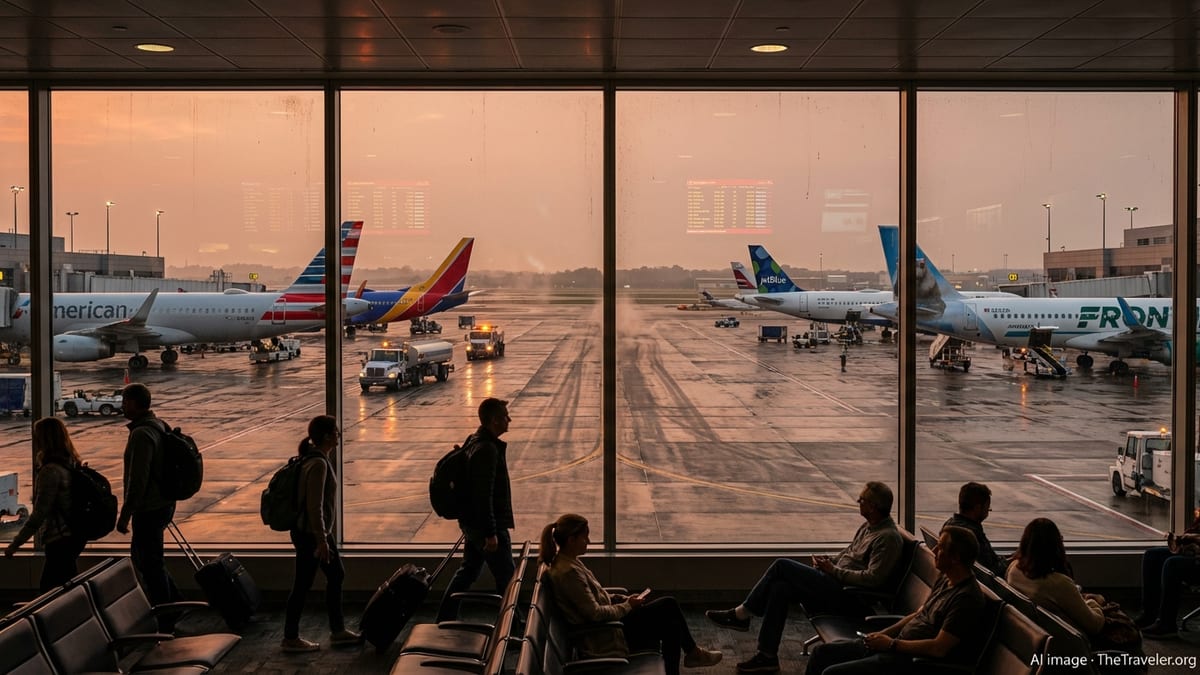
Fuel Costs Climb Back to the Center of the Crisis
After several quarters of relief, fuel is re-emerging as one of the most destabilizing line items on U.S. airline balance sheets. Data from the U.S. Bureau of Transportation Statistics show that by early 2025, the average price paid by U.S. carriers for jet fuel was roughly one third higher than in early 2020, even as overall consumption climbed above pre-pandemic levels. That combination of higher unit cost and greater volume is magnifying the impact of every swing in global oil markets on airline income statements.
Fuel routinely ranks as the second-largest expense for most U.S. carriers behind labor, and its share of total operating costs can spike quickly when oil markets tighten. Analysts warn that a sustained rise of just a few cents per gallon can translate into hundreds of millions of dollars in additional annual costs for large airlines, forcing management teams to choose between fare hikes that risk dampening demand and absorbing the hit to margins.
The latest Middle East tensions have underscored those vulnerabilities. This past summer’s exchange of strikes between Israel and Iran briefly pushed benchmark crude prices sharply higher and triggered an immediate selloff in airline stocks, as investors recalibrated expectations for 2025 and 2026 earnings. Even though oil prices later retreated from their peaks, the episode highlighted how quickly geopolitics can push fuel from background risk to existential threat.
American Airlines: Fully Exposed to Oil’s Whiplash
Among the major U.S. carriers, American Airlines is one of the most exposed to swings in fuel prices because it does not hedge its fuel consumption. The company has long argued that hedging programs can be costly and that, over time, buying fuel at market prices is more efficient. That strategy worked to its advantage when jet fuel prices eased during parts of 2024 and 2025, helping to lower American’s per-gallon costs and briefly supporting margins.
Yet American’s own disclosures illustrate the scale of the risk when oil moves the other way. Company filings indicate that a sustained one cent increase in the price of a gallon of jet fuel can add tens of millions of dollars to its annual fuel bill. With quarterly fuel consumption measured in the billions of gallons, a sudden oil shock tied to a conflict or supply disruption can quickly erase a quarter’s profit or tip an already tight year into the red.
The airline has faced other financial and legal headwinds, from rising labor costs to the fallout of antitrust litigation over its former Northeast Alliance with JetBlue. But analysts say renewed volatility in fuel prices could be the most destabilizing variable for American over the next two years. Unlike carriers with more diversified revenue streams or more efficient fleets, American has less room to maneuver if oil climbs decisively higher and stays there.
JetBlue and Southwest: Hedging Retreat Meets New Price Reality
For years, Southwest Airlines was the textbook case of how hedging could shield an airline from energy shocks. Its long-standing program of fuel derivatives helped it sidestep some of the worst price spikes of the mid-2000s and early 2010s. That narrative has shifted. In 2024 and 2025, Southwest began dismantling its hedging program, arguing that the cost of maintaining those contracts had outstripped the benefits. The carrier disclosed spending more than one hundred million dollars on hedge premiums in 2024 alone, and it now plans to allow existing positions to roll off by 2027.
The timing is awkward. Even as Southwest pursues billions of dollars in structural cost savings and grapples with its first-ever round of corporate layoffs, it now faces energy markets without the buffer that once set it apart. Higher fuel price guidance for late 2024 and 2025 has already pressured its profit outlook, and management has warned that future fuel shocks would have to be absorbed through capacity tweaks, fleet planning and, where possible, fare adjustments.
JetBlue, once a hedging participant itself, has also retreated from using fuel derivatives and is leaning more heavily on operational tactics to cope with energy volatility. The New York-based carrier has trimmed capacity, simplified parts of its network and focused on improving unit revenue to counteract higher operating costs, including fuel. Its recent guidance assumes fuel in the mid two dollar per gallon range, but executives acknowledge that another jump in crude would quickly ripple through to its earnings and could compel more aggressive schedule cuts or surcharges.
Frontier and the Ultra-Low-Cost Gamble on Efficiency
Frontier Airlines sits at the extreme end of the cost spectrum, with a business model built around ultra-low fares and highly disciplined cost control. In that world, a few cents per gallon on fuel can be the difference between a thin profit and a quarter in the red. Frontier’s latest financial results show just how central fuel is to its economics. In the second quarter of 2024, the airline spent nearly three hundred million dollars on fuel at an average price in the high two dollar range per gallon, a figure that represented roughly a third of its operating expenses.
To stay ahead of that burden, Frontier has pursued a multi-pronged strategy: aggressively modernizing its fleet with more fuel-efficient aircraft, optimizing schedules to reduce unprofitable flying and extending aircraft leases to lock in lower ownership costs. The airline touts a structurally lower cost per seat mile than many competitors, which gives it slightly more room to absorb fuel spikes before passing them on to passengers in the form of higher fares or added fees.
Still, ultra-low-cost carriers like Frontier are acutely sensitive to demand shifts. Their customer base is often more price-conscious and more likely to cut back on discretionary travel in response to higher ticket prices. If oil prices were to surge back toward three figures per barrel, analysts say Frontier and its peers could find themselves squeezed from both sides: rising fuel bills on one hand and softer demand on the other, with little cushion in between.
Regionals Like SkyWest and Envoy: Thin Margins and Contract Pressures
While the largest U.S. carriers draw most of the headlines, regional airlines such as SkyWest and Envoy Air may be even more vulnerable to a sustained increase in jet fuel costs. These companies operate much of the domestic feed that keeps large hub-and-spoke networks running, typically under capacity purchase agreements that reimburse many operating costs and pay a fixed margin per flight or block hour.
Fuel arrangements in these contracts vary, but higher energy prices can still sting. In some cases, reimbursements lag actual market conditions, forcing regional operators to float higher bills until rates reset. In others, cost pressures emerge indirectly through renegotiated terms when contracts are renewed, as mainline partners push to share more of the fuel risk or offset their own higher expenses elsewhere in the network.
At the same time, regionals are grappling with a prolonged pilot shortage, wage inflation and a shift toward larger, more fuel-efficient jets. Operating smaller aircraft on short segments is particularly fuel-intensive on a per-seat basis, and that math becomes more punishing as oil rises. For carriers such as SkyWest and Envoy, which already work on razor-thin margins, the prospect of another sustained fuel shock risks undermining the economics of some marginal routes altogether.
Geopolitics, Supply Fears and the New Oil Risk Premium
The fuel squeeze confronting U.S. airlines is not purely a function of rising demand for travel. It is also being driven by a renewed geopolitical risk premium in oil markets. The mid-2025 flare-up between Israel and Iran, involving strikes on nuclear and military infrastructure, sent shock waves through energy trading desks. Benchmark crude prices jumped by more than a quarter in just a few weeks as traders contemplated worst-case scenarios, including potential disruptions to traffic through the Strait of Hormuz, a vital chokepoint for global oil shipments.
Although tanker flows have so far continued and prices have since cooled from their initial peak, the episode served as a stark reminder of how quickly airline economics can be upended by events far from U.S. airports. Each percentage point jump in crude often translates, with a short lag, into higher jet fuel prices. Airline shares duly sold off in June as investors rushed to reprice the sector’s exposure, with stocks of American, Southwest, JetBlue and other major carriers falling several percentage points in a single session on fears that a protracted conflict could send fuel bills soaring.
Beyond the Middle East, tighter supply policies by major producers and fluctuating U.S. shale output have added further uncertainty. Forecasts that Brent crude could climb back toward one hundred dollars per barrel if key shipping lanes were disrupted have concentrated minds in airline boardrooms. For carriers already wrestling with higher labor, maintenance and financing costs, another oil spike could be the shock that forces deeper restructuring.
From Hedging to “Natural” Defenses: How Airlines Are Responding
The latest turbulence in fuel prices is also reshaping the toolkit airlines use to manage energy risk. Where fuel hedging once dominated risk management strategies, many U.S. carriers now emphasize what they describe as natural hedges: more efficient fleets, flexible capacity planning and diversified revenue. United Airlines, for instance, has kept only minimal hedging in place and instead focused on modernizing its aircraft, boosting premium cabin sales and leveraging a strong international network to offset higher operating costs when oil rises.
American, Delta and others have pursued similar paths, pouring billions into new-generation aircraft that burn significantly less fuel per seat than the jets they replace. These investments, while expensive upfront, can lock in lower fuel burn for decades and make airlines more resilient to price spikes. At the same time, carriers are using more sophisticated data tools to fine-tune schedules, trimming underperforming routes and adjusting frequencies in near real time in response to demand and cost signals.
Even so, the retreat from financial hedging carries its own risks. As Southwest’s shift illustrates, walking away from derivatives removes an important buffer against sudden oil surges. The industry is, in effect, betting that efficiency gains and pricing power will be enough to counter the next fuel shock. If that bet proves wrong, airlines could be forced into abrupt fare hikes and capacity cuts that unsettle travelers and corporate clients alike.
Travelers Caught Between Higher Fares and Thinner Networks
For passengers, the industry’s fuel squeeze is already visible in more dynamic pricing and, in some markets, higher average fares. When oil prices spike, airlines move quickly to adjust capacity, zeroing out marginal flights and reducing service on thinner routes. That can translate into fewer nonstops, less schedule flexibility and higher prices on the flights that remain, particularly during peak travel periods.
Ultra-low-cost carriers such as Frontier, along with Southwest and JetBlue, have traditionally served as a check on fare inflation on many domestic routes. But when fuel accounts for a rising share of their costs, even these discounters have limited room to undercut the market. Analysts note that in past fuel spikes, so-called ancillary revenues from bag fees, seat assignments and other add-ons have also tended to creep higher, effectively allowing airlines to recover more of their fuel bill without raising the base fare as visibly.
There are competitive silver linings. Carriers with newer fleets, stronger balance sheets and better access to capital may be able to gain share as weaker rivals cut back or consolidate. For now, though, the picture for U.S. airlines as a group is clear: in an era of renewed geopolitical risk and stubbornly higher energy prices, fuel is once again the factor most likely to determine which carriers soar and which ones are left struggling for altitude.