

More news on this day
American Airlines has moved to sharply narrow refund eligibility for seat downgrades and damaged wheelchairs, signaling a broader shift among major United States carriers to tighten compensation rules just as regulators revisit several hard‑won consumer protections.
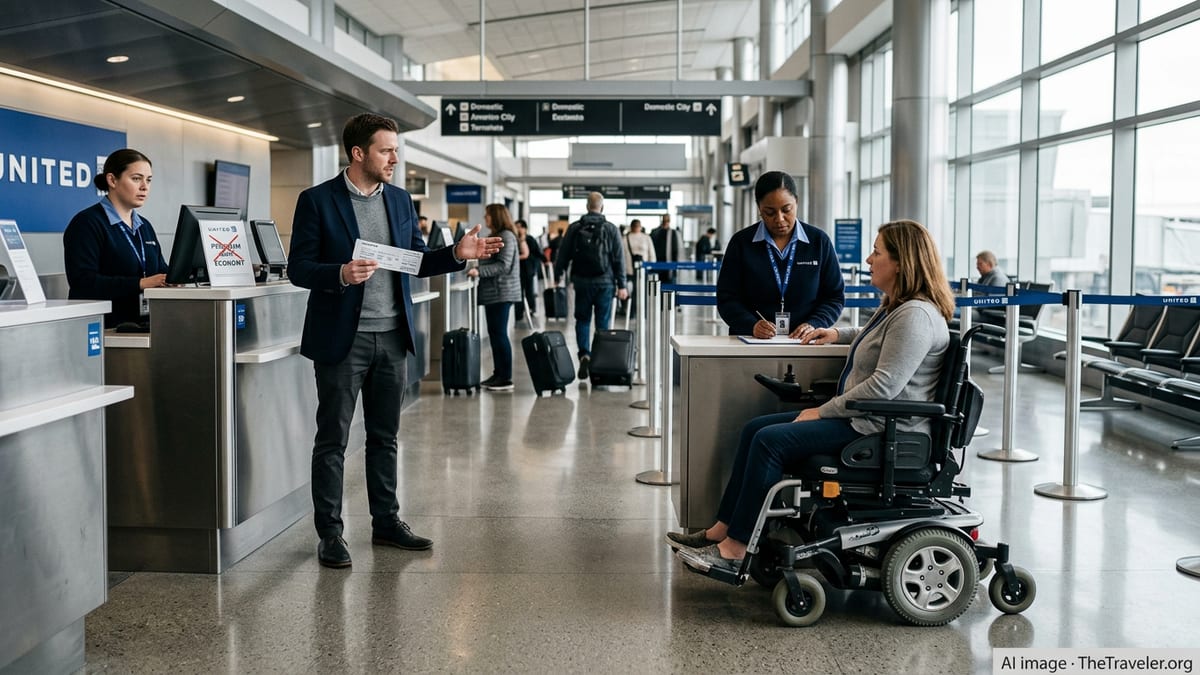
American Narrows Payouts for Involuntary Downgrades
American Airlines has updated its contract of carriage to cap cash refunds for many involuntary downgrades at 40 percent of the fare, a change industry analysts say could materially reduce what travelers receive when they are moved to a lower cabin through no fault of their own. The policy, which took effect this week, departs from the long‑standing practice of refunding the full difference between the original cabin and the downgraded seat when an airline cannot provide the service that was sold.
The airline’s new language distinguishes more sharply between voluntary changes made by the passenger and operational disruptions such as aircraft swaps or oversold premium cabins. In practice, it gives the carrier more discretion to treat certain downgrades as a form of “partial service delivery” rather than a failure to provide the purchased product, limiting its obligation to reimburse the full fare difference. Consumer advocates warn that the shift will be confusing for travelers who assume that paying for business or first class guarantees either the seat or a complete refund of the upgrade cost if things go wrong.
The move comes as United, Delta and other large U.S. carriers face mounting cost pressures from higher fuel prices, tight aircraft availability and lingering staffing constraints. With margins under strain, airlines are focusing on high‑yield premium cabins and add‑on fees, seeking to preserve revenue even when operations require last‑minute changes. Narrower downgrade refunds, industry watchers note, are one way to protect premium revenue while still offering at least a partial concession when customers are bumped to a lower class of service.
New 24‑Hour Window for Wheelchair Damage Claims
In a second significant change, American has imposed a strict 24‑hour deadline for reporting damage or problems involving wheelchairs and other mobility devices, aligning its domestic rules more closely with its existing baggage timelines. Customers who discover cracks, bent frames or malfunctioning electronics after that window could find themselves ineligible for full compensation, even when the damage appears directly linked to air travel.
Disability advocates say the new limit fails to reflect how mobility damage is often discovered. Power chairs and scooters may appear intact at the airport but reveal alignment issues, battery problems or broken components only after several transfers or a long journey home. In some cases, front‑line staff reportedly recategorize complaints as general assistance requests instead of mishandled assistive devices, further complicating a passenger’s ability to file a timely claim that qualifies for reimbursement.
Under federal transportation rules, airlines remain liable for the full repair or replacement cost of wheelchairs damaged while in their custody, a standard that goes beyond typical baggage liability caps on domestic flights. That legal baseline has not changed. What has shifted is how quickly passengers must document a problem and how much procedural friction they face in getting an airline to acknowledge responsibility. The tighter reporting window raises the stakes for travelers who may already be navigating airport transfers, hotel check‑ins and accessibility challenges at their destination.
Regulatory Landscape in Flux for Disability Protections
The timing of American’s contract revisions coincides with a patchwork of evolving federal rules on disability accommodations and airline refunds. In late 2024, the U.S. Department of Transportation issued a sweeping final regulation aimed at improving treatment of passengers who use wheelchairs, establishing higher standards for assistance, training and the handling of mobility devices. That rule also created a presumption that mishandling a wheelchair violated federal disability law, making it easier for regulators to penalize carriers.
Since then, enforcement has grown more complicated. Facing legal and political pushback from airlines and industry groups, the department has delayed or scaled back enforcement of some of the most stringent provisions while it prepares a second rulemaking round. Officials have also signaled plans to revisit broader consumer‑protection rules on refunds and fee transparency, reflecting a shift in priorities under the current administration.
The net effect is a regulatory environment in which the formal rights of disabled travelers remain on paper, but the practical likelihood of swift enforcement has diminished. Airlines have responded by fine‑tuning contracts of carriage and internal procedures, tightening deadlines and definitions in ways that remain technically compliant but can make it harder for passengers to obtain full redress. Advocates worry that this dynamic will particularly disadvantage travelers who rely on complex, customized wheelchairs that are costly to repair and difficult to replace quickly.
Operational Pressures Drive Tougher Refund Stance
Behind the legal language lies an industry still grappling with operational volatility. U.S. carriers continue to contend with aircraft delivery delays, parts shortages and sporadic ground‑handling constraints that complicate fleet planning. A recent Airbus software‑related recall, which forced immediate inspections and took thousands of aircraft out of service worldwide, underscored how suddenly capacity can disappear and schedules unravel.
In that context, premium‑cabin downgrades and delayed or mishandled wheelchairs are often symptoms of deeper operational stress. Airlines argue that tighter refund formulas and more rigid claim procedures are needed to bring predictability to their financial exposure, especially when disruptions stem from safety‑driven maintenance or external supply‑chain issues. Industry trade groups maintain that over‑broad compensation mandates could divert resources from investments in reliability and accessibility improvements.
Passenger groups counter that the burden of uncertainty is increasingly being shifted onto travelers, who pay record fares but are left with fewer clear remedies when service falls short. They point to recent record fines against major carriers for disability violations as evidence that voluntary efforts have not been sufficient to protect some of the most vulnerable customers. Stricter internal rules, critics say, risk creating a two‑tier system in which well‑informed travelers who know how to escalate complaints are made whole, while many others quietly absorb the cost.
What Travelers Should Watch for Before They Fly
For now, the most immediate impact will be felt by customers flying on American Airlines, though experts expect competitors to monitor how the new policies play out and potentially adjust their own terms. Frequent fliers who rely on upgrades or pay cash for premium seats are being urged to review contract‑of‑carriage language on downgrades and to keep records of original fares and seating assignments in case of disputes.
Passengers traveling with wheelchairs or other mobility devices face an even narrower margin for error. Disability rights organizations recommend inspecting equipment as soon as it is returned at the gate or baggage claim, requesting that any issue be logged explicitly as a mishandled assistive device, and obtaining written confirmation of a claim number before leaving the airport. Documenting visible damage with time‑stamped photos and following up in writing within the airline’s deadline may prove crucial under the tighter rules.
As regulatory debates continue in Washington, the balance of power between passengers and airlines is shifting once again toward contract terms written by the carriers themselves. For travelers, particularly those who depend on mobility devices or pay extra for premium comfort, understanding those terms before departure is becoming as essential as checking the weather or packing a passport.