

More news on this day
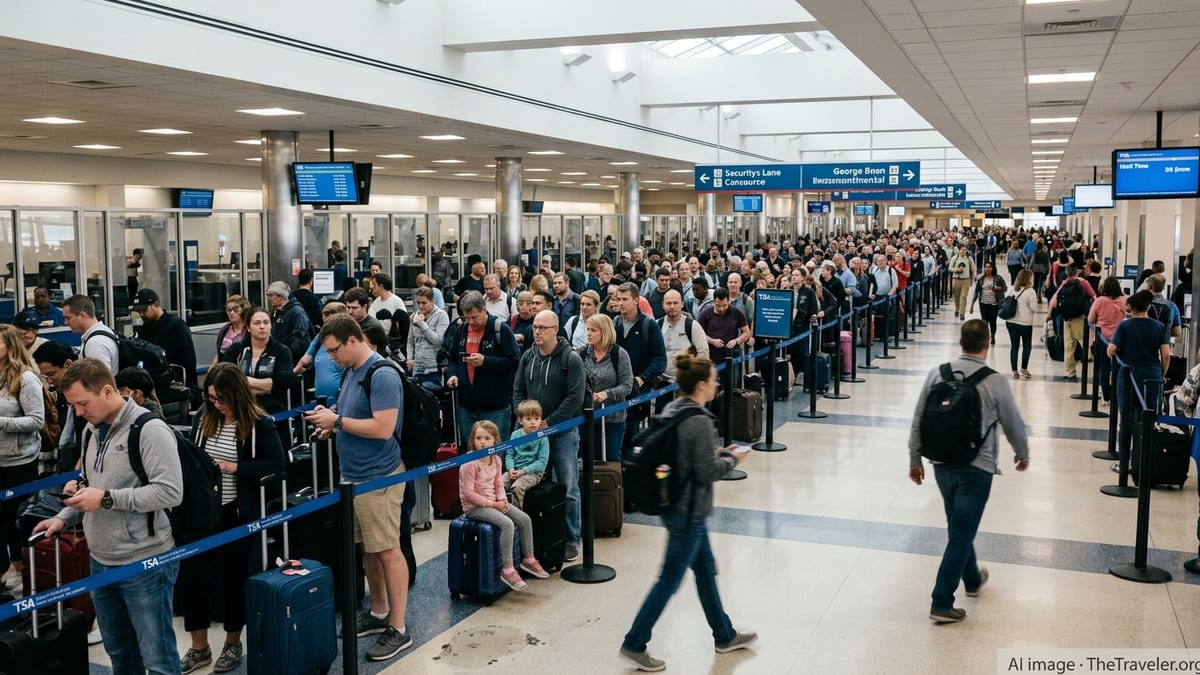
Hours long security lines, sporadic checkpoint closures and mounting confusion are rippling through major US airports as the ongoing partial government shutdown strains Transportation Security Administration staffing and disrupts spring travel plans.
Get the latest news straight to your inbox!
Shutdown Fuels Nationwide Screening Delays
Publicly available reports from major outlets describe scenes of congestion at airports across the United States as unpaid TSA officers call in sick or seek temporary work elsewhere, leaving checkpoints understaffed at the height of the spring break travel period. At some large hubs, wait times over the past weekend stretched to two or even three hours, far beyond the agency’s typical goal of keeping most passengers under the 30 minute mark.
Coverage of conditions at Hartsfield Jackson Atlanta International, the world’s busiest airport, indicates that screening queues have periodically filled entire concourses, with some travelers missing flights despite arriving well in advance. Similar accounts from Houston’s George Bush Intercontinental and other large hubs describe partial checkpoint closures and long lines spilling into ticketing halls as remaining lanes struggle to keep up with morning and evening peaks.
The current disruption follows a series of federal funding lapses affecting the Department of Homeland Security, which oversees TSA. Analyses by travel industry groups and policy researchers note that each shutdown compounds staffing and morale problems, as screeners work without pay, face delayed overtime, and confront uncertainty about how long emergency operations will last.
Historical data from prior shutdowns shows a similar pattern of mounting absenteeism, longer lines and localized terminal closures once a funding lapse extends beyond a few days. Observers say the latest episode is notable for colliding with one of the busiest leisure travel periods of the year and for affecting trusted traveler programs at some airports, removing a key pressure valve for congestion.
ICE Deployments and Patchwork Airport Responses
As delays intensified this week, national and local coverage documented the arrival of Immigration and Customs Enforcement officers in tactical gear at checkpoints in New York, Houston, Atlanta and several other large airports. According to those reports, the officers are being used in limited support roles alongside TSA as part of a federal effort to keep lines moving during the shutdown.
The move has generated debate among aviation and civil liberties advocates, in part because ICE personnel are not trained as aviation security screeners and because their presence at passenger checkpoints introduces a separate layer of tension for some travelers. Analysts quoted in published coverage questioned whether such deployments can meaningfully reduce wait times compared with more targeted steps like shifting TSA staff between terminals, consolidating checkpoints or adjusting flight schedules.
At the local level, airport operators are rolling out a patchwork of responses. Some terminals have consolidated early morning screening into fewer checkpoints to concentrate limited staff, while others have opened additional general screening lanes by temporarily closing dedicated PreCheck or priority lines. A few airports are reminding passengers via social media and terminal signage that wait times can vary widely throughout the day and encouraging travelers to arrive earlier than usual.
Travel forums and social media posts suggest that conditions remain highly uneven. While certain hubs are seeing extreme waits of two to three hours during peak periods, others still report relatively normal queues, particularly at off peak times or in smaller markets less affected by callouts. For travelers, this inconsistency makes planning more difficult and increases the importance of checking local conditions before leaving for the airport.
Programs Suspended and Spring Break Impact
The shutdown is also affecting expedited screening options that many frequent travelers rely on to avoid long queues. According to official notices and local airport statements cited in news coverage, TSA PreCheck has been suspended or curtailed at some airports, and enrollment or renewal services for programs like Global Entry, which is operated by Customs and Border Protection, have been paused nationwide during the funding lapse.
The timing is especially challenging for families and students traveling for spring break. Travel industry assessments released in recent weeks warned that even modest increases in screening times can cascade into missed flights, tighter connection windows and heavier burdens on airport customer service desks. With some checkpoints now reporting waits several times longer than usual, those warnings appear to be playing out in real time.
Airlines are responding within the constraints of their own operations. Several carriers are using email and app notifications to urge passengers to arrive at the airport earlier, in some cases suggesting three hours for domestic flights and four hours for international departures where local conditions warrant. Industry groups have reiterated calls for stable federal aviation funding, arguing that recurring shutdowns add unpredictable strain to a system already managing weather disruptions, staffing shortages and aircraft constraints.
For now, the experience of passengers appears to depend heavily on departure time, airport layout and local staffing. Travelers departing in the very early morning or late evening are sometimes reporting relatively smooth passage, while those hitting mid morning and late afternoon peaks in major hubs describe bottlenecks so severe that lines back up into parking walkways and public transit corridors.
How to Check Airport Wait Times in Real Time
With conditions changing day by day and even hour by hour, travelers are increasingly turning to real time tools to check security lines before they head to the airport. The Transportation Security Administration publishes estimated checkpoint wait times for many airports based on recent throughput and staffing, which can provide a broad sense of whether lines are trending light, moderate or heavy at a given moment.
Individual airport operators often share more granular updates. Many large hubs now feature live security wait time dashboards on their official websites and within their mobile apps, drawing on queue sensors or manual reports from each checkpoint. Publicly available information shows that some airports break this data down by terminal and, where applicable, by general screening, PreCheck and CLEAR lanes, allowing travelers to choose security checkpoints strategically when multiple options exist.
In addition, airline apps and third party travel tools aggregate crowd sourced reports from passengers who have recently cleared security, offering another perspective on actual conditions versus official estimates. Posts on popular travel and aviation forums during the current shutdown highlight both the usefulness and the limitations of these tools: while they can flag severe backups, they sometimes lag reality during sudden spikes caused by shift changes, equipment issues or a cluster of departing wide body flights.
Experts in travel planning recommend checking multiple sources on the morning of departure, paying attention not only to current wait times but also to trends over the previous few days at similar times. Even then, they advise treating any posted estimate as a snapshot rather than a guarantee and building in a generous buffer when airports are under unusual strain.
Practical Strategies for Travelers Navigating the Disruption
In light of the uncertainty around checkpoint operations during the shutdown, travel organizations and consumer advocates are circulating updated guidance for passengers who must fly in the coming days and weeks. The central recommendation is to plan for significantly longer security screening than usual, particularly at large hub airports and during peak periods such as Monday mornings and Friday afternoons.
Many advisories suggest arriving at least three hours before domestic flights and four hours before international departures when traveling through airports that have reported extended waits. Travelers with tight connections at intermediate hubs are encouraged to consider rebooking to itineraries with longer layovers where possible, especially if they are unfamiliar with airport layouts or will be transferring between terminals.
Simple preparation steps can also help lines move more smoothly once travelers reach the checkpoint. Organizing carry on items to make removal of electronics and liquids straightforward, wearing easily removable shoes and avoiding excessive metal accessories can reduce the need for secondary screening. Parents traveling with young children or strollers may benefit from reviewing TSA’s published guidelines ahead of time so they are not surprised by additional checks.
Finally, travel experts advise maintaining flexibility as conditions evolve. For some passengers, shifting to earlier or later departures, choosing alternative airports within a region or combining trips to reduce the number of flights taken during the shutdown period may be worthwhile. While the current disruption has introduced new stress and unpredictability, careful planning and real time monitoring of wait times can help travelers preserve a measure of control over their journey.