

More news on this day
Air travelers across the United States faced another day of severe disruption on March 29, as more than 650 flight delays and at least six cancellations rippled through major hubs in Miami, Phoenix, Charlotte, and Philadelphia, snarling operations for American Airlines, Southwest Airlines, and several other carriers.
Get the latest news straight to your inbox!
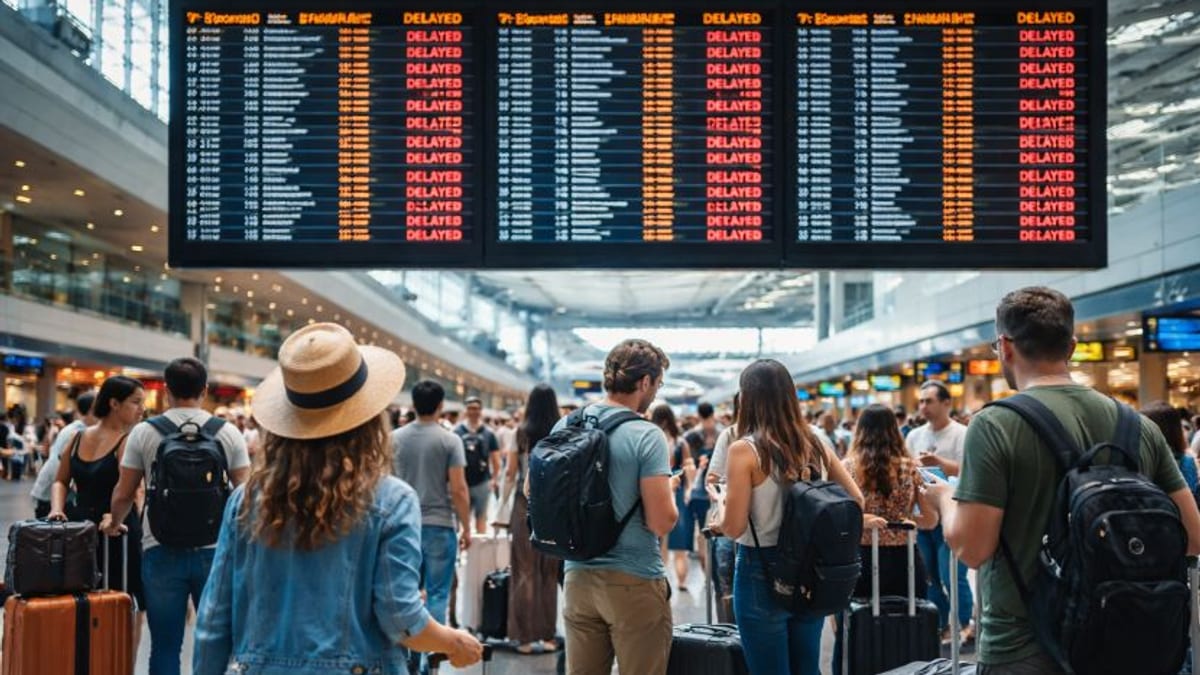
Image by Travel And Tour World
Delays Surge Across Major US Hubs
Publicly available tracking data on March 29 indicated that cumulative delays at Miami International, Phoenix Sky Harbor, Charlotte Douglas, and Philadelphia International climbed into the hundreds, with at least six flights cancelled outright as airlines struggled to keep already tight schedules running. American Airlines and Southwest, two of the largest domestic carriers, were among those most exposed due to their sizeable operations at these airports.
Miami and Charlotte, in particular, have been recurring pinch points this winter, according to aggregated flight statistics and passenger reports describing repeated rolling delays that often end in late-night cancellations. Phoenix and Philadelphia, both key connecting hubs, added to the strain as late arrivals cascaded into missed connections and crew-availability problems.
While the headline numbers may appear modest compared with past nationwide meltdowns, the timing of the disruptions, at the tail end of a busy spring travel period and on a weekend, amplified the impact for travelers attempting to connect through multiple hubs in a single day.
Weather, Winter Aftershocks, and Operational Strain
The latest wave of delays comes against a backdrop of a punishing 2025 to 2026 winter season for US aviation. Major storms in January and February repeatedly snarled traffic in the Midwest and Northeast, including Philadelphia and the broader Mid Atlantic, leaving aircraft and crews out of position and compressing airline schedules. Industry analysts note that even after a storm clears, the effects on fleet rotations and staffing can linger for days.
Recent winter events in early 2026 have also highlighted how quickly weather-related slowdowns can expose other vulnerabilities. When schedules are packed near capacity, relatively minor issues such as de-icing backlogs, runway flow restrictions, or short bursts of low visibility can lead to long strings of departure holds and late arrivals at downstream hubs like Miami, Charlotte, and Phoenix.
In several recent cases documented in public forums and flight-data dashboards, flights initially delayed for weather or congestion have then faced separate mechanical or crew-related issues once on the ground, compounding the disruption. Travelers in Charlotte and Miami have described multiple rounds of 30 to 45 minute rolling delays that extended into the night, only to culminate in cancellations after crews reached duty-time limits.
American and Southwest Under the Microscope
American Airlines, which operates large hubs in Miami, Charlotte, and Philadelphia, appears particularly exposed when irregular operations hit. Historical data and recent traveler accounts suggest that when winter storms or system outages occur, American’s dense hub-and-spoke network can experience a wave of cancellations and missed connections that may take days to unwind.
Southwest Airlines, with its point-to-point model and substantial presence in Phoenix and other Sun Belt cities, has also faced scrutiny since its widely reported operational collapse in December 2022. More recent analyses of US domestic flight data indicate that while Southwest and other major carriers have improved on some measures, the average length of a delay has grown, meaning that when delays strike, they tend to be more disruptive to passenger itineraries.
On March 29, both American and Southwest were among the carriers reporting clusters of delayed departures and arrivals at the four affected airports. Other airlines also experienced knock-on effects as congested taxiways, ramp constraints, and airspace flow programs slowed the movement of aircraft into and out of these already busy hubs.
Passenger Frustration Builds as Delays Cascade
For passengers, the statistics translate into long hours in terminals and growing uncertainty about when they will reach their destinations. In recent weeks, travelers passing through Charlotte and Phoenix have described being rebooked multiple times as flights slipped further behind schedule or were cancelled late in the day after crews timed out or aircraft were reassigned.
Accounts shared on public forums from Miami and Philadelphia in early 2026 depict travelers stuck for days attempting to get home, sometimes resorting to buying last-minute tickets on competing airlines such as Delta or Southwest to escape ongoing disruptions at American hubs. Some travelers reported being delayed through a chain of airports, starting with a weather or staffing issue in one city and continuing as misaligned schedules followed them from connection to connection.
These experiences underscore a broader reality of the current US air travel environment: even when the number of outright cancellations appears relatively low, a high volume of delays can leave passengers facing missed connections, overnight stays, and lost work time, particularly when peak travel days collide with lingering winter weather and tight crew schedules.
Systemic Challenges Highlight Need for Resilience
Analysts reviewing multi-year US flight performance data point to several systemic challenges contributing to recurring travel chaos. Demand has rebounded sharply since the pandemic, filling seats and leaving airlines with less slack in their networks. At the same time, staffing challenges, aircraft maintenance cycles, and aging IT infrastructure have created vulnerabilities that become evident whenever storms, technical glitches, or airspace constraints push the system beyond its limits.
Recent commentary from aviation experts emphasizes that while airlines have reduced some categories of controllable delays compared with the early 2020s, more congested skies and tighter schedules mean each disruption now tends to ripple further through the network. Airports like Miami, which handle intensive international and domestic traffic, and hubs like Charlotte and Philadelphia, which serve as critical connecting points, are especially sensitive to any disturbance.
For travelers, the events of March 29 serve as another reminder that US air travel remains highly susceptible to cascading disruptions. Consumer advocates suggest building in longer connection windows, monitoring flight status closely in the 24 hours before departure, and having contingency plans ready, particularly when connecting through major hubs during the volatile winter and early spring period.