

More news on this day
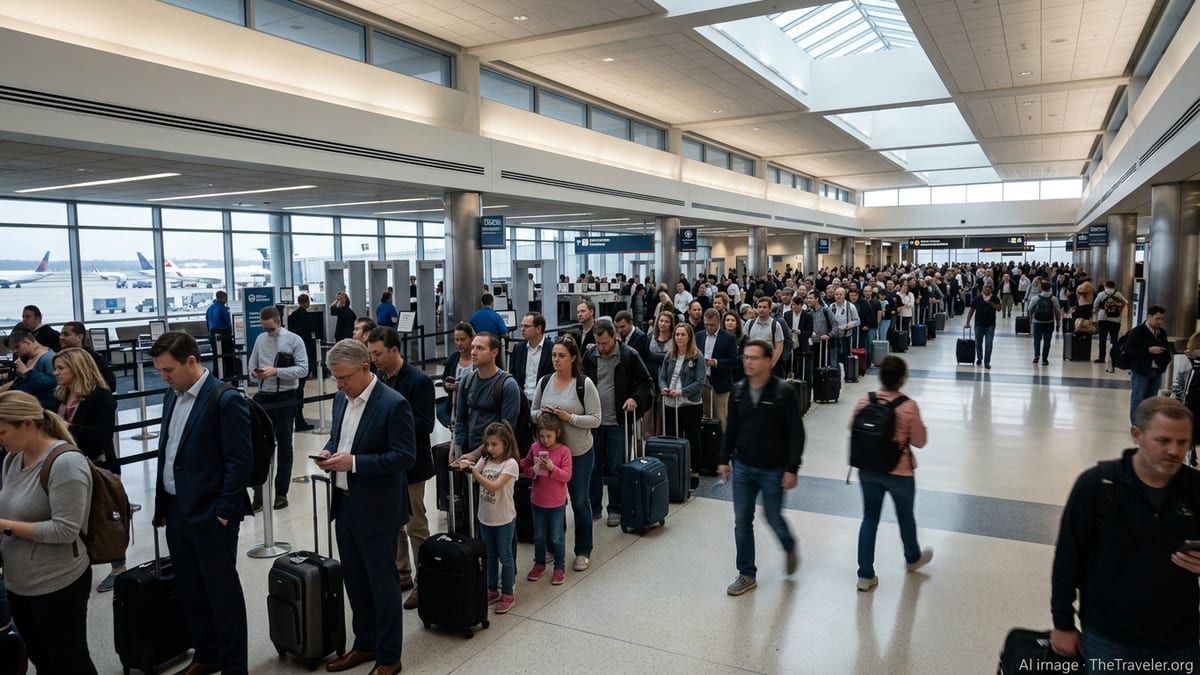
Security lines stretching into parking garages, rolling flight delays and last minute rebookings are confronting air travelers across the United States this week, as strained federal staffing and heavy spring demand combine to slow operations at Louis Armstrong New Orleans International, Reagan Washington National, LaGuardia and other major airports.
Get the latest news straight to your inbox!
Shutdown Fallout Meets Peak Spring Travel
Publicly available information indicates that the ongoing partial shutdown of the Department of Homeland Security, now stretching past five weeks for Transportation Security Administration personnel, is rippling through airport security checkpoints nationwide. TSA officers are working without pay, and staffing levels have fluctuated from day to day as workers call out or seek temporary employment elsewhere. The resulting variability has made it harder for airports to predict when lines will spike and for airlines to keep tightly scheduled operations on time.
Recent coverage from national outlets describes an uneven but persistent pattern. At some hubs, early morning and evening peaks have produced waits of well over an hour, while midday lulls can still see passengers moving through in under 20 minutes. The uncertainty is prompting airlines and airport operators to urge passengers to arrive significantly earlier than usual, particularly at large connecting hubs and popular leisure gateways.
Federal statistics compiled over the past several years show that security related delays, once a relatively small share of the nation’s overall aviation disruptions, have become a more visible contributor as travel volumes rebound from the pandemic and reach record territory. Academic analyses of Bureau of Transportation Statistics data point to a gradual shift in how screening bottlenecks propagate through heavily used nodes in the U.S. network, especially when combined with weather or air traffic control constraints.
Industry observers note that the current shutdown has landed just as carriers ramp up schedules for spring break and shoulder season travel. That timing has amplified the effects of any staffing gaps, leaving less margin to absorb long lines before flights must depart or sacrifice on time performance.
Louis Armstrong New Orleans International Under Pressure
Louis Armstrong New Orleans International Airport has emerged as one of the most visible flashpoints in the current disruption. Local and national coverage, along with widely shared photos on social media, show security queues wrapping out of the terminal and into the attached parking garage on multiple mornings in March. Travelers have reported arriving two to three hours early and still missing flights, while others have rushed through boarding at the last minute after navigating snaking lines.
According to recent reports from New Orleans based outlets, staffing shortages at TSA checkpoints have forced the consolidation of lanes and intermittent closures of dedicated options such as PreCheck. At times, passengers with expedited screening have queued alongside general travelers until they reach the podium, reducing the benefit of programs many purchased specifically to avoid unpredictable delays.
In response to the mounting congestion, the Department of Homeland Security has deployed Immigration and Customs Enforcement personnel to the airport to “bolster TSA efforts,” according to publicly released statements summarized in news coverage. The precise role of those officers at Louis Armstrong remains limited, with reports indicating they are not trained screeners and have largely served in support or observational positions. For passengers, their presence has done little to shorten waits so far, even as lines continue to spill into public areas during the busiest departure banks.
Local travel forums and community message boards suggest that some New Orleans residents are choosing to drive to smaller regional airports or adjust itineraries to avoid the worst congestion periods. Others are simply arriving in the pre dawn hours to hedge against the possibility of multi hour waits before morning departures.
Reagan National and LaGuardia Grapple with Compounding Constraints
On the East Coast, Reagan Washington National Airport and New York’s LaGuardia Airport are confronting their own mix of security bottlenecks and operational strain. Both facilities already operate within tightly constrained airspace and infrastructure, and recent safety incidents and regulatory changes have introduced additional complexity to their schedules.
At Reagan National, newly mandated radar separation standards for helicopters and fixed wing aircraft around the capital region, adopted by federal regulators after a fatal midair collision over the Potomac River, have tightened the choreography of takeoffs and landings. Publicly available aviation analyses indicate that these rules, layered atop long standing perimeter and slot restrictions, limit the flexibility to recover from ground side delays such as late arriving passengers held up in security lines.
LaGuardia, meanwhile, is coping with the aftermath of a deadly collision between an Air Canada regional jet and a Port Authority fire truck on the runway, which killed two pilots and disrupted operations. According to recent national reporting, safety investigators and crash response teams faced their own obstacles reaching affected sites, with at least one federal investigator delayed for three hours in a TSA line at a connecting airport. The episode underscored how prolonged security waits can impede not only leisure and business travelers but also critical emergency and oversight work.
Both airports have seen rolling delays and gate holds as airlines adjust to passenger backups at checkpoints. Weather related disruptions and residual effects from a recent late season blizzard in parts of the country have added further strain, leaving minimal slack in tightly banked schedules at Reagan National and LaGuardia.
Ripple Effects at Other Major Hubs
The challenges are not confined to a handful of headline making airports. Recent accounts from major hubs such as Chicago O Hare, Houston’s Bush Intercontinental and Phoenix Sky Harbor describe a patchwork of short staffed checkpoints, temporary lane closures and shifting wait times throughout the day. In some instances, passengers faced waits approaching three to four hours during peak morning banks, only for lines to shrink to single digit minutes later the same afternoon.
Coverage from multiple metropolitan newsrooms notes that Immigration and Customs Enforcement officers have been dispatched to several of these airports as well, in an attempt to supplement TSA’s stretched workforce. However, publicly reported details emphasize that ICE officers are not certified to conduct primary screening, limiting their ability to materially speed the flow of passengers through metal detectors and imaging machines.
Data highlighted in recent transportation studies show that as security lines lengthen at large hub airports, delays quickly cascade to smaller cities connected by those flights. Late departures from coastal gateways can strand travelers at midcontinent transfer points, compress connection times and increase the likelihood of missed flights, even when security operations at those secondary airports are functioning normally.
Airlines have started proactively issuing travel alerts, encouraging customers to build in extra time at certain airports and, in some cases, offering fee waivers for travelers who wish to adjust itineraries to avoid peak congestion windows. Industry analysts caution that such measures can only partially offset the broader operational drag created when security infrastructure struggles to keep pace with record passenger throughput.
Passengers Adjust Habits Amid Ongoing Uncertainty
For individual travelers, the immediate impact of the current turmoil is being felt in altered routines and heightened anxiety. Travel blogs, social media posts and regional reporting all point to a growing tendency among passengers to arrive far earlier than they might have in previous years, sometimes four hours or more before domestic departures at the most congested airports.
Some travelers are purchasing or renewing memberships in expedited screening programs in the hope of bypassing the longest queues. Yet with reports of intermittent closures or reduced capacity in those dedicated lanes at airports like Louis Armstrong, the benefits are not always guaranteed. Others are shifting travel to less popular times of day, booking first departures in the morning or late evening flights to avoid the mid morning and late afternoon surges.
Airport operators and local tourism groups remain concerned about the broader perception of the air travel experience at a time when demand for leisure and business trips is otherwise strong. Passenger satisfaction surveys in recent years have noted that while terminal upgrades and new concessions have improved the ambiance at many North American airports, persistent delays and long security lines can quickly erode those gains.
With Congress still debating longer term funding for Homeland Security and travel demand expected to stay high into the summer, publicly available commentary from aviation experts suggests that U.S. passengers may need to prepare for continued unpredictability in security wait times. For now, the sprawling lines at New Orleans, Washington, New York and other gateways serve as a visible reminder of how tightly linked federal staffing decisions are to the everyday experience of getting from curb to gate.