

More news on this day
Several major American airports are issuing fresh warnings for passengers and on-site workers to allow significantly more travel time in the coming weeks, as a packed calendar of high-profile sporting events is expected to strain terminal capacity, security checkpoints, and surrounding road networks.
Get the latest news straight to your inbox!
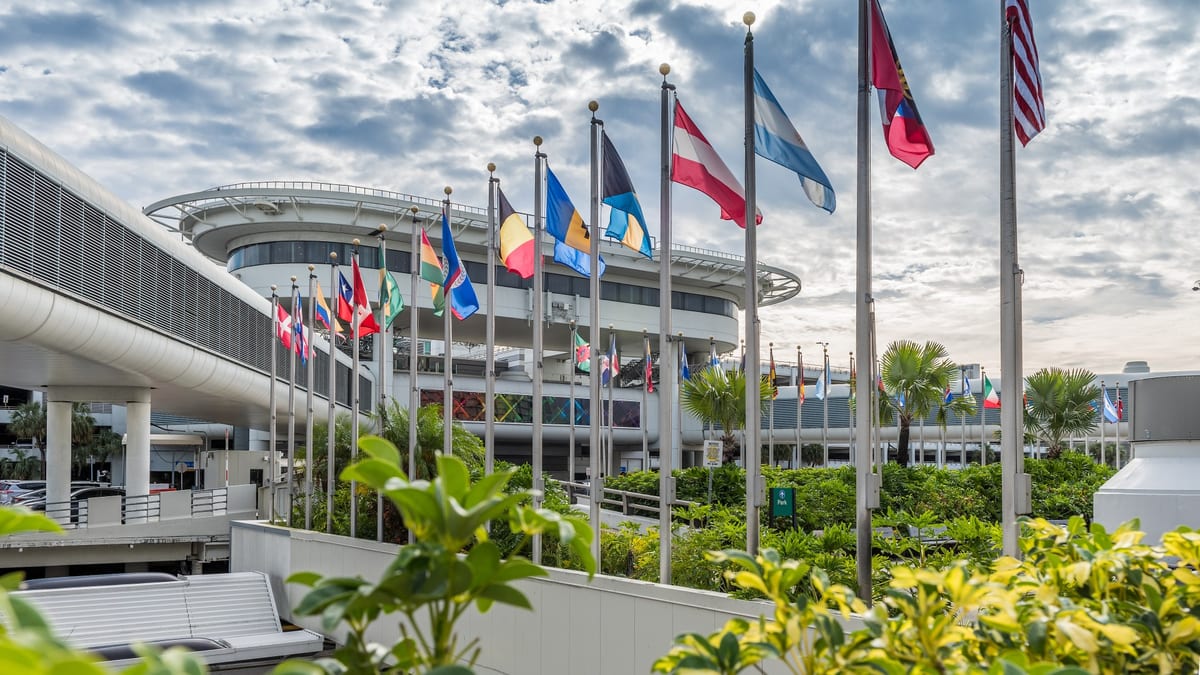
Image by the-sun.com
Big-game season collides with already fragile airport operations
Publicly available information shows that U.S. airports are heading into one of the busiest stretches of the year against a backdrop of staffing strains, recent storm-related disruptions and ongoing federal funding uncertainty. The combination is heightening concern about how well terminals will cope when tens of thousands of sports fans arrive in short, concentrated windows.
Reports on recent travel conditions describe long security queues at hubs such as Houston’s George Bush Intercontinental Airport and Atlanta’s Hartsfield Jackson, where wait times have swung sharply from minutes to more than an hour depending on the time of day. Industry coverage notes that these fluctuations are occurring even before the largest spring and summer sports crowds reach the gates.
Airlines and airport operators are already responding with travel advisories, urging customers to build in extra time both to reach the airport and to clear security once inside. In many cases, these recommendations now exceed the traditional guidance of arriving two hours before domestic flights and three hours before international departures.
Operational analyses published in recent days suggest that the margin for error is narrower than in past years. Training pipelines for new federal screeners can run four to six months, while construction projects and new safety rules at some large hubs are limiting the number of arrivals and departures that can be handled during peak periods.
College basketball finals put Phoenix and Indianapolis in the spotlight
The NCAA basketball postseason is one of the first major tests. Phoenix Sky Harbor International Airport has issued detailed guidance ahead of the 2026 NCAA Women’s Final Four, encouraging fans to plan extra time for parking, check in and security screening as crowds surge around game days. Airport communications highlight the importance of using tools such as early bag check and the airport’s people mover system to ease congestion inside the terminal.
In Indianapolis, air traffic notices published by the Federal Aviation Administration outline special procedures for the Men’s Final Four weekend in early April. The documentation anticipates a large number of aircraft operating into the region, particularly business jets and charter flights, and warns that standard radar services may be limited close to Indianapolis International Airport during the busiest hours.
Those measures are primarily directed at pilots and operators, but they signal the level of strain expected across the broader aviation system. When airspace becomes saturated with game related traffic, delays can cascade to commercial flights, extending the time passengers spend in terminals and at gates.
Travel planners advising corporate and fan groups for the college tournaments are now recommending that attendees leave additional time not only for airport processing, but also for surface travel between arenas, downtown fan zones and outlying hotels. That approach reflects lessons from recent years, when even minor disruptions on congested interstate corridors delayed thousands of passengers on their way to flights after championship games.
FAA restrictions and security shortages complicate World Cup and Super Bowl build up
Looking beyond the current basketball tournaments, federal and local planning for the 2026 sports calendar is already reshaping expectations around airport timing. Published coverage of recent congressional testimony indicates that the Transportation Security Administration is struggling to replace screeners who left during the Department of Homeland Security funding impasse, raising questions about checkpoint capacity ahead of the 2026 FIFA World Cup.
Analysts note that training timelines for new officers mean many hires made this spring will not be fully certified by the time the World Cup begins in June 2026. Airports serving host cities, including major hubs in Texas and along the East Coast, are therefore expected to lean heavily on overtime, schedule changes and aggressive passenger messaging that emphasizes early arrival.
The aviation system will also face pressure from American football. FAA notices for Super Bowl LX in February 2026 show that airports in the San Francisco Bay Area are planning reservation systems and special traffic management programs to handle a surge in business aviation and charter operations. These measures often lead to shifted departure times and holding patterns that can lengthen the overall journey for commercial travelers.
Separately, newly reported safety driven capacity limits at San Francisco International Airport are expected to constrain arrivals during certain weather conditions, adding another variable for passengers connecting through one of the country’s busiest transcontinental gateways on their way to major events.
Local advisories focus on roads, parking and shift changes
Airport messages tied to upcoming sporting events are not directed only at passengers. Public notices and local media reports highlight repeated appeals to airport employees, concession workers and ground transport drivers to adjust their commuting patterns on game days.
At airports serving large downtown stadiums and arenas, officials are promoting the use of public transit and encouraging workers to travel earlier or later than usual shifts, seeking to reduce the overlap between daily commuters and waves of fans. In Phoenix, for example, information made available ahead of the Women’s Final Four points travelers toward light rail connections and airport train links designed to bypass roadway bottlenecks.
Similar strategies are emerging in other markets preparing for marquee events in 2026, such as World Cup host cities and Super Bowl related airports. Local transport agencies are coordinating additional bus and rail services, while airport planners prepare for heavy use of rideshare zones and rental car centers before and after games.
These efforts are intended to keep road congestion from spilling back into the terminals. When traffic slows around airport access roads and highway interchanges, security checkpoints can see sharp spikes in volume as many passengers arrive simultaneously, amplifying the need for the extra buffer time now being recommended.
What travelers can expect in the months ahead
For travelers, the immediate impact is likely to be felt in the form of more assertive and frequent advisories to arrive early on days when major games are scheduled. Airport websites, social media feeds and airline notifications are already highlighting specific weekends tied to college basketball, Formula One races, championship football and, further out, World Cup matches.
Industry observers expect that some airports will experiment with more granular guidance, such as recommending different arrival times by terminal, airline or time of day as data becomes available. That could be especially important at hubs that serve both everyday travelers and large groups moving on charter flights to and from events.
Travel analysts point out that these warnings do not mean every passenger will experience long lines or delays. Instead, they reflect an attempt to smooth demand and avoid the most severe bottlenecks that can emerge when aircraft movements, security staffing and surface transport all come under pressure at once.
With the United States set to host a dense lineup of global tournaments and championship games through at least 2026, signs suggest that stronger, more detailed messaging about airport timing will become a standard feature of big event travel. Passengers and airport workers are being urged to treat game days as special operations days and to build that reality into their plans long before they head to the terminal.