

More news on this day
Thousands of travelers were stranded on Sunday and Monday after United Airlines, Southwest, American Airlines and Air Canada abruptly canceled flights to key Mexican vacation hubs, as a sudden surge of cartel violence and security operations following the reported killing of drug lord Nemesio “El Mencho” Oseguera Cervantes plunged parts of the country into chaos.
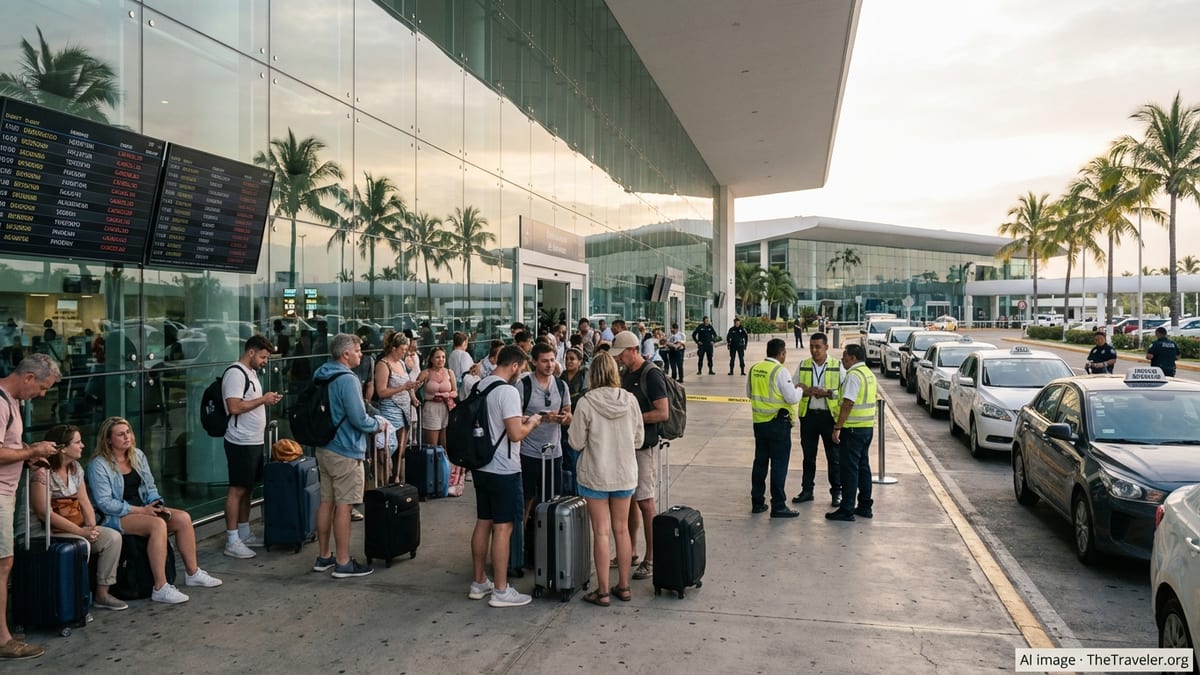
Cartel Leader’s Killing Sparks Sudden Aviation Disruption
The wave of cancellations followed a Mexican military operation on February 22 that authorities say killed El Mencho, the powerful and long‑hunted leader of the Jalisco New Generation Cartel, in the mountains of Jalisco state. Within hours, retaliatory attacks, road blockades and arson erupted across multiple states, including Jalisco, Tamaulipas, Guerrero, Nuevo León and others, overwhelming local security forces and catching travelers off guard.
In Pacific resort city Puerto Vallarta and the inland metropolis of Guadalajara, witnesses reported burning vehicles on highways, gunfire near transport hubs and barricades that made reaching airports nearly impossible. Although terminal buildings remained under federal protection and, in some cases, technically open, access roads were choked by blockades and security checkpoints, forcing airlines to prioritize safety over schedule commitments.
As images of smoke plumes, shuttered shops and empty airport concourses circulated, aviation authorities and carriers moved rapidly from monitoring to action. By Sunday evening, a patchwork of airline‑by‑airline decisions had effectively severed many air links between North America and Mexico’s Pacific coast leisure markets, typically bustling at this time of year with winter tourists.
The timing intensified the impact. Late February is peak season for travelers from the United States and Canada seeking warm‑weather escapes, and flights into Puerto Vallarta and other coastal airports are often close to full. The sudden halt in operations created an immediate backlog of displaced passengers with few ground transport options due to the violence.
United, Southwest and American Extend Cancellations Beyond Initial Shock
United Airlines moved quickly to suspend all flights to Puerto Vallarta and Guadalajara, first for Sunday’s schedule and then, according to industry reports, extending those cancellations through at least February 25. The freeze affects services from several major hubs, including Houston, Denver, Chicago and San Francisco, and represents one of the most extensive single‑destination disruptions the carrier has implemented in recent years outside of severe weather events.
Southwest Airlines, which operates a substantial Mexico network from U.S. gateways including Houston and other western and southern cities, confirmed that it canceled all scheduled services into Puerto Vallarta on Sunday. Network planners have since pulled additional rotations for the coming days as the carrier evaluates conditions, with customer support teams preparing added sections once it is deemed safe to fly.
American Airlines, whose hub at Dallas–Fort Worth is a key connector for both Puerto Vallarta and Guadalajara, canceled flights to and from both cities for the remainder of Sunday and then extended its suspension through February 24. The airline has issued travel alerts allowing affected passengers to rebook without change fees, emphasizing that further operational adjustments remain possible as security assessments evolve.
Although each airline announced its decisions independently, the cumulative effect is a near‑total standstill in scheduled U.S. service to parts of Mexico’s Pacific coast for several days. Smaller route suspensions and diversions are also being reported on flights to Mazatlán and other destinations in regions touched by the unrest, underscoring the geographic breadth of the disruption.
Air Canada and Other Carriers Suspend Puerto Vallarta Operations
Air Canada, a major player in winter sun markets, has temporarily suspended its operations to Puerto Vallarta, initially covering February 22 and 23 as security incidents intensified around the resort city and nearby highways. The airline issued a travel notice describing “unexpected civil unrest” around Puerto Vallarta and Guadalajara and advising customers already in the region to remain in their hotels or current accommodations rather than attempting to reach the airport.
The Canadian flag carrier has relaxed ticketing rules for affected flights, waiving change fees and allowing passengers to modify travel dates or itineraries without penalties, subject to availability. Call centers and online channels have seen heavy traffic as travelers scramble to secure new plans, with some opting to reroute through alternate Mexican destinations not directly affected by the violence.
Other Canadian and regional carriers have followed suit. WestJet has reportedly canceled dozens of flights into Puerto Vallarta, Guadalajara and Manzanillo, diverting several aircraft that were already en route when the situation on the ground deteriorated. Additional Mexican airlines, including AeroMexico, Volaris and Viva Aerobus, have cut or suspended services to airports in Jalisco and neighboring states after blockades and staff shortages made operations untenable.
Despite the cancellations, Mexican airport operators stress that their facilities remain under the protection of federal security forces and, where possible, open for limited operations. The gap between runway readiness and real‑world accessibility, however, highlights how road security and surface transport can be just as critical as airspace when it comes to keeping tourism corridors functioning.
Travelers Stranded as Shelter‑in‑Place Advisories Spread
The immediate human impact of the cancellations has been felt by thousands of tourists and business travelers marooned on both sides of the border. In Puerto Vallarta, some visitors awoke to hotel notifications instructing them to stay inside as smoke from burning vehicles darkened the skyline and local authorities shut down public transportation, taxis and ride‑hailing services across parts of the city.
Inside the resort zone, hotel managers have shifted from standard check‑out routines to crisis protocols, extending stays where possible and coordinating with consulates to keep guests informed. With roads blocked or considered unsafe, many travelers who were due to catch flights home have been forced to wait out the crisis in beachfront properties and rental accommodations, increasingly dependent on local staff and official updates.
At airports in Houston, Phoenix, San Francisco and other U.S. gateways, the opposite scene has played out: departure boards filled with cancellations to Mexican destinations, security lines thinning as passengers are turned back from check‑in counters, and customer service desks crowded with people seeking rebooking or refunds. In some cases, travelers bound for weddings, cruises or long‑planned family vacations learned mid‑journey that their flights were being turned around or diverted.
Disruption has also rippled into connecting traffic, particularly for American and Canadian snowbirds who transit through major hubs to reach Mexico’s Pacific coast. With many coastal flights grounded, airlines have urged customers not to travel to the airport unless their flight status is confirmed and to monitor channels for travel waivers and options such as credit vouchers or alternate routings through unaffected cities.
Governments Issue Security Alerts and Tighten Travel Guidance
As the violence spread on Sunday, the U.S. government issued a rare, broad security alert advising citizens in multiple Mexican states to shelter in place. The advisory cited “ongoing security operations” and related criminal activity, warning that roadblocks and clashes were affecting access to airports in Guadalajara and Puerto Vallarta and had already contributed to domestic and international flight cancellations.
U.S. consular officials urged travelers and residents alike to avoid large gatherings, stay indoors away from windows and monitor local news and official channels for instructions. Embassy staff in affected areas were themselves placed under movement restrictions, a signal that authorities view the threat as dynamic and serious rather than localized or short‑lived.
Canadian officials issued parallel guidance, advising citizens in Jalisco and other affected regions not to attempt overland travel to airports and to be prepared to shelter in place for extended periods. Both governments have encouraged travelers to register with consular services and to keep family members informed of their whereabouts, particularly as intermittent communications outages and localized power disruptions complicate information flows.
The heightened alerts come on top of longstanding travel advisories for parts of Mexico where organized crime poses persistent risks. What distinguishes the current episode, officials say, is the speed and scale of the retaliation following the military operation, as well as its reach into traditionally tourism‑focused corridors that have generally remained insulated from the worst cartel violence.
Tourism Hotspots Face New Questions Over Safety and Reliability
Puerto Vallarta, Guadalajara and nearby Pacific resorts have long been marketed as relatively safe alternatives to some of Mexico’s more volatile regions, with tourism officials emphasizing secure hotel zones, busy international airports and extensive foreign investment in hospitality infrastructure. The sudden turn in fortunes, triggered by a single security operation and subsequent reprisals, is now prompting difficult questions for both local authorities and the international travel industry.
In recent years, Puerto Vallarta has become a strategic node not only for vacationers but also for the Jalisco New Generation Cartel’s logistics, according to analysts, blurring the line between tourism and organized crime interests. The latest violence, which has included attacks and blockades near commercial centers and main roads used by visitors, has undercut efforts to maintain a perception of distance between cartel activity and tourist spaces.
For tour operators and hotel groups, the immediate priority remains guest safety. Many are working closely with airlines and local officials to coordinate staggered departures once flights resume, in an attempt to avoid bottlenecks that could leave travelers waiting outside terminals or stuck on backed‑up highways. Some resort properties are offering discounted extensions, meal credits or complimentary activities to stranded guests, both as a goodwill gesture and as a way to keep people on‑site and out of potentially risky areas.
In the medium term, however, tourism boards and investors may have to grapple with reputational damage in key source markets. Travel advisors in the United States and Canada report a spike in client inquiries about safety in Mexican destinations, with some vacationers already asking to switch to Caribbean islands or domestic beach resorts for upcoming spring and summer trips.
Airlines Balance Safety, Liability and Network Commitments
The mass cancellations across multiple airlines highlight how carriers weigh safety and liability considerations in volatile environments. While Mexican aviation authorities have not imposed a blanket closure on affected airports, airlines retain discretion over whether they consider conditions acceptable for operation, taking into account not just airspace but also the security of ground access routes, crew accommodations and emergency response capabilities.
Executives and safety teams typically consult a combination of government intelligence, local station reports and third‑party risk assessments before suspending or resuming service. In this case, reports of gunfire near airport approaches, burning vehicles on key highways and suspended ground transport tipped the balance toward caution. Industry observers note that few carriers are willing to risk crew or passenger safety, or the prospect of stranded aircraft, when reliable evacuation routes cannot be guaranteed.
The cancellations also carry financial implications, from lost ticket revenue to the cost of repositioning aircraft and providing refunds or travel credits. Yet airlines often judge that the reputational and legal damage of operating into an active security zone would be far greater. Some carriers are using the disruption as an opportunity to stress their safety‑first messaging, reiterating that schedules will only normalize once security partners and local authorities signal that conditions are stable.
For now, carriers are issuing rolling updates rather than firm restart dates, reflecting uncertainty about how quickly Mexican security forces can restore order and reopen key roadways. Travelers with bookings to affected cities over the coming week are being urged to check their flight status frequently and to consider flexible itineraries that allow for rapid route changes should the situation worsen or spread.
What Travelers Should Expect in the Coming Days
With United and Southwest canceling flights to Puerto Vallarta through at least mid‑week and American halting service to Puerto Vallarta and Guadalajara through February 24, aviation analysts expect a gradual, rather than immediate, resumption of operations even if violence subsides. Air Canada’s targeted suspension through February 23 could be extended if conditions on the ground do not markedly improve.
Travelers currently in affected regions should prepare for the possibility of extended stays, ensuring they have access to essential medications, cash and communication tools, as well as direct contact details for their airline and consulate. Experts advise against attempting improvised overland exits through regions experiencing roadblocks or clashes, stressing that official guidance and coordinated evacuation flights, if needed, offer safer options.
Those with upcoming trips to Mexico’s Pacific coast are being encouraged to review airline travel waivers, which may allow free changes to dates or destinations, and to consult travel insurance providers about coverage for security‑related disruptions. While many policies exclude civil unrest, some comprehensive plans or add‑on riders may offer limited benefits for trip interruption under these circumstances.
Ultimately, the pace at which flights resume and confidence returns will depend on how quickly Mexican authorities can contain retaliatory violence and reassure both carriers and foreign governments. Until then, the abrupt standstill in air links between North America and some of Mexico’s most popular vacation gateways stands as a stark reminder of how fragile travel connectivity can be in the face of sudden security shocks.