

More news on this day
American Airlines has become the latest major North American carrier to halt services to key Middle East destinations as widening airspace closures and escalating regional conflict force airlines to suspend routes to Israel, the United Arab Emirates, Qatar, Iraq and neighboring countries.
Get the latest news straight to your inbox!
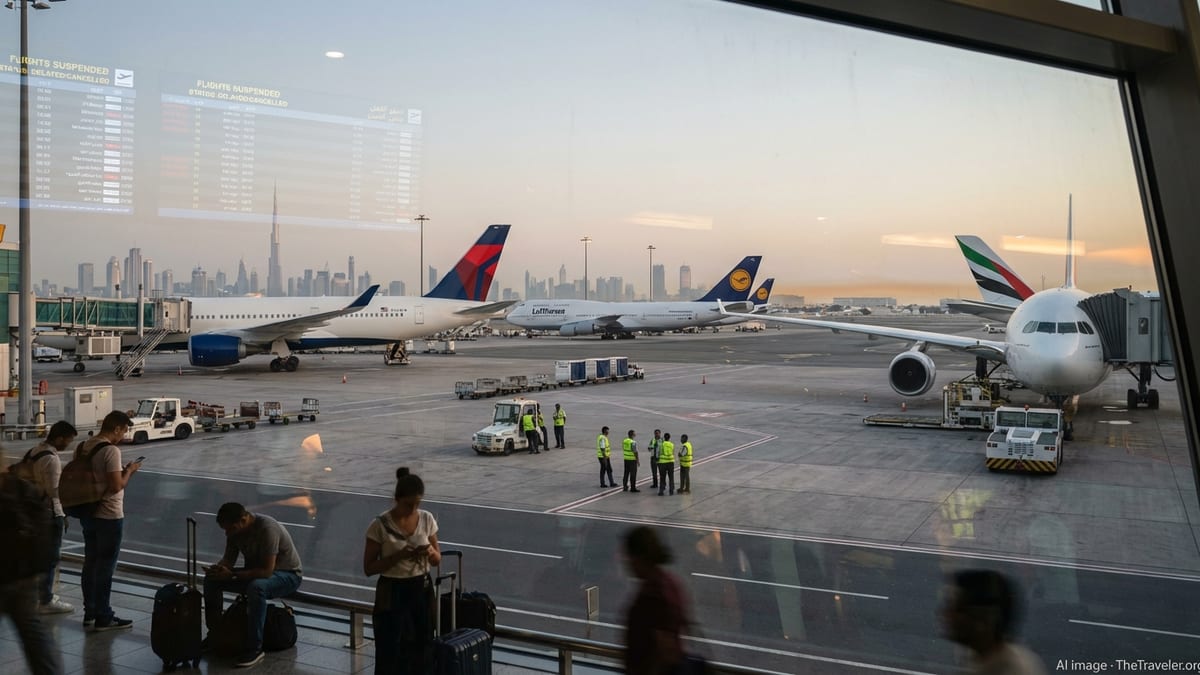
American Aligns With United, Delta and Partners on Middle East Pullback
According to publicly available schedule data and travel advisories, American Airlines has joined a growing list of carriers pausing flights to Israel and parts of the Gulf in response to the deteriorating security situation and shifting airspace restrictions. American’s adjustments place it alongside fellow US majors United Airlines and Delta Air Lines, as well as alliance partners and codeshare collaborators, in sharply reducing direct links between North America and the region.
Information compiled by passenger-rights platforms and travel-industry outlets indicates that American is among the international airlines referenced in recent overviews of widespread Middle East suspensions and limited operations. These roundups list numerous global carriers, including US, European and Asian airlines, that have either temporarily halted flights or are maintaining only skeleton schedules as they monitor official airspace notices and risk assessments.
For American’s customers, the changes primarily affect itineraries touching Israel and key Gulf hubs via partner connections, since the airline relies heavily on joint ventures and codeshares for deeper Middle East coverage. The broader network of alliances means that even when American is not the operating carrier, suspensions by partner airlines can significantly disrupt through-ticketed journeys originating in the United States.
Travel waiver policies have become a central tool for US airlines navigating the crisis. While formal statements focus on change-fee flexibility and rebooking options, frequent updates to waiver periods and affected cities underline how quickly conditions are evolving and how closely network planners are tracking developments in the region.
Air Canada, WestJet and Other Canadian Carriers Extend Route Suspensions
In Canada, flag carrier Air Canada has repeatedly extended the suspension of flights on its high-profile routes to Tel Aviv and Dubai. An update at the end of March indicated that services to both cities would remain on hold well into September, reflecting ongoing operational caution even as some other long-haul markets continue to recover. Trade publications covering the airline’s schedules note that these routes had been central pillars of its Middle East offering prior to the latest conflict escalation.
Specialist aviation coverage and regional business media report that Air Canada’s Tel Aviv and Dubai suspensions are part of a wider pattern of North American and European airlines stepping back from the region. The carrier has encouraged affected passengers to shift to alternative destinations in Europe, India and Africa, signaling a longer-term reshaping of how it deploys long-haul capacity while Middle East demand remains difficult to serve directly.
WestJet, Canada’s second-largest airline, has also been recalibrating its international footprint amid overlapping geopolitical and operational challenges. While WestJet’s most prominent recent suspension involved the end of its services to Cuba, industry reporting places the airline among carriers that have been cautious about expanding or reinstating Middle East flying during extended periods of uncertainty and high fuel and insurance costs.
For Canadian travelers, these moves mean that access to the Middle East increasingly depends on connections via European or Asian hubs operated by carriers still serving the region. As a result, routings have become longer and less predictable, with travelers advised to check for last-minute changes even when tickets were issued weeks in advance.
United, Delta and Global Partners Navigate Airspace Closures
United Airlines and Delta Air Lines have been adjusting their operations around Tel Aviv since late winter, as the conflict between Israel, Iran and other regional actors deepened. Public travel-advisory updates tracked by aviation analysts show that Delta has paused its New York and Atlanta services to Tel Aviv through at least early September, following a series of shorter rolling suspensions. United has repeatedly expanded its own “Middle East unrest” travel waivers, offering more flexibility for passengers booked to and from Israel.
These changes sit within a wider tapestry of network headaches caused by airspace closures and rerouting. Regional reporting from Iraq notes that the country recently extended its airspace closure for an additional week, citing security considerations as cross-border missile and drone activity continues. Similar closures and restrictions have periodically affected airspace over Iran, the Gulf and parts of the Eastern Mediterranean, forcing airlines to cancel flights outright or accept significantly longer routings around excluded zones.
European and Asian airlines have responded in similar fashion, as outlined in travel-compensation and consumer rights briefings that track which carriers remain operational. Recent summaries list Qatar Airways, Gulf carriers, European flag airlines and several Asian long-haul operators among those either canceling services outright or maintaining heavily reduced schedules to cities such as Dubai, Doha, Riyadh, Tel Aviv and Beirut.
For US travelers, the cooperation between American, United, Delta and their alliance partners means that a decision by a non-US airline to suspend a route can still disrupt an itinerary ticketed through a US carrier. Codeshare agreements, which normally broaden choice and convenience, now act as conduits through which regional instability spreads quickly across multiple global networks.
Wider Regional Crisis Severely Curtails Travel Options
The latest airline decisions cannot be viewed in isolation from the broader conflict and its impact on aviation infrastructure. Reports on the 2026 strikes on Qatar and subsequent regional military activity highlight how closures of Qatari, Israeli and Emirati airspace have rippled across the global route map. When major hubs such as Doha, Dubai and Tel Aviv become temporarily inaccessible or subject to tight restrictions, flight planners face complex detours that may not be commercially or operationally viable.
Travel-industry analyses describe hundreds of cancellations and delays across the Middle East during March as airlines grappled with airspace bans, military activity near key corridors and congestion at alternative airports. Some Gulf carriers have attempted to maintain partial operations by rerouting via secondary airports or using more southerly tracks, but these workarounds add time, fuel burn and scheduling challenges.
The disruptions are not confined to passenger flights. Cargo networks and postal services into the region have also been affected, with logistic notices from mail and freight operators documenting suspended service to countries including Israel, Iraq, Qatar and the United Arab Emirates. These knock-on effects highlight the extent to which air connectivity underpins not only tourism but also trade and everyday commerce.
Travel advisories from multiple governments continue to warn of potential rapid changes in the operating environment. This in turn influences airlines’ risk calculations, as carriers must weigh demand for essential travel and repatriation against the possibility of sudden new restrictions or security incidents that could strand aircraft and crew.
What Travelers Can Expect in the Months Ahead
With American, United, Delta, Air Canada and other airlines in North America aligning more closely with their international peers on Middle East suspensions, travelers can expect limited direct options to Israel, the Gulf states and Iraq for at least the early part of the northern summer season. Industry observers note that many airlines have shifted from very short-term cancellations to longer suspension windows that extend into late spring or early autumn, suggesting they do not anticipate a rapid normalization.
Passenger-rights organizations advise that customers already booked to affected destinations should monitor airline notifications closely and make use of rebooking or refund options where available. Policies vary by carrier, but many waivers allow passengers to change their destination or push travel dates into late 2026, sometimes without additional fees, though fare differences may still apply.
Travel planners are also watching how airlines redeploy capacity freed up from Middle East routes. Early indications from schedule filings and corporate announcements show increased focus on transatlantic services to Europe and on long-haul flights to South Asia and Africa, markets perceived as offering more stable demand and operational reliability under current conditions.
For now, publicly available information points to a prolonged period of disruption across Middle East air corridors, with American’s latest suspensions underscoring how deeply the conflict is reshaping global air travel. The situation remains fluid, and airlines are likely to continue issuing rolling updates as they respond to new airspace notices, risk assessments and diplomatic developments.