

More news on this day
The US Federal Aviation Administration is facing renewed scrutiny over its ability to monitor United Airlines’ maintenance and safety practices, after a federal watchdog found that chronic staffing shortages and reliance on virtual inspections have left key risks insufficiently overseen across the carrier’s global operations.
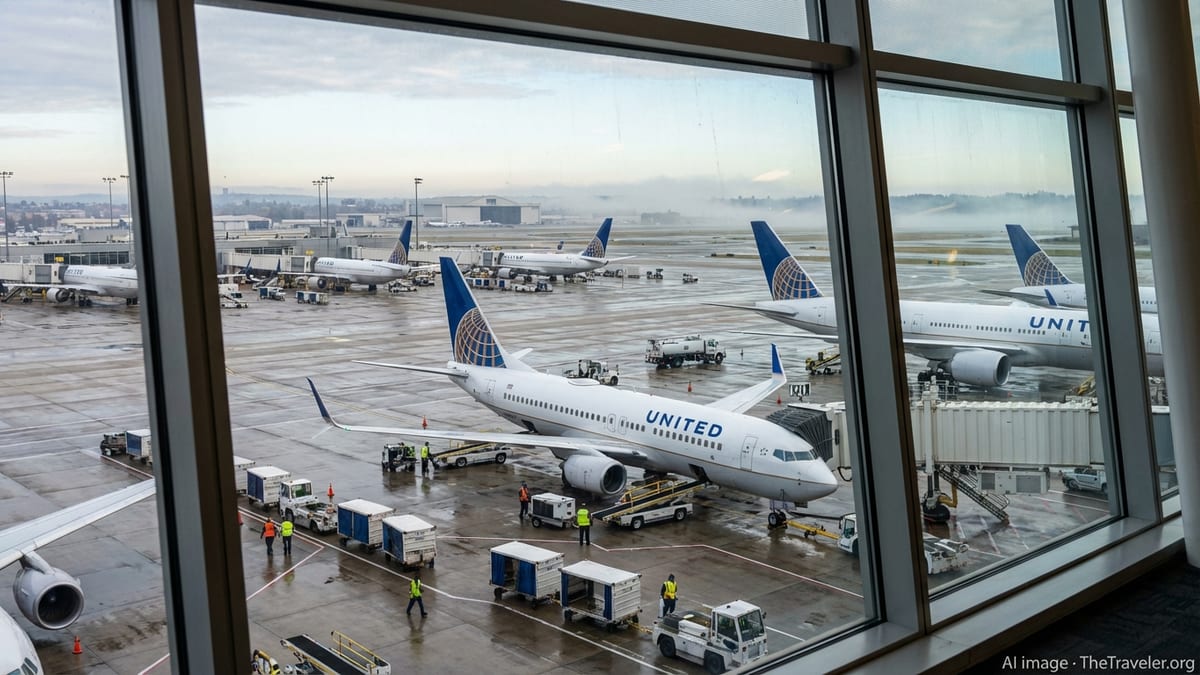
Watchdog Audit Puts FAA Oversight Under the Microscope
A newly released audit from the US Department of Transportation’s Office of Inspector General has concluded that the FAA lacks the staffing and planning needed to effectively oversee United Airlines’ sprawling maintenance network. The report, dated February 18, 2026, found that the certificate management office responsible for United does not have enough inspectors to keep pace with required on site reviews, particularly at major maintenance providers and engine facilities.
The watchdog launched its review in response to a series of recent incidents involving United aircraft, including in flight engine shutdowns, runway excursions and emergency landings. While the audit did not identify a single systemic defect in United’s fleet, it raised serious questions about whether federal regulators have the resources and tools to detect emerging safety trends at one of the world’s largest airlines, which carries more than 160 million passengers a year.
Investigators concluded that gaps in oversight are not the result of a single failure, but of a combination of thin staffing, high turnover among inspectors, outdated workforce planning and barriers to accessing United’s internal safety data. Those weaknesses, the report warned, risk allowing maintenance issues to go unnoticed or unaddressed for longer than regulators would normally tolerate.
The findings land at a sensitive moment for US aviation, as travelers return to the skies in near record numbers and public attention to airline safety intensifies following a series of headline grabbing incidents across the industry. For many frequent fliers, the question is shifting from how safe aircraft are, to whether the watchdogs tasked with monitoring them are being stretched too thin.
Staffing Shortages and Lost Institutional Knowledge
At the heart of the inspector general’s report is a stark assessment of staffing at the FAA office that oversees United. Investigators found persistent vacancies among front line inspectors and specialists, with some positions left unfilled for extended periods. That has translated into heavier workloads for remaining staff, making it harder to complete required inspections and follow up on findings in a timely manner.
One of the most striking examples highlighted by the audit involves oversight of United’s engine operations. The airline manages more than 2,000 engines across its fleet, yet the FAA reportedly has only two inspectors currently assigned to monitor this highly technical and safety critical area. With one of those inspectors expected to retire in 2026, auditors warned that critical expertise could be lost unless knowledge is documented and transferred to newer personnel.
The report also emphasized the impact of turnover on what it termed “institutional knowledge.” Long serving inspectors often accumulate deep familiarity with a carrier’s procedures, culture and recurring problem areas. When those inspectors retire or depart without adequate succession planning, their experience can evaporate, leaving less seasoned staff to interpret complex maintenance data and risk signals with limited context.
According to the audit, these staffing dynamics have already resulted in fewer inspections at United’s domestic and international repair stations. In some years, more than a third of required maintenance provider inspections were not completed, and in others the shortfall approached two thirds. Such gaps, the report suggested, leave blind spots in the regulatory picture of how United and its contractors are maintaining aircraft that operate daily throughout the United States and across key global routes.
Virtual Inspections Raise Questions About Safety Margins
In addition to highlighting the sheer lack of personnel, the watchdog sharply criticized how the FAA has tried to work around those constraints. Instead of postponing certain inspections when inspectors and travel budgets are not available, front line managers have at times instructed staff to conduct reviews virtually, through document checks, video calls or other remote means, the report said.
FAA policy calls for required inspections that cannot be performed on site to be rescheduled, using a “resources not available” designation. The inspector general found that the agency has not consistently followed that guidance in United’s case, and that virtual inspections have become more common than intended. While remote tools can be useful for some compliance tasks, auditors warned that they are no substitute for being physically present on the hangar floor or at a repair station.
Inspectors interviewed for the audit expressed concern that virtual reviews limit their ability to spot subtle maintenance issues, assess the condition of tools and facilities, or observe whether written procedures match actual practice. Remote visits were also more likely to result in key items being tagged as “not observable,” simply because they required an in person presence to verify.
For travelers, the debate over virtual versus in person inspections may seem technical, but it goes to the heart of how safety margins are preserved. Physical oversight has long been a cornerstone of the aviation safety system, allowing regulators to see first hand how work is being done. The shift toward remote checks, driven in part by staffing and resource pressures, is now drawing sharper scrutiny from lawmakers, unions and consumer advocates.
Recent United Incidents Keep Public Attention Focused
The timing of the audit underscores why United’s operations have become a focal point in the broader conversation about FAA oversight capacity. Between 2024 and late 2025, the airline experienced several high profile incidents that, while not resulting in fatalities, highlighted the importance of rigorous maintenance and monitoring.
In March 2024, passengers on a United flight in Houston were evacuated after the aircraft rolled off the runway following landing. The following day, a United jet bound for Japan lost a tire during takeoff from San Francisco, forcing a diversion and emergency response before the aircraft ultimately landed safely in Los Angeles. Each event drew widespread media coverage and raised questions about the condition of equipment and the robustness of pre flight checks.
More recently, in December 2025, a United aircraft departing from Washington Dulles International Airport suffered an engine failure during takeoff. Pilots shut down the affected engine and returned safely to the airport, but investigators flagged the incident as another data point in a pattern of maintenance related events the FAA is expected to track closely.
Individually, such events are not uncommon in commercial aviation, and they are often managed safely thanks to multiple layers of redundancy and training. Together, however, they provide context for why regulators and watchdogs are paying renewed attention to maintenance practices and the resources devoted to overseeing them, particularly at carriers with global networks and dense schedules.
FAA and United Respond to Oversight Criticism
The FAA has not publicly disputed the core findings of the inspector general’s report. In a written response included with the audit, the agency agreed with most of the recommendations and pledged to adopt a more systematic approach to staffing its inspection workforce. Officials said they would reevaluate staffing models, conduct an independent survey of inspector workloads and office culture, and improve training aimed at helping inspectors access and interpret United’s safety data.
The agency framed these steps as part of a broader effort to ensure that inspector capacity keeps pace with evolving airline operations and regulatory demands. It has signaled plans to review how often and under what circumstances virtual inspections are used, with an eye toward aligning practice more closely with policy that prioritizes on site oversight when safety is at stake.
United, for its part, has emphasized that it works closely with the FAA on a daily basis and maintains its own safety management system, which is designed to identify hazards, analyze risk and implement mitigation measures across its fleet. In a statement responding to coverage of the audit, the airline said it has long advocated for ensuring that the FAA has the resources necessary to perform its mission, while stressing that safety remains its highest priority.
Executives are keenly aware that public confidence is as critical to the airline’s business as on time performance and route network strength. While the audit focuses on the regulator rather than United itself, the airline’s name and operations are at the center of the discussion, giving it strong incentives to demonstrate that it is proactively cooperating with regulators and investing in its own internal safeguards.
Implications for Travelers and the Wider Airline Industry
For passengers deciding whether to book a ticket on United or any other major carrier, the inspector general’s report arrives in a landscape where aviation safety in the United States remains statistically robust, even as isolated incidents spark intense media attention. Commercial air travel continues to boast one of the best safety records of any mode of transportation, thanks to layers of engineering, training and oversight built up over decades.
What the new findings highlight is less an immediate crisis in the air and more a structural strain on the regulatory system that underpins that safety record. As airlines have expanded fleets, added new routes and leaned on complex global maintenance networks, the FAA’s inspector workforce has not always grown or adapted at the same pace. That imbalance can affect how quickly regulators detect patterns in minor incidents or maintenance slips that, if left unaddressed, might eventually contribute to more serious events.
The concerns raised in the United audit also echo earlier watchdog reviews of FAA oversight at other carriers, including American Airlines, Southwest Airlines and Allegiant Air. In each case, auditors pointed to similar themes: limited inspector staffing, uneven use of risk based oversight tools and challenges in keeping up with rapid changes in airline operations and outsourcing.
Industry analysts note that addressing these issues will likely require both additional funding for the FAA and a more flexible approach to workforce planning, including targeted hiring of specialists in avionics, powerplants and data analytics. For travelers, any move that strengthens the capacity of front line inspectors and modernizes oversight tools could translate into even higher safety margins in the years ahead, though such changes rarely happen overnight.
Data Access and the Push for Risk Based Oversight
Beyond staffing numbers, the inspector general’s report called out specific obstacles that FAA inspectors face in accessing and making use of United’s internal safety and maintenance data. Modern oversight relies heavily on analyzing large data sets to identify patterns, from repeated component failures to trends in deferred maintenance. Without seamless access to such information, regulators can struggle to keep their risk assessments current.
Auditors found that not all inspectors assigned to United were fully trained or equipped to navigate the airline’s data systems. In some cases, limited permissions or technical hurdles slowed down efforts to review records, forcing inspectors to rely on summaries or reports prepared by others rather than examining raw data themselves.
The report recommended expanded training and clearer protocols for data sharing between the airline and the FAA, arguing that better access would improve inspectors’ ability to target high risk areas and verify whether corrective actions are working. Strengthening this data driven approach has been a central theme in aviation safety strategy for years, but the United audit suggests that implementation on the ground still lags in places.
For regulators and airlines alike, the challenge is balancing operational complexity, privacy and cybersecurity concerns with the imperative to spot small issues before they grow. As aircraft generate ever larger volumes of performance and maintenance data, the ability of inspectors to interpret that information effectively will be a key factor in how well oversight keeps pace with technological change.
What Comes Next for FAA Oversight of United
In the wake of the audit, attention is turning to how quickly the FAA can translate its commitments into concrete changes. The agency has set targets for implementing many of the inspector general’s recommendations by the end of the year, including updates to staffing assessments, workload surveys and training programs.
Lawmakers on Capitol Hill are expected to scrutinize those efforts as part of broader debates over FAA funding and reauthorization. Pilot unions, maintenance workers and consumer advocates are also likely to weigh in, pressing for reforms that they argue will better align resources with the realities of modern airline operations.
For United, the coming months may bring additional engagement with regulators, including potential adjustments to how it shares data, coordinates inspections and documents maintenance practices at both in house facilities and third party repair stations. While the airline continues to operate its full schedule, added attention to safety processes could influence priorities for capital spending and operational planning.
Travelers are unlikely to see visible changes at the gate or on board as a direct result of the audit. The most important shifts will be behind the scenes, in how inspectors are deployed, how frequently they are present in hangars and on maintenance lines, and how effectively they can mine data for warning signs. The watchdog’s central message is that keeping US aviation as safe as passengers expect will depend not only on the performance of airlines like United, but also on whether the FAA has the people and tools it needs to keep watch.