

More news on this day
U.S. airlines are beginning to lean on the new long‑range Airbus A321XLR to sustain and grow winter transatlantic flying, using the single‑aisle jet to extend seasonal routes, tap secondary European cities and keep widebody aircraft focused on the busiest long‑haul markets.
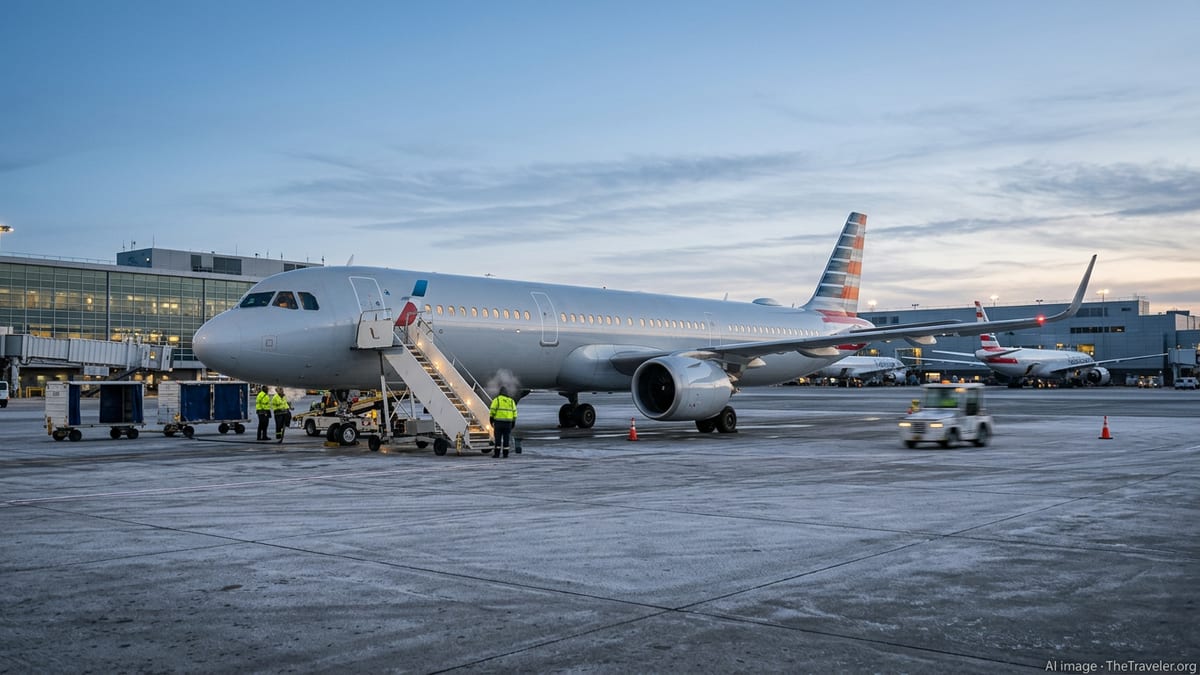
American Leads With New Narrowbody Crossings to Europe
American Airlines is at the forefront of the U.S. A321XLR rollout, pairing the type’s long range with a premium cabin tailored for overnight Atlantic crossings. After debuting the aircraft on transcontinental services between New York and Los Angeles in December 2025, American is now transitioning the jet to its first scheduled Europe routes from the U.S. East Coast in 2026, positioning the model as a workhorse for thinner long‑haul markets.
The carrier has highlighted New York–Edinburgh as a launch transatlantic city pair, using the A321XLR’s economics to make a route viable year‑round that previously struggled outside peak summer demand. Industry schedules filed for the upcoming winter season show the jet also being used to extend shoulder‑season flights to other mid‑size European markets that historically saw a sharp capacity pullback after October.
American executives have said the aircraft will allow the airline to keep more transatlantic flying in the schedule through the four to five lowest‑demand months of the year, rather than parking widebodies or cutting service entirely. The move is part of a broader strategy to defend share against rivals in Europe while redeploying larger jets to higher‑yield routes to major hubs on both sides of the Atlantic.
Capacity data from aviation analytics firms suggests American’s winter transatlantic seat count will shift gradually from a widebody‑dominated mix toward a more balanced blend of large and small aircraft, with the A321XLR responsible for much of the incremental growth to secondary cities.
United and JetBlue Prepare Similar Moves From East Coast Hubs
United Airlines, which has 50 A321XLRs on order, has long signaled that the jet will be central to its strategy of reaching more European and North African destinations from Newark and Washington. Executives have previously indicated that the type will largely take over Boeing 757 missions across the North Atlantic, freeing remaining widebodies for growth to major capitals and deeper expansion into Asia and South America.
The first A321XLR deliveries to United are slated to ramp up in the second half of the decade, and network planners have already pointed to “smaller cities in Europe and North Africa” as prime candidates for the aircraft. While many of these routes are expected to launch in the peak summer season, industry observers anticipate that the strongest performers will increasingly remain in the schedule during winter once the fuel‑efficient narrowbody proves its staying power.
JetBlue, which has used the A321LR and A321neo family to carve out a niche on transatlantic flights from New York and Boston, is also expected to incorporate the XLR variant as deliveries progress. The carrier has publicly discussed using long‑range single‑aisle jets to reach deeper into continental Europe from its Northeast bases, potentially adding winter‑friendly destinations where a widebody would be too large for off‑season demand.
Combined, the three U.S. carriers are positioning the A321XLR as a tool to broaden their joint transatlantic footprints while maintaining daily or near‑daily frequencies in winter to cities that once saw service limited to a few summer months.
Extending Seasonal Routes and Reaching Secondary European Cities
The immediate impact many travelers will notice is not an explosion of brand‑new cities, but rather the quiet extension of seasonal routes deeper into the winter calendar. In some cases, connections between U.S. hubs and mid‑size European airports that previously ended in October or early November are now scheduled well into December and early spring, enabled by the lower operating costs of the A321XLR.
Industry schedule filings and route announcements point to Scottish, Portuguese and other Northern and Western European destinations benefitting first, including airports such as Edinburgh and Porto where strong tourism interest exists but winter demand is highly variable. The A321XLR’s smaller gauge allows airlines to maintain daily or near‑daily service with fewer empty seats, making it financially viable to stay in the market when leisure traffic dips.
In addition to extending seasons, U.S. carriers are eyeing a new wave of so‑called “secondary” cities that lack the scale to support widebody aircraft in winter. These include regional capitals and coastal gateways with attractive tourism or visiting‑friends‑and‑relatives traffic but limited business demand. By pairing the A321XLR with flexible schedules and close coordination with European partners, airlines hope to build sustainable year‑round networks that spread beyond traditional London, Paris, Frankfurt and Amsterdam hubs.
For passengers, that could translate into more nonstop options from the United States to European cities that previously required a connection, even in the heart of winter, with modern cabins that narrow the comfort gap between single‑aisle and twin‑aisle aircraft.
Cabin Experience and Product Positioning on Long Narrowbodies
One key question as the A321XLR crosses the Atlantic in growing numbers is how travelers will perceive long overnight flights on a single‑aisle jet. U.S. carriers have attempted to address this by fitting their aircraft with lie‑flat business‑class suites, premium economy cabins and upgraded inflight entertainment packages that mirror or closely resemble those on their latest widebodies.
American’s early A321XLRs, for example, introduce a new generation of suites at the front of the cabin, targeting corporate travelers and high‑yield leisure customers on routes such as New York–Edinburgh and other East Coast links where schedule convenience and nonstop access can outweigh aircraft size for many passengers. Similar concepts are expected on forthcoming United aircraft, with the airline already signaling that its latest Polaris‑style seats will eventually appear on long‑range narrowbodies.
In economy, airlines are betting that modern cabin lighting, quieter engines and improved seat design will make the experience more comparable to a newer widebody than to older narrowbodies. However, some frequent flyers remain skeptical about spending six to eight hours overnight in a single‑aisle cabin, especially on full flights, and may continue to favor widebody options when schedules and fares are similar.
The result is a careful product‑positioning exercise. Carriers are likely to deploy the A321XLR most heavily on routes where demand is strong enough to support a premium cabin but not large enough to fill a widebody in winter, while continuing to use larger twin‑aisle jets on trunk routes where customer expectations around space and amenities are highest.
Competitive and Environmental Implications for the North Atlantic
The wider use of the A321XLR over the Atlantic this winter also has strategic implications for competition and sustainability. On the competitive front, U.S. airlines gain a tool long embraced by some European carriers, enabling them to match or surpass rivals’ reach into regional markets and emerging leisure destinations without committing scarce widebodies.
From an environmental perspective, the type’s fuel efficiency per seat allows airlines to reduce emissions compared with older aircraft it replaces, particularly aging 757s. While total emissions still rise as more flights are added, regulators and industry analysts note that replacing older jets with newer models is a critical component of aviation’s decarbonization pathway, especially on long‑haul routes where battery or hydrogen solutions are not yet practical.
For airports on both sides of the Atlantic, the shift may mean more consistent winter traffic patterns and a broader mix of destinations. Smaller European airports that secure A321XLR service could see a steadier stream of U.S. visitors in the off‑season, helping to smooth tourism demand and support local economies. U.S. gateway airports, meanwhile, gain more flexibility to balance runway capacity between widebody and narrowbody operations during peak travel periods.
As additional A321XLRs arrive in U.S. fleets over the next few years, industry experts expect winter transatlantic schedules to become denser and more geographically diverse, with the line between “seasonal” and “year‑round” service gradually blurring for a growing number of European destinations.