

More news on this day
Portugal’s tourism boom accelerated in 2025, with new records in visitor numbers, tourism receipts and overnight stays, as strong demand from the United States joined traditional European markets such as the United Kingdom, Spain, Germany, France and Brazil in pushing the sector to unprecedented economic highs.
Get the latest news straight to your inbox!
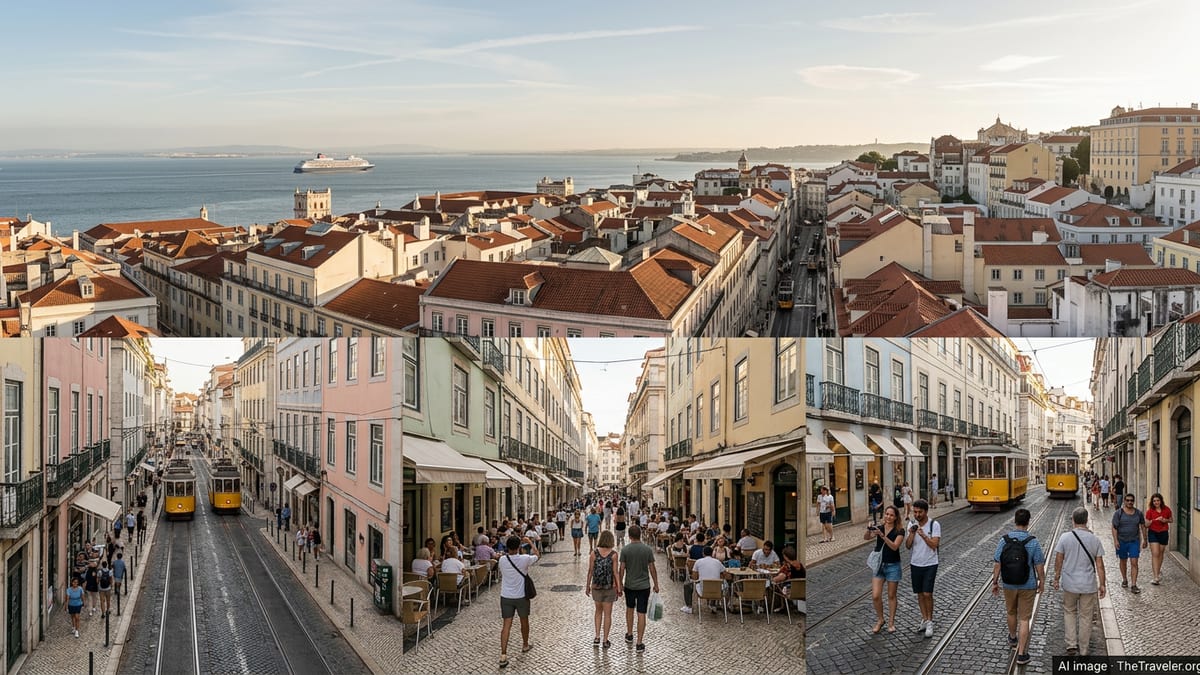
Record Visitors Cement Tourism as a Pillar of Portugal’s Economy
Recent data from Statistics Portugal and the Bank of Portugal indicate that 2025 marked another record year for the country’s tourism industry, consolidating its position as one of the most tourism-dependent economies in the European Union. Published figures show that Portugal welcomed around 32.5 million visitors in 2025, up roughly 3 percent on 2024, extending a multi‑year trend of post‑pandemic growth in international arrivals.
Tourism’s contribution to national output has grown alongside this surge. Publicly available information for 2024 placed the sector’s impact at around 12 percent of gross domestic product, and early assessments for 2025 suggest this share remained elevated as foreign spending on travel and accommodation continued to climb. Analysts note that tourism exports, measured as spending by non‑residents in Portugal, have risen faster than the broader economy for more than a decade, helping to improve the country’s external balance.
Overnight stays in tourist accommodation have followed a similar trajectory. Between 2021 and 2024, overnight stays by non‑residents recorded successive annual increases, and preliminary 2025 tallies point to another all‑time high. International guests now account for the majority of nights spent in hotels and similar establishments, underscoring how closely Portugal’s hospitality sector is tied to global travel flows.
Tourism authorities highlight that this growth has been broad based across city, coastal and inland destinations, but with particularly strong momentum in Lisbon, Porto and key resort areas. Lisbon alone hosted several million international hotel guests in 2024, and travel intelligence platforms report further gains in 2025 as airlines expanded transatlantic and intra‑European capacity into Portugal’s main gateways.
United States Emerges as a Core Growth Engine
While European neighbors remain crucial source markets, the United States has emerged as one of Portugal’s most dynamic engines of tourism growth. Data released by Statistics Portugal for 2025 place US residents among the top three foreign markets by overnight stays, with close to 10 percent of all non‑resident nights attributed to US visitors. That share puts the United States ahead of several traditional European feeder countries and reflects a rapid rise from pre‑pandemic levels.
Air connectivity has played a central role in this shift. Flag carriers and low‑cost airlines have expanded nonstop services between major US hubs and Portuguese cities, including Lisbon, Porto and Faro, making short breaks and multi‑city itineraries more feasible for American travelers. Travel trade analysis points to strong demand for culture‑focused city trips, wine and gastronomy in regions such as the Douro and Alentejo, and coastal escapes in the Algarve, often combined in a single itinerary.
Spending patterns also highlight the importance of the US market. Bank of Portugal tourism accounts show that high‑spending, long‑haul visitors contribute disproportionately to overall receipts. Industry observers report that US travelers typically stay longer and spend more per day than many short‑haul European visitors, particularly in higher‑end accommodation, dining and experiential activities. This has helped lift Portugal’s tourism revenues to new records, even as policymakers place more emphasis on value over volume.
Travel forecasters expect the United States to retain its position as a strategic market for Portugal through 2025 and beyond, supported by a strong dollar in recent years, growing awareness of Portugal as a safe and relatively affordable European destination, and ongoing marketing of lesser‑known regions to repeat visitors.
Traditional European Markets Remain the Backbone
Despite the surge in transatlantic demand, published statistics show that European neighbors still form the backbone of Portugal’s inbound tourism. According to data compiled by national tourism and investment agencies for 2024 and 2025, the United Kingdom, France, Germany and Spain collectively account for a substantial share of foreign overnight stays and visitor spending.
The United Kingdom remains the single largest source market by revenue, with Bank of Portugal figures for recent years assigning the highest tourism receipts to UK residents. German and French visitors follow closely in terms of spending, reflecting long‑standing travel ties and dense air links to Portugal’s coastal and island regions. Spanish residents, meanwhile, contribute heavily to cross‑border short breaks and peak‑season resort demand, especially in the Algarve and northern Portugal.
Brazil continues to stand out as a leading long‑haul market from outside Europe and North America, supported by linguistic and cultural links and by direct air services between São Paulo, Rio de Janeiro and Portuguese hubs. Travel industry summaries for 2024 and 2025 rank Brazil among the top non‑European contributors to overnight stays, with growth in both leisure and visiting‑friends‑and‑relatives travel.
Combined, these markets create a diversified base that has helped Portugal weather fluctuations in individual countries’ demand. When one market has softened, others have often accelerated, allowing total arrivals and overnight stays to trend higher. This mix of regional and intercontinental visitors is regarded by tourism strategists as an important buffer against external shocks, whether related to currency movements, fuel prices or economic conditions in any single region.
New Highs in Tourism Receipts and Overnight Stays
The most visible outcome of this broad‑based demand is a series of records in tourism receipts. Bank of Portugal balance‑of‑payments data and subsequent media coverage report that revenues from foreign tourists surpassed 27 billion euros in 2024 and climbed further in 2025, with press reports citing around 29 billion euros in total tourism income last year. This progression marks a sharp increase from pre‑pandemic levels and reinforces Portugal’s position among the EU countries where tourism has the greatest weight in the economy.
Tourism receipts have benefited from both higher visitor numbers and a strategic focus on attracting higher‑value segments, including long‑haul travelers, premium city‑break visitors and niche markets such as wine tourism and nature‑based experiences. Hotels and short‑term rentals have reported solid average daily rates during peak seasons, while shoulder‑season events and cultural programming have supported occupancy outside traditional summer months.
Overnight stays have set corresponding records. Statistics Portugal data for 2024 point to tens of millions of nights spent by non‑residents in tourist accommodation, with international stays growing faster than domestic ones. Provisional 2025 indicators suggest that these figures climbed again, reaching the highest volumes ever recorded in the country. Growth was particularly strong in metropolitan Lisbon and Porto, in coastal resorts, and on the islands of Madeira and the Azores.
Travel analysts note that capacity constraints in some hotspots are beginning to emerge, especially during peak summer weeks, as occupancy in popular districts hits very high levels. This is prompting ongoing discussions about how to manage visitor flows while keeping tourism as a central driver of job creation, tax revenue and regional development.
Balancing Rapid Growth with Sustainability Goals
Portugal’s rapid ascent as a tourism powerhouse has coincided with a broader international debate about how to balance economic benefits with environmental and social pressures. According to recent OECD assessments and national strategy documents, Portugal has placed sustainability at the core of its long‑term tourism planning, with a renewed Tourism Strategy 2027 explicitly linking growth targets to environmental stewardship and community well‑being.
Policy initiatives include encouraging travel outside peak summer months, promoting less‑visited regions, and supporting investments in energy‑efficient accommodation and public transport links to major tourist sites. Publicly available information highlights efforts to strengthen data collection on visitor flows, local impacts and emissions, in order to better calibrate infrastructure planning and regulatory responses.
At the same time, local governments in major cities and resort areas are reviewing rules around short‑term rentals, cruise ship calls and event permitting, seeking to address housing pressures and quality‑of‑life concerns while preserving tourism’s role as an economic lifeline for many communities. Industry bodies are also promoting training and upskilling programs to ensure that the sector can continue to attract and retain workers, including many foreign nationals employed in hospitality and related services.
With visitors from the United States joining strong demand from the United Kingdom, Spain, Germany, France and Brazil, most current forecasts anticipate that Portugal will remain on a robust tourism growth path in 2026. The key question for policymakers and businesses is how to channel this momentum into more geographically balanced, higher‑value and environmentally responsible forms of travel that can sustain Portugal’s new economic heights over the long term.