

More news on this day
The United States is rushing thousands of Marines and additional warships to the Middle East as escalating clashes with Iran close vital shipping lanes, trigger evacuations of foreign nationals and raise fears of a wider regional war.
Get the latest news straight to your inbox!
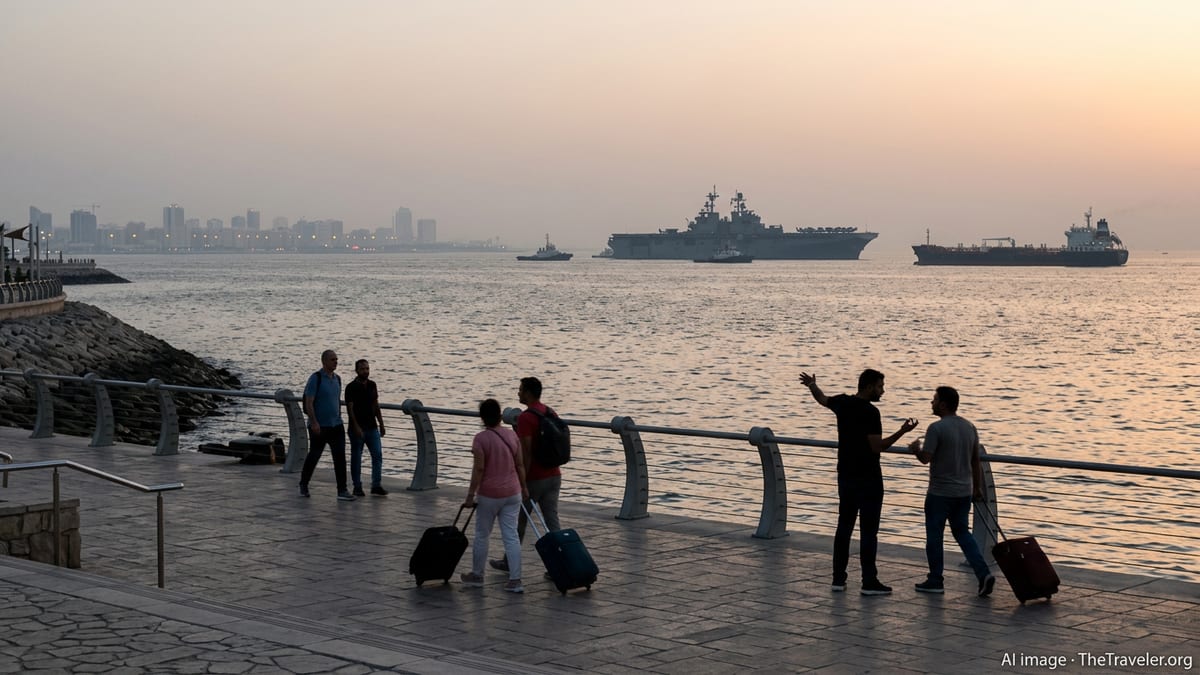
Major Marine Contingent Heads Toward Conflict Zone
US defense officials say roughly 2,500 Marines, embarked on at least one amphibious assault ship and accompanying vessels, are en route to the Middle East in one of Washington’s most visible military moves since open hostilities with Iran erupted in late February. The deployment, drawn in part from a forward-based Marine expeditionary unit, is intended to provide rapid-response forces capable of evacuations, limited raids and protection of key facilities across the region.
The Marines are expected to operate within the US Central Command theater, where American forces have been striking Iranian military infrastructure following a coordinated Israeli and US air campaign on Iranian territory. Their arrival will add a flexible ground and air-ground component to a buildup that has so far been dominated by air power, missile defenses and naval assets.
Pentagon officials have framed the move as a deterrent step and a way to protect US personnel and shipping, while declining to spell out precise rules of engagement. Analysts note, however, that placing a sizable Marine force closer to Iranian territory and proxy groups increases the risk that any localized incident, such as a drone or missile attack on a base or ship, could escalate quickly.
Strait of Hormuz Disruptions Send Shockwaves Through Trade
The Marine deployment comes as Iran’s missile and drone barrages, along with reported minelaying attempts, have effectively choked traffic through the Strait of Hormuz, the narrow waterway through which around a fifth of the world’s traded oil normally passes. US forces say they have destroyed multiple mine-laying vessels in recent days, but shipping companies remain wary of routing tankers and container ships through the area.
Insurance costs for vessels transiting the Gulf have surged, with major maritime insurers warning of sharply rising war-risk premiums and the possibility of partial coverage withdrawals if the conflict intensifies. Some carriers are beginning to reroute ships around the Cape of Good Hope, lengthening voyages and adding significant costs that could ultimately filter into consumer prices far from the region.
Energy markets have responded with heightened volatility, as traders weigh the immediate loss of some Gulf exports against the capacity of other producers to compensate. While strategic reserves and alternate suppliers offer a partial buffer, a prolonged closure or heavy militarization of the Strait would mark one of the most serious disruptions to global energy flows in decades.
US Footprint Expands Across Key Gulf and Levant Bases
The arrival of the Marines builds on a broader, months-long US military reinforcement across the Middle East that has accelerated since Iran began launching retaliatory strikes on American-linked targets in Bahrain, Kuwait and elsewhere. The United States has moved advanced fighter jets, airborne early-warning aircraft and additional missile defense systems into the region, while reinforcing long-standing hubs in countries such as Qatar, Bahrain and the United Arab Emirates.
Naval deployments have included carrier strike groups and guided-missile destroyers, intended to provide air cover, ballistic missile defense and sea control around critical chokepoints. The Marine force will add amphibious and expeditionary capabilities, giving commanders options that range from securing embassies and ports to shoring up vulnerable partners facing drone and missile attacks.
Regional governments are calibrating their responses carefully, balancing security ties with Washington against fears of being dragged into a prolonged confrontation with Tehran. Gulf states have tightened air defenses and restricted some airspace, while also quietly pressing both Washington and Tehran to avoid direct attacks on their territory and infrastructure.
Evacuations, Travel Disruptions and Rising Risk for Tourists
As the security environment deteriorates, the US and several allied governments have begun organizing evacuation flights for their citizens from conflict-affected parts of the Middle East. Commercial airlines have cut or suspended routes to certain airports, and air corridors near active missile and drone trajectories have been rerouted, extending flight times and stranding some travelers.
Tourism-dependent economies around the Mediterranean and Gulf are bracing for a sharp downturn. Industry groups in Europe already report widespread cancellations for spring and summer holidays linked to anxiety over the Iran conflict and its spillover into neighboring states. Cruise lines and tour operators are revising itineraries away from the Eastern Mediterranean and Gulf ports, with some companies shifting capacity back toward the Atlantic and Indian Ocean.
Travel advisories from Western governments now warn against nonessential travel to multiple countries in the region, citing the risk of missile and drone strikes, disruptions to air travel and the possibility of protests or unrest. For travelers who remain in or near affected areas, consular officials are urging close monitoring of official guidance, flexible itineraries and readiness to move quickly if evacuation opportunities arise.
Diplomatic Pressure Mounts as Escalation Fears Grow
The Marine deployment is unfolding against an intense diplomatic backdrop, as European and Asian powers press Washington and Tehran to rein in attacks and reopen channels of communication. United Nations officials are warning of the humanitarian toll from strikes on urban infrastructure in Iran and neighboring states, while aid agencies struggle to reach affected areas amid security and logistical constraints.
Iranian leaders portray the US buildup as proof of hostile intent and have vowed to respond to further strikes on their territory or on allied militias. At the same time, internal strains in Tehran, driven by recent protests and economic pressure, complicate assessments of how unified the Iranian command structure remains, and how far various factions may be willing to go in challenging US forces.
For the United States, dispatching Marines and other reinforcements is meant to reassure allies and deter further Iranian attacks, but it also deepens Washington’s direct stake in a fast-moving conflict. With more American troops, ships and aircraft operating in contested air and sea space, the margin for error narrows, and a single miscalculation on either side could transform a campaign of strikes and counterstrikes into a wider, more sustained war.