

More news on this day
The U.S. Embassy and Consulates in Mexico have issued an urgent security alert instructing American citizens in several popular Mexican destinations to shelter in place, as sweeping security operations and cartel-related violence disrupt travel, shut down transportation and trigger widespread anxiety among tourists and residents alike.
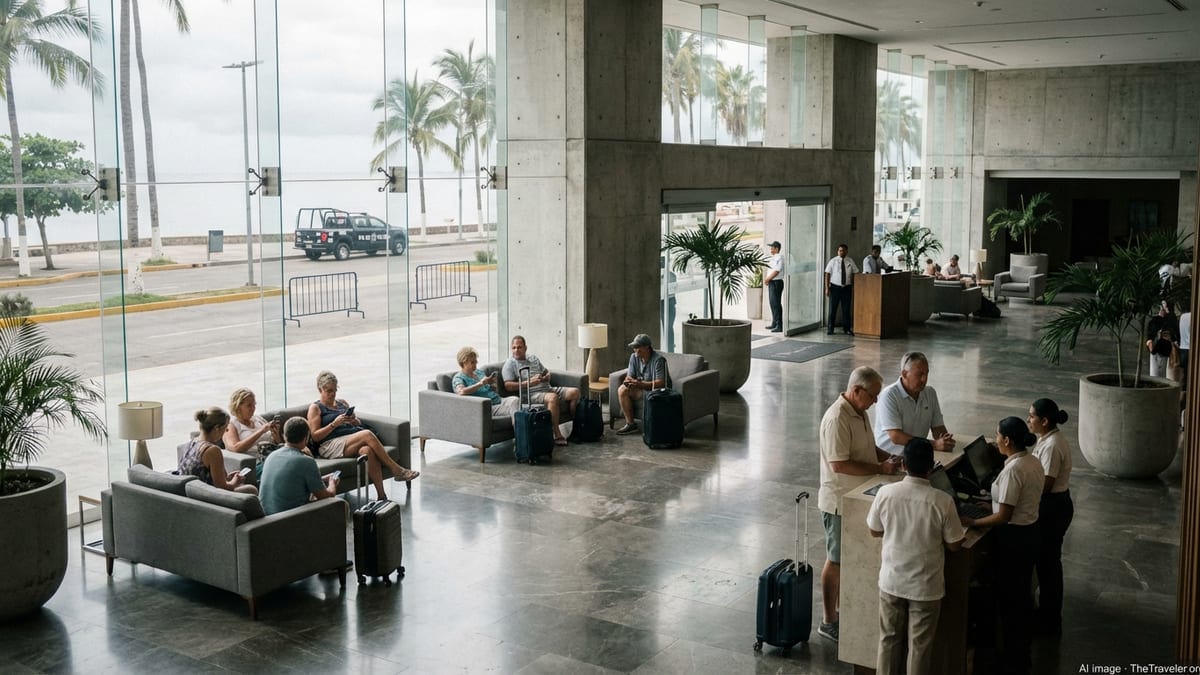
What Prompted the Sudden Security Alert
The heightened warning, issued on February 22 and updated on February 23, 2026, follows a major Mexican military operation targeting the Jalisco New Generation Cartel, one of the country’s most powerful and violent criminal organizations. Mexican authorities say the group’s leader, Nemesio “El Mencho” Oseguera Cervantes, was killed in the operation, an event that has sent shockwaves through cartel-controlled territories.
In the hours after the announcement, reports from Mexican officials and local media described burning vehicles, blocked highways and armed confrontations across parts of western and central Mexico. Videos shared on social platforms showed plumes of smoke over Puerto Vallarta and chaotic scenes at Guadalajara International Airport, underscoring the volatility on the ground.
U.S. officials say the embassy’s alert is directly tied to these “ongoing security operations and related road blockages and criminal activity.” The language of the alert is unusually strong, instructing U.S. citizens in named locations not just to exercise caution, but to remain sheltered where they are until further notice.
While outbreaks of cartel violence are not new in Mexico, the combination of a high-profile cartel leader’s reported death, retaliatory attacks and a sweeping shelter-in-place directive from the U.S. Mission has elevated concern among travelers, airlines and regional governments on both sides of the border.
Where the Alert Applies and Who Is Affected
The U.S. Mission’s security alert covers a broad swath of Mexico, including some of the country’s busiest vacation hubs favored by American travelers. Officials specifically list Jalisco, Baja California, Quintana Roo and parts of Guanajuato, Guerrero, Michoacan, Oaxaca, Nuevo León and Tamaulipas as areas where U.S. citizens should shelter in place.
In Jalisco, the advisory names Puerto Vallarta, Chapala, Guadalajara and Ciudad Guzmán, areas that mix expat communities, lakeside retreats, urban centers and beach resorts. In Baja California, the alert references Tijuana, Tecate and Ensenada, border and coastal cities frequently visited by day-trippers and weekend tourists from California.
On the Caribbean side, Quintana Roo’s resorts are also affected, including Cancun, Playa del Carmen, Tulum and Cozumel. These destinations draw millions of American tourists each year for beach vacations, cruises and short-haul getaways, making the embassy’s instruction to remain indoors particularly disruptive to the tourism sector.
The shelter-in-place directive applies not only to private U.S. citizens, but also to U.S. government personnel. Embassy and consulate staff in locations such as Guadalajara, Puerto Vallarta, Cancun, Playa del Carmen, Cozumel, Reynosa, Tijuana and parts of Michoacan have been told to work remotely and remain at secure locations. Staff at the Consulate General in Monterrey have been ordered to stay within the metropolitan area and to postpone travel to other regions.
How Travel and Transportation Are Being Disrupted
The embassy emphasizes that no airports have been formally closed, but acknowledges that roadblocks and unrest are significantly affecting air travel and ground transportation. Flights in and out of Guadalajara and Puerto Vallarta have been among the most impacted, with airlines canceling or delaying services as they assess security conditions and crew safety.
Reports from aviation and local authorities describe clusters of cancellations involving major North American carriers serving west coast and central hubs. In some cases, passengers have found themselves stranded at airports or stuck in resort areas as airlines adjust schedules and reroute aircraft around affected regions.
On the ground, the disruption is even more pronounced in certain cities. In Puerto Vallarta, taxis and app-based ride services have been suspended, cutting off a primary means of moving between hotels, beaches and the airport. Local businesses, including beachfront clubs and hospitality venues, have voluntarily closed, citing difficulties for staff to travel safely and a desire to protect guests and employees.
Highway blockades, often formed with hijacked and burned vehicles, are a familiar tactic in cartel-dominated areas, designed to slow or divert military and police movements. During the current operations, authorities have documented multiple such blockades, complicating intercity travel and raising the risk for tourists attempting overland journeys between resorts, airports and nearby towns.
What the US Embassy Is Urging Travelers to Do Right Now
The core message of the U.S. Embassy’s alert is clear: if you are in one of the named areas, stay put and minimize your movements until conditions stabilize. Officials urge Americans to shelter in place in their current accommodations, whether that is a hotel, vacation rental or residence, and to avoid unnecessary trips outside.
Travelers are being advised to avoid areas around law enforcement or military operations, which are potential flashpoints for clashes with armed groups. The embassy also stresses the importance of steering clear of crowds, demonstrations and large public gatherings that could become targets or be affected by sudden road closures or security actions.
U.S. citizens are encouraged to monitor local news and official announcements, stay alert to changing conditions in their immediate area and follow the instructions of local authorities. In an emergency, travelers in Mexico are reminded that the nationwide emergency number is 911, which can connect callers with police, fire and medical services.
The alert further urges Americans to keep friends and family informed of their whereabouts and safety status through phone calls, text messages and social media, particularly if they are unable to depart as planned due to canceled flights or blocked roads. Officials also recommend enrolling in the State Department’s Smart Traveler Enrollment Program so that the U.S. government can send real-time updates and locate citizens if conditions deteriorate.
Risk Levels by Region and What Tourists Are Seeing on the Ground
Conditions can vary widely from one Mexican state to another, and even between neighborhoods within the same city. While the embassy’s language is broad and precautionary, the most visible unrest has been concentrated in portions of Jalisco and neighboring states, where the initial military operation took place and cartel influence has historically been strong.
In Puerto Vallarta, tourists have reported sudden closures of bars, beach clubs and restaurants, along with a heavy presence of security forces on main roads and in tourist districts. Some travelers describe an eerie contrast between relatively calm beachfronts and blocked access routes farther inland, highlighting how localized disruptions can reshape the visitor experience.
Along the U.S. border in Baja California and Tamaulipas, heightened vigilance is evident in and around Tijuana and Reynosa, with Mexican security forces increasing patrols and checkpoints. While cross-border traffic has not been universally halted, travelers are encountering longer waits, detours and a more visible military and police presence on key routes.
On the Caribbean coast, including Cancun, Playa del Carmen, Tulum and Cozumel, authorities and hotels are balancing efforts to maintain basic tourism operations with the embassy’s recommendation that Americans remain in secure locations. In many resort corridors, guests are still able to access on-site amenities, but are being discouraged from unnecessary off-property excursions until security agencies provide clearer guidance.
Implications for Upcoming Trips and Bookings
The sudden alert is forcing many would-be visitors to reassess travel plans scheduled for the coming days and weeks. While the U.S. government has not issued a blanket ban on travel to Mexico, the shelter-in-place directive and reports of localized violence are prompting airlines, tour operators and cruise companies to revisit their risk calculations.
Some carriers have begun waiving change fees or offering travel credits for flights involving heavily affected airports, particularly Guadalajara and Puerto Vallarta. Travelers whose itineraries include layovers or connections through these cities may find it possible to reroute through alternative hubs, though seat availability can be tight during periods of disruption.
For those with nonrefundable hotel reservations or vacation packages in impacted states, flexibility will depend largely on the policies of individual providers. Many resort operators are closely tracking government advisories and may be willing to adjust dates, extend credits or rebook guests once conditions improve, especially if security operations and road closures persist.
Travel insurance coverage varies widely, and not all policies treat civil unrest and government warnings in the same way. Travelers considering whether to postpone or cancel should review their policy documents carefully and, if necessary, speak with their insurer to understand what, if anything, can be recovered if plans change due to the current alert.
How This Fits Into the Broader Security Picture in Mexico
The latest alert lands against a longstanding backdrop of regional security challenges in Mexico, where cartel violence, interstate rivalries and federal enforcement campaigns have periodically disrupted tourism and cross-border travel. The Jalisco New Generation Cartel, in particular, has been a central focus of Mexican and U.S. security concerns for years, given its reach across multiple states and its reputation for violence.
U.S. travel advisories for Mexico are layered and complex, with different levels of caution assigned to different states based on crime rates, kidnapping risks and other factors. Even before the current operations, some states listed in the new alert already carried heightened warnings, including recommendations that U.S. citizens reconsider or avoid travel altogether in certain areas.
What sets the present situation apart is the combination of a dramatic enforcement action, the reported killing of a top cartel figure and the rapid issuance of a broad, time-sensitive shelter-in-place order that includes several major tourist destinations. For many travelers, this raises fresh questions about how quickly security conditions can change and how prepared they are to respond.
Mexican officials, meanwhile, are attempting to project control and reassure both residents and international visitors that the current operations are aimed at restoring long-term stability. Local governments in affected states have canceled public events, adjusted school schedules and increased patrols in high-traffic zones in an effort to prevent further escalation.
Practical Safety Tips for Americans Currently in Mexico
For U.S. citizens already in the affected areas, experts emphasize a blend of situational awareness, flexibility and patience. Travelers are urged to resist the impulse to “self-evacuate” through regions where security forces are engaged in active operations or where roadblocks have been reported, as attempting to drive out can carry its own risks.
Instead, security specialists advise confirming with your hotel, airline or tour operator whether it is safe and feasible to depart, and to rely on official guidance from local authorities and the U.S. Embassy. If the decision is to stay put, simple measures such as keeping mobile devices fully charged, storing extra drinking water and snacks in your room and knowing the emergency exits and shelter areas of your lodging can provide added peace of mind.
Americans are also encouraged to keep essential documents, including passports, printed itineraries and proof of travel insurance, readily accessible in case conditions improve and departure becomes possible at short notice. Maintaining a low profile, avoiding discussion of sensitive topics in public and steering clear of any areas with visible security operations can further reduce exposure to potential flashpoints.
While the current alert underscores the unpredictability of travel in regions facing organized crime and security crackdowns, officials stress that remaining informed, following official instructions and avoiding unnecessary movement are among the most effective steps travelers can take to protect themselves until the situation stabilizes.