

More news on this day
The US Embassy in Manama has urged American citizens to avoid hotels across the Bahraini capital after an Iranian strike hit the Crowne Plaza Bahrain on March 1, injuring guests and staff and deepening safety concerns for travelers amid a rapidly widening regional conflict.
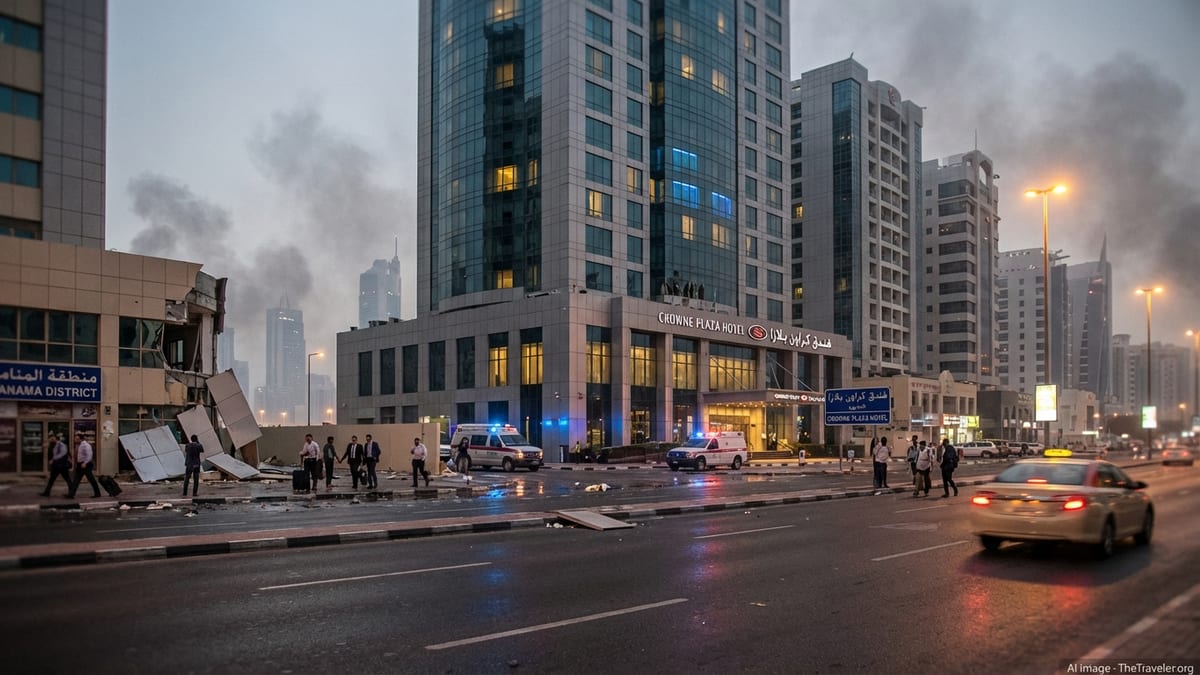
Embassy Issues Heightened Alert After Crowne Plaza Hit
The security alert, circulated early Sunday by the US mission in Bahrain and reiterated through official State Department channels, said the embassy was tracking confirmed reports that the Crowne Plaza Hotel in Manama was struck during Iranian attacks. Images from the scene showed damage to parts of the upscale complex and emergency crews working around shattered glass and debris.
While initial reports indicate that the strike caused injuries but no mass casualties, the incident marked one of the clearest signs to date that civilian hotels in Bahrain are now on the front line of the confrontation between Iran and a US Israeli military coalition. The alert warned that hotels in Manama could be targeted again in future attacks and advised Americans to avoid staying in any hotels in the capital until further notice.
US government personnel have been moved out of hotels in Manama as a precaution, and the embassy said it is closely monitoring the security situation and coordinating with Bahraini authorities. The mission has also been operating under earlier guidance to shelter in place in response to Iranian missile and drone strikes on the kingdom.
US Embassy Operations Curtailed as Regional Strikes Expand
The warning to avoid hotels comes on top of a separate announcement that the US Embassy in Bahrain would close on Sunday, March 1, due to what it described as ongoing missile strikes against the kingdom. Consular appointments, including emergency services, were canceled, with officials stating that normal operations would resume only when conditions allow.
The Crowne Plaza strike followed a barrage of Iranian missiles and drones that have hit targets across the Gulf in recent days, including high rise buildings and strategic sites in Bahrain, and reported attacks on infrastructure in neighboring states. Washington has raised its travel advisory for Bahrain, telling Americans to reconsider travel because of terrorism and armed conflict and noting confirmed strikes on high rise structures in Manama.
US officials have stressed that the situation is fluid and could change quickly, with further closures of airspace and restrictions on movement possible with little or no warning. The embassy has encouraged citizens to ensure their travel documents are accessible, maintain contact with family and employers, and be prepared to adjust plans or shelter in place if the security environment deteriorates further.
Impact on Travelers, Hotels and Aviation in Bahrain
For visitors and residents alike, the immediate impact of the embassy’s alert is being felt across Manama’s hospitality sector. Major international properties clustered in business districts and near diplomatic and financial centers have seen a sharp drop in new bookings, while existing guests are reassessing their stays and, in some cases, relocating to alternative accommodation outside the capital or leaving the country altogether.
Travel agents and regional carriers report that Bahrain’s airspace has already faced temporary closures and disruptions, part of a broader pattern of suspensions and diversions affecting multiple Gulf states since the latest round of strikes began. Some aviation activities associated with motorsport and large scale events in Bahrain have been scaled back or canceled as operators assess security risks and insurance coverage.
Hotel managers in Manama, speaking to local media, have emphasized that they are working closely with Bahraini security services, tightening entry checks and reviewing contingency plans that include directing guests to internal shelters or lower floors away from exterior windows during air raid sirens. Nevertheless, the US embassy’s explicit call to avoid hotels represents a significant blow to confidence at a time when the country had been counting on tourism and business travel to support economic growth.
Guidance for US Nationals and Other Foreign Visitors
In its latest message, the US Embassy urged Americans already in Bahrain to remain vigilant, avoid large gatherings and demonstrations, and keep a low profile. Citizens are advised to identify the safest room in their residence, stock essential supplies such as water, food and medication, and review building evacuation or shelter plans. Those in multi story buildings are instructed, when possible, to move to lower levels away from exterior walls and glass during alerts.
The embassy’s security guidance underscores the risks from both direct impacts and falling debris, which can occur even when incoming missiles or drones are intercepted by air defenses. Travelers are being told to monitor local news channels, follow instructions from Bahraini authorities, and stay enrolled in official alert systems to receive real time updates on rocket fire, airspace closures, and curfews.
For Americans planning trips to the Gulf, the State Department recommends checking the latest country specific advisories before departure and considering whether nonessential travel can be postponed. Airlines and tour operators are offering limited flexibility on rebooking and refunds as schedules shift in response to changing security and airspace conditions.
Tourism Outlook Darkens Amid Broader Gulf Tensions
The strike on the Crowne Plaza and the subsequent hotel warning come at a sensitive time for Bahrain’s tourism industry, which has been investing heavily in new resorts, waterfront developments and cultural attractions to compete with larger Gulf destinations. Manama’s hotels cater not only to business travelers and expatriate workers but also to weekend visitors from neighboring countries drawn by events, shopping and dining.
Analysts note that repeated missile alerts, airspace closures, and direct hits on civilian infrastructure could deter international visitors well beyond the immediate crisis period. Travel insurers may revise coverage terms for Bahrain and nearby destinations, while global corporations could temporarily shift conferences, training sessions and regional meetings to alternative hubs perceived as less exposed.
Regional tourism boards are watching developments in Bahrain closely, aware that perceptions of risk tend to spill across borders. Even destinations not directly targeted by strikes are bracing for potential declines in arrivals, higher operating costs and changing traveler behavior, including a preference for shorter stays, more flexible bookings and accommodations located farther from central business districts or high profile landmarks.
For now, the US Embassy’s message is unambiguous for its citizens in Bahrain: avoid hotels in Manama, stay alert to fresh security guidance, and be ready to move quickly as the conflict and its impact on civilian life and travel continue to evolve.