

More news on this day
Emergency safety assessments at Delta Air Lines, Alaska Airlines, and American Airlines have prompted targeted disruptions on certain US–Europe services to Athens and Madrid, rattling consumer confidence and raising new questions over how resilient tourism flows to Greece and Spain will be in the crucial upcoming peak season.
Get the latest news straight to your inbox!
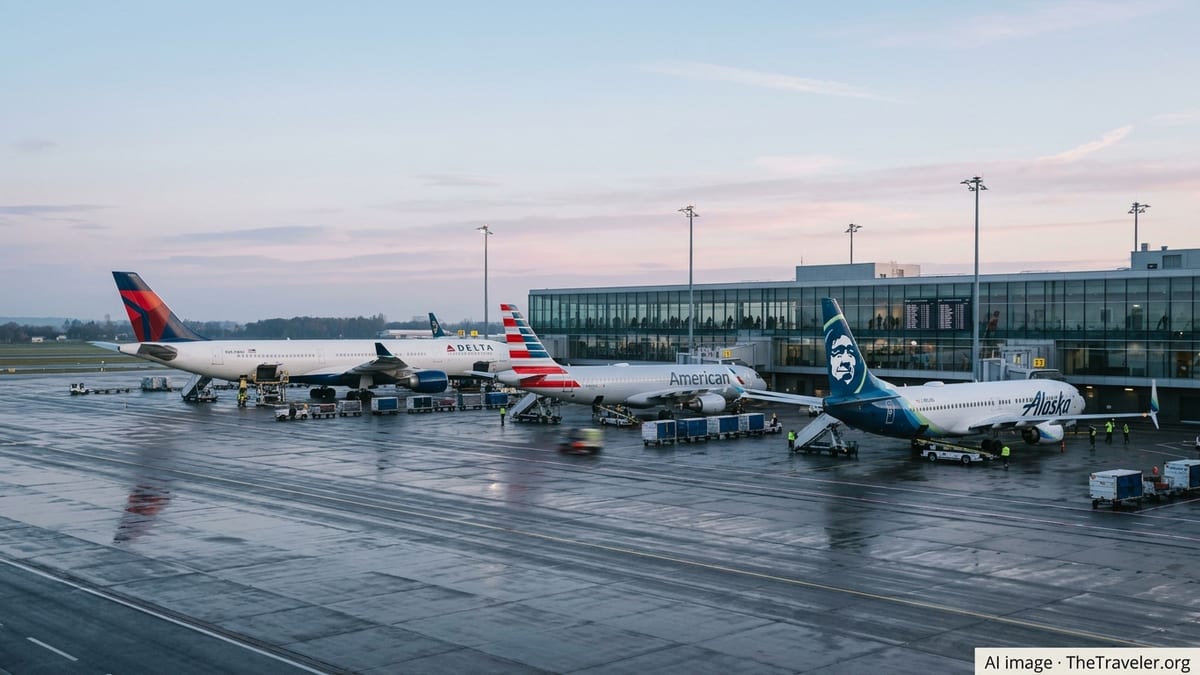
Targeted Safety Reviews Ripple Across Transatlantic Networks
Publicly available operational updates and industry coverage indicate that Delta Air Lines, Alaska Airlines, and American Airlines have recently intensified safety checks on parts of their long-haul fleets, triggering schedule changes on select transatlantic services. While the bulk of US–Europe flying remains intact, routes linking US hubs with Athens and Madrid have seen isolated cancellations, aircraft substitutions, and revised departure times as carriers accommodate additional inspections.
The heightened focus on safety follows a period of elevated scrutiny of aircraft maintenance practices across the industry, particularly on longer-haul widebody and high-utilization narrowbody jets. Airlines have been reshuffling aircraft and crews to create inspection windows, a process that can temporarily strain transatlantic networks where aircraft typically operate tight rotations. Athens and Madrid, which rely heavily on summer leisure demand, are among the first secondary European gateways to feel the impact.
Industry tracking data suggests that some flights have been removed from schedules several days in advance, while others have been adjusted closer to departure as maintenance planning evolves. The result for travelers is a patchwork of disruptions that vary by date and route, complicating advance planning for both individual tourists and tour operators counting on predictable lift into Greece and Spain.
Athens and Madrid Face Fresh Uncertainty Ahead of Peak Season
For Greece and Spain, the timing of the latest schedule volatility is particularly sensitive. Tourism authorities in both countries have been projecting solid demand for the 2026 summer season, with North American arrivals seen as a key growth engine after several record-breaking years for Mediterranean destinations. Athens has become a popular jumping-off point for island itineraries, while Madrid serves as both a cultural destination and a major connecting hub to other Spanish cities.
Any sustained trimming of nonstop capacity from the United States could weaken those forecasts. Even limited disruptions on US–Athens and US–Madrid routes can push travelers toward alternative gateways such as Rome, Paris, or Barcelona, where capacity may be more resilient or supported by a wider mix of carriers. This kind of demand diversion can have knock-on effects, from hotel occupancy patterns to local transport bookings and tour availability in Greece and mainland Spain.
At the same time, tourism demand remains robust, and many travelers are showing a willingness to rebook via indirect routings rather than cancel trips outright. Travel agencies report that some clients are shifting to one-stop itineraries through Northern and Western European hubs when nonstop options from US carriers become uncertain. This suggests that the immediate impact may be felt more in yield and route profitability for individual airlines than in a sharp collapse of visitor numbers to Greece and Spain.
Passenger Experience: Rebookings, Longer Routings, and Rising Anxiety
For passengers, the emergency safety reviews are manifesting as a mix of cancellations, aircraft changes, and schedule shifts, often communicated on relatively short notice. Travelers booked on nonstop flights to Athens and Madrid are increasingly being offered alternative routings via partner hubs or different European cities, adding connections and longer journey times to itineraries that were originally sold as point-to-point.
Consumer forums and travel discussion boards highlight a growing sense of anxiety among some travelers who see safety-related schedule adjustments appended to existing concerns about weather disruptions and air traffic control delays across Europe. While many passengers express appreciation for a cautious approach to maintenance, the operational uncertainty is prompting some to delay bookings or opt for more flexible tickets that allow for last-minute changes.
Travel insurers and online travel agencies are also being drawn into the picture as customers seek clarity on coverage for safety-driven schedule changes. Policies often treat such disruptions differently from weather events or labor actions, and the latest wave of checks is testing how clearly those distinctions are communicated to travelers heading to Greece and Spain over the coming months.
Implications for Airlines, Alliances, and Competing Carriers
The operational strain linked to emergency safety reviews is forcing Delta, Alaska, and American to revisit their transatlantic deployment strategies, particularly on leisure-heavy routes. Athens and Madrid, which rely more on seasonal demand than corporate traffic, are sometimes more vulnerable to reductions when airlines need to free up aircraft for other markets or create additional maintenance slack in their fleets.
Alliances and joint ventures may help soften the impact. Partner airlines based in Europe can, in some cases, backfill capacity or carry rebooked passengers on shared itineraries, preserving connectivity even when a US-operated nonstop is temporarily removed from the schedule. However, alliance coordination takes time, and available seats during peak summer weeks are finite, meaning some travelers will inevitably face less convenient options.
The disruptions also create openings for rival carriers. European low-cost and hybrid airlines have been steadily increasing their presence in Mediterranean markets, and any extended capacity gap from major US carriers into Athens or Madrid could accelerate that trend. Competing North American airlines that are not affected by the current wave of safety checks may also see an opportunity to strengthen their brands in Greece and Spain by emphasizing schedule reliability and alternate gateways.
What Travelers to Greece and Spain Should Expect Next
Looking ahead, publicly available schedule data and airline communications suggest that the emergency safety reviews are likely to remain most intense in the near term, with some potential for stabilization as inspection backlogs clear and maintenance programs settle into a new rhythm. However, the situation remains fluid, and further targeted adjustments on US–Athens and US–Madrid routes cannot be ruled out, especially around high-demand travel dates.
Travelers planning trips to Greece or Spain in the coming months should be prepared for possible changes, including equipment swaps, time shifts, or rebookings via intermediate hubs. Flexible booking options, longer connection buffers, and careful monitoring of airline notifications may help mitigate the practical impact if itineraries are disrupted by ongoing safety-related checks.
For the tourism sectors in Greece and Spain, the latest developments are a reminder of how tightly their fortunes are linked to transatlantic airline operations. While demand fundamentals remain strong, the ability of carriers to deliver consistent, reliable service into Athens and Madrid will be a key factor in determining how confidently the upcoming peak season unfolds for hotels, tour operators, and the wider visitor economy.