

More news on this day
The United States has expanded a visa bond requirement that affects certain applicants for short-term business and tourism visas, adding more countries and setting refundable bonds of up to 15,000 dollars for some travelers from April 2026.
Get the latest news straight to your inbox!
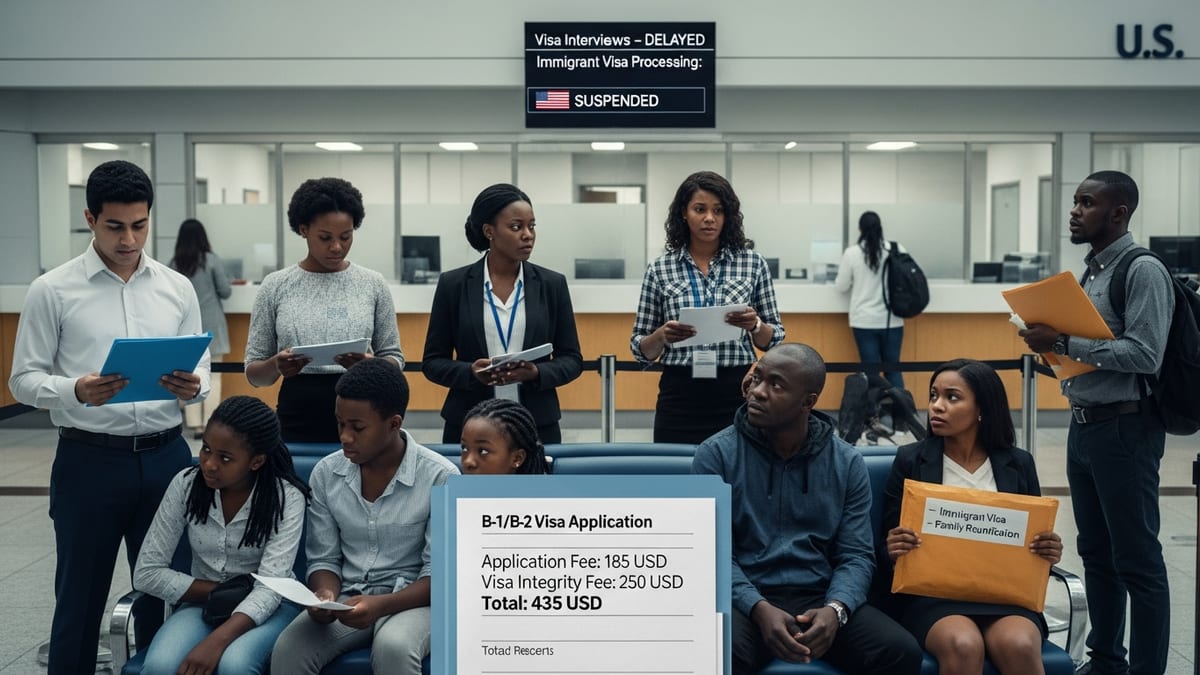
Latest Policy Update and Who It Affects
Recent updates to United States visa policy confirm that a growing number of countries are now subject to mandatory financial bonds for certain nonimmigrant visitors. Publicly available State Department notices and legal analyses indicate that the measure targets B1 and B2 visa applicants, typically used for business trips and tourism, from countries with higher recorded overstay rates. The list has expanded in several stages since late 2025 and was updated again in March 2026.
According to current coverage, nationals applying for a B1/B2 visa with a passport from a listed country may be required to post a refundable bond in the amount of 5,000, 10,000, or 15,000 dollars, depending on individual circumstances. The bond is a condition of visa issuance and is intended to be returned if the applicant either does not receive a visa or, after travel, is shown to have complied with the terms of admission and departed on time.
Reports describe the program as a pilot that was first applied to a small group of African countries and then broadened to additional states in Africa, Asia, the Caribbean, Latin America, and the Pacific. By early 2026, immigration law updates and travel industry reports were noting that the number of countries included had climbed into the dozens, with further growth expected as new notices are posted.
The bond requirement does not apply to all travelers worldwide. It is limited to nationals of the designated countries who are applying for B1/B2 visas and who are otherwise found eligible under existing rules. Travelers from countries in the US Visa Waiver Program, for example, continue to enter under that separate system without visa bonds, although they remain subject to security screening and electronic authorization.
Key Dates, New Countries, and Bond Amounts
Information compiled from State Department postings and specialist immigration briefings shows that the current phase of the visa bond policy took shape in several key waves. A first set of designations took effect in August and October 2025, covering a small group of African states whose nationals were required to post bonds ranging from 5,000 to 15,000 dollars as part of B1/B2 visa processing. These initial steps were described as a one year pilot focused on discouraging overstays.
In late 2025 and early 2026, the program widened. Travel and legal news outlets reported that states such as Malawi, Zambia, Gambia, and later Bhutan, Botswana, Guinea, and several others were added, with effective dates running from late 2025 into January 2026. Parallel coverage noted that some citizenship by investment countries and additional African and Asian states were also brought into scope, as the administration leaned more heavily on bond mechanisms to address overstay concerns.
A further significant expansion was announced in mid March 2026, with implementation scheduled to begin in early April. Reports indicate that a group of twelve additional countries, including Cambodia, Ethiopia, Georgia, Grenada, Lesotho, Mauritius, Mongolia, Mozambique, Nicaragua, Papua New Guinea, Seychelles, and Tunisia, will be covered from April 2, 2026. This round, described in multiple summaries, lifts the total number of countries subject to the bond program to several dozen, consolidating the measure as a central feature of US travel policy for certain nationalities.
Across all phases, the structure of the bond itself has remained broadly consistent. Eligible applicants from designated countries are told that, if they meet the normal criteria for a B1/B2 visa, issuance may be conditioned on posting a bond of 5,000, 10,000, or 15,000 dollars. The specific amount is reported to be set case by case, often linked in commentary to the applicant’s travel history, financial profile, and perceived risk of overstay, although detailed internal criteria are not publicly disclosed.
How the Bond Requirement Works in Practice
Public guidance explains that the visa bond is not a fee but a refundable security deposit intended to encourage compliance with US immigration rules. The bond is typically collected after a consular officer determines that an applicant otherwise qualifies for a B1/B2 visa but falls within the category of nationals subject to the program. At that point, the applicant or a third party must arrange payment of the bond through an approved channel before the visa can be issued.
Payment of the bond does not guarantee that an applicant will receive a visa, and it does not exempt the traveler from standard background checks or eligibility rules. Instead, it is an additional condition layered onto the existing adjudication process for certain passport holders. If a visa is denied after a bond has been posted, or if the traveler later departs within the authorized period and respects all terms of stay, the bond is meant to be returned.
Immigration advisories stress that the bond requirement applies regardless of the location where a person applies. This means that nationals of listed countries cannot avoid the measure by filing their B1/B2 application in a third country. As a result, the policy is reshaping how some travelers plan business meetings, family visits, and tourism itineraries, with applicants now weighing the cost of tying up several thousand dollars alongside standard visa fees and travel expenses.
Analysts also note that the bond program is time limited but subject to renewal or replacement by future rules. Current legal memoranda describe an end date in August 2026 for the original pilot framework, but recent expansions and additional designations suggest that authorities may be using the pilot as a platform for broader, more permanent changes to how higher risk visitor flows are managed.
Impact on Travelers, Tourism, and Source Countries
Travel sector reporting and commentary from migration researchers suggest that the bond policy is already influencing travel decisions in several regions. For many households in low and middle income countries, a bond of 5,000 to 15,000 dollars is a substantial sum, effectively placing US trips beyond reach even if the traveler could afford airfare and accommodation. Tourism industry outlets warn that the requirement may reduce arrivals from affected markets, particularly for short stays and leisure trips.
Business travelers and small firms in the designated countries may also feel the effects. While larger corporations can more easily cover or front the bond for employees, smaller enterprises may find it difficult to immobilize thousands of dollars for the duration of a trip. In some cases, observers note that clients and partners may shift meetings to third countries or rely more on virtual engagements rather than absorbing the additional administrative and financial burden.
For governments in the countries covered, the program has become a sensitive diplomatic issue. Public statements and local media coverage in some affected states frame the bond as a sign of mistrust or as a penalty aimed disproportionately at particular regions. Others present it as a pragmatic response to overstay statistics and stress that individuals can still travel if they are able to meet the conditions.
Universities and advocacy groups that monitor international mobility have raised concerns that the bond requirement, combined with separate travel bans and heightened screening, may discourage prospective students and skilled visitors from considering the United States. Although the bond currently targets B1/B2 visas rather than study categories, industry analysts point out that first impressions of a country’s entry regime can influence long term decisions about where to invest, study, or build professional networks.
What Prospective Visitors Should Do Now
Travel experts and immigration attorneys advise prospective visitors from potentially affected countries to start by checking whether their nationality appears on the latest official list of countries subject to visa bonds. Because the roster has changed several times since 2025 and may be updated again, relying on older information or informal summaries can be risky. Applicants are encouraged to review the most recent public notices and consult qualified legal guidance where appropriate.
Applicants who discover that their passport is covered by the program need to factor the bond into their planning from the outset. That includes preparing documentation that clearly demonstrates ties to their home country, financial stability, and a clear purpose of travel, as well as making realistic decisions about whether they can afford to immobilize several thousand dollars while the visa is valid. Families planning collective trips may face especially complex choices, because bonds can apply per traveler rather than per group.
Travel and policy analysts also highlight the importance of timing. Effective dates for new countries vary, and some travelers may find that moving up or postponing an application could affect whether a bond is required. Given the relatively short notice that sometimes accompanies policy shifts, however, there is no guarantee that applying early will avoid future obligations, so close monitoring remains essential.
More broadly, the expansion of visa bonds is being watched as part of a larger trend toward financial and administrative barriers in global mobility. For travelers considering the United States, the latest changes underscore the need to treat visa planning as a core part of trip preparation, alongside flights and accommodation, particularly if they hold passports from countries that have experienced higher overstay rates or recent shifts in their bilateral relationship with Washington.