

More news on this day
The United States has updated its global travel guidance with a sweeping safety alert and a refreshed advisory map that highlights a cluster of countries now considered the most dangerous destinations for American travelers, with several labeled "Do not travel" because of war, terrorism, civil unrest and the risk of targeted attacks.
Get the latest news straight to your inbox!
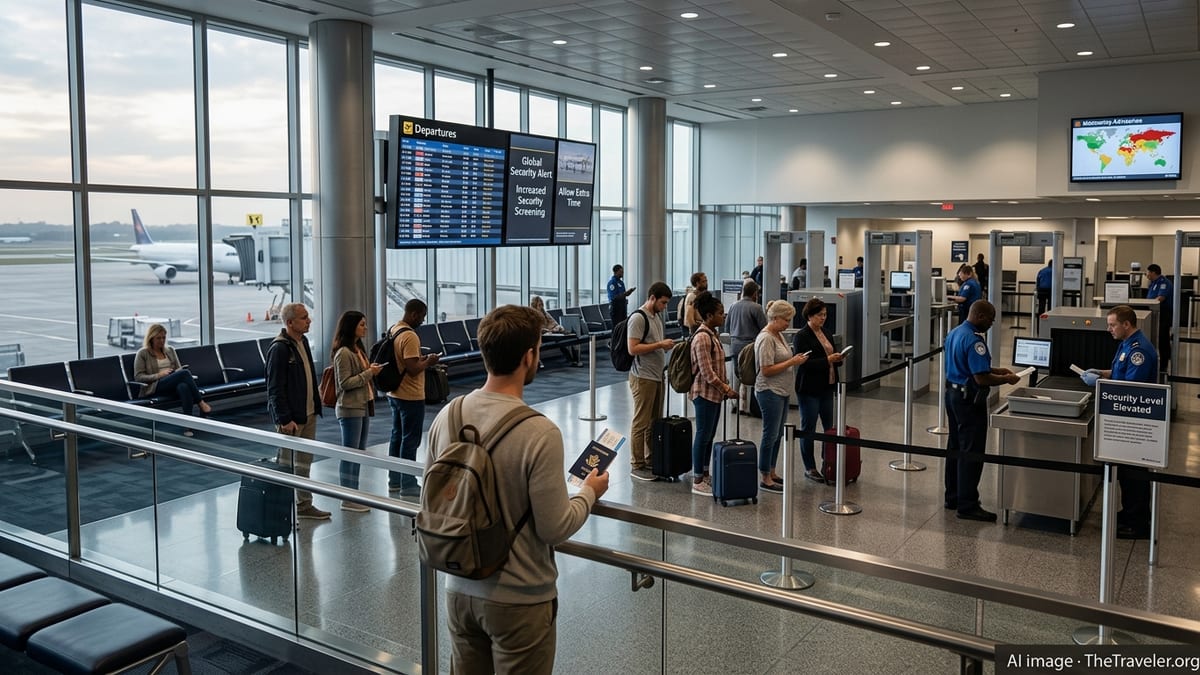
Global safety alert follows mounting regional tensions
The latest worldwide alert was issued after an escalation of conflict and security incidents affecting multiple regions, prompting US officials to advise citizens overseas to exercise increased caution. The alert reflects concern about the potential for terrorist attacks, protests, and violent actions directed at US nationals and facilities, even far from active front lines.
Publicly available notices describe the alert as a broad warning rather than a ban on travel. It is intended to sit on top of country-specific advisories, signaling that risks linked to geopolitical tensions and non-state armed groups have risen simultaneously in several parts of the world.
Security analysts note that such global alerts have been used at moments when threats are diffuse and fast evolving, from heightened extremist activity to spillover from wars that may inspire attacks or trigger unrest in third countries. The current notice reflects a climate in which localized crises can quickly acquire a transnational dimension, particularly for a high-profile nationality such as Americans.
For travelers, the practical impact is an expectation of more frequent security screenings, sudden disruptions to flights and ground transport, and localized curfews or internet shutdowns in countries that experience protests or violence. The message for US citizens is to stay informed about changing conditions, register their trips where possible, and maintain contingency plans.
Level 4 countries: where Americans are told not to travel
Alongside the global alert, the State Department’s color-coded advisory map again draws a stark line around a group of countries tagged as Level 4, the highest warning level, with a clear instruction not to travel. These destinations are deemed so dangerous for US citizens that the government states it has “very limited ability” to assist if something goes wrong.
The current Level 4 list is dominated by conflict zones and states with extreme political instability. It includes Afghanistan, Syria, Yemen and Somalia, where years of war and weak state institutions have left large areas under the control of armed factions. It also features countries such as Iraq and parts of Ukraine, where active hostilities, frequent missile or drone attacks and a high risk of collateral damage make routine tourism untenable.
Other Level 4 destinations reflect a combination of kidnapping risks, terrorism, and high rates of violent crime, often compounded by poor medical infrastructure and unreliable rule of law. In some cases, advisory language stresses the possibility of wrongful detention or politically motivated arrests of foreigners, including Americans, in the context of tense bilateral relations.
These designations do not carry legal penalties for ignoring them, but they are the strongest warning tools available to US authorities. They also influence decisions by airlines, cruise lines, insurers and large tour operators, many of which either suspend services or impose strict conditions when a location is labeled “Do not travel.”
How the US decides which countries are most dangerous
The State Department uses a four-tier system to gauge the relative risk in every country, from Level 1, advising normal precautions, up to Level 4, advising against any travel. Public guidance explains that analysts assess destinations across a set of risk indicators that include crime, terrorism, civil unrest, health threats, natural disasters, kidnapping and wrongful detention.
Within this framework, the “most dangerous” countries are the ones where several of these risks intersect at high intensity and where US citizens are considered especially vulnerable. Active wars, frequent terrorist attacks in urban centers, the presence of anti-American militant groups and recent incidents involving foreigners tend to push a country toward Level 4.
The ratings also attempt to capture the local capacity to respond when things go wrong. That covers the strength of local police and emergency services, the availability of quality hospitals, and the ability of US consular staff to reach affected citizens. In highly unstable environments, embassy teams may be partially evacuated or operations severely restricted, which in turn raises the advisory level.
Officials acknowledge that conditions change quickly. Some countries move between levels as ceasefires hold or break down, as elections ease or inflame tensions, or as health crises such as epidemics flare up and recede. Travelers consulting the map are encouraged to look not only at the level but also at the date of the most recent update on each country page to understand whether a warning reflects a sudden crisis or a long-standing risk.
Travel industry reacts to shifting risk map
Airlines, cruise operators and major hotel brands closely track the advisory system because it influences demand and affects their duty of care to customers and staff. Industry reports suggest that a Level 4 designation can lead to immediate route suspensions, itinerary changes for cruises, and the withdrawal of promotional campaigns targeting affected destinations.
Travel insurers also factor the US ratings into coverage decisions. Policies frequently exclude claims arising from trips to locations with “do not travel” warnings, or they require special riders and higher premiums. Some companies highlight that travelers who knowingly visit Level 4 countries may find that trip interruption, evacuation and medical claims are denied unless they purchased expanded coverage in advance.
Tour operators with long experience in risky environments sometimes continue to offer highly controlled itineraries in countries at Level 3, where the guidance is to reconsider travel. These companies emphasize local partnerships, detailed security planning and dynamic rerouting to avoid flashpoints. Once a destination crosses into Level 4, however, most mainstream operators withdraw, leaving only specialized outfits catering to niche adventure or conflict-zone tourism.
At the same time, destinations that remain in Levels 1 and 2, including much of Europe and parts of Asia and Latin America, often highlight their relatively low advisory status in marketing campaigns. Tourism boards frame themselves as safe alternatives for travelers keen to explore beyond their home countries while still respecting official risk guidance.
What the new warnings mean for American travelers
For individual travelers, the updated map and global safety alert translate into a need for more deliberate planning. Advisers commonly suggest that Americans start each international trip by checking both the overarching alert and the specific advisory level for their destination, then confirming whether their insurance and airline policies treat that location as high risk.
Those who choose to visit countries at Level 3 or near conflict zones are being urged to share itineraries with family, register their travel on available government platforms, and prepare for disruptions such as sudden airport closures or rerouted flights. In practice, this can mean building extra time into schedules, avoiding tight connections, and budgeting for unexpected hotel nights or alternative transport if a route shuts down.
An additional concern is the potential for anti-American sentiment to flare during periods of geopolitical tension, even in countries that are otherwise relatively safe. Public commentary on the advisories stresses that traveling discreetly, staying informed through reputable local and international media, and avoiding demonstrations or political gatherings can significantly reduce exposure to risk.
Despite the stark warnings, the updated advisory map still shows most of the world in the lower tiers, signaling manageable risk for prepared visitors. The strongest language is reserved for a limited set of states where war, terrorism and lawlessness have combined to make even short-term travel for Americans a high-stakes decision.