

More news on this day
Air travelers across the United States faced fresh disruption on March 10 as more than two dozen international flights were canceled at major hubs in Atlanta, Chicago, Dallas, Los Angeles, Miami and New York, affecting services operated by Qatar Airways, United Airlines, Delta Air Lines, American Airlines, Southwest and other carriers to key destinations including Doha, Tel Aviv, Brussels and Philadelphia.
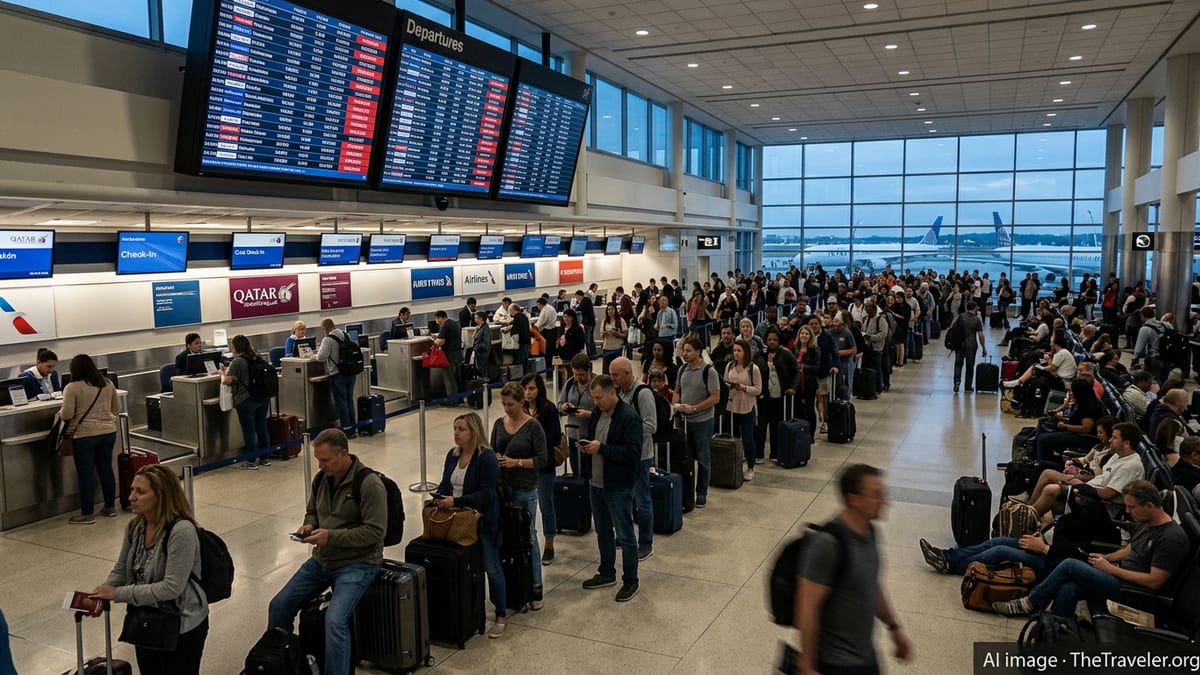
Middle East Airspace Crisis Ripples Into US Hubs
The latest round of cancellations follows a two-week period of heightened disruption linked to airspace restrictions and security tensions across parts of the Middle East. Gulf carriers such as Qatar Airways have been operating on sharply reduced schedules after temporarily suspending regular services to and from Doha, forcing last-minute changes to itineraries that rely on the Qatari hub for onward connections to Asia and Africa.
US carriers, including Delta Air Lines and United Airlines, have also extended their suspensions or reductions on routes to Tel Aviv and other regional gateways, citing evolving security assessments and constrained routings around closed airspace. In practice, that has translated into fresh cancellations from New York and other East Coast gateways, with knock-on effects for connecting passengers who began their journeys in inland hubs like Atlanta and Chicago.
While many of the cancellations on March 10 were concentrated on long-haul departures to Doha and Tel Aviv, schedule data also showed interruptions on services feeding into European partners, including flights touching Brussels and Philadelphia. Airline operations teams have been working with limited routing options as they seek to avoid restricted corridors over Iraq, Iran and neighboring states, which adds time and cost to any flights that can still operate.
Industry analysts note that these security-driven cancellations come on top of typical early spring weather volatility across North America, compounding operational complexity for airlines already juggling diversions, aircraft rotations and crew duty limits. For passengers, the combined effect has been sudden gate-change announcements, rolling delay estimates and, in a growing number of cases, outright cancellations with only hours of notice.
Qatar Airways Cuts Deep Into US–Doha Network
Qatar Airways continues to be among the most visibly affected carriers in the US market, after it moved to suspend or sharply curtail its regular schedule from American gateways to Doha. Customers booked from cities such as New York, Chicago, Dallas, Miami, Atlanta and Los Angeles have reported receiving short-notice notifications that their flights to Doha have been removed from the schedule as the airline adapts to a restricted operating window from its hub.
The Doha-based airline has outlined a limited relief schedule through at least March 12, prioritizing a small number of inbound and outbound flights where airspace access and crew availability can be assured. That reduced timetable has left many US-origin itineraries without viable same-day connections, prompting the cancellation of more than two dozen services and forcing passengers either to accept multi-day delays or request refunds and alternative arrangements.
Travel agents and corporate travel managers say they have been scrambling to re-accommodate Qatar Airways customers, often by rebooking them on competing carriers via Europe or the Asia-Pacific depending on the final destination. In some cases, travelers originally scheduled to fly from East Coast or Gulf Coast cities have been advised to reposition themselves to West Coast gateways such as San Francisco, where limited alternative long-haul options remain available.
Passenger accounts emerging from airport terminals in Atlanta and Miami describe long queues at airline customer-service counters and phone hold times stretching into hours, as affected travelers seek clarity on whether they can be moved to partner airlines or must instead pursue card chargebacks and full refunds. Many report that rebooking options on short notice are significantly more expensive than their original tickets.
US Carriers Extend Tel Aviv Suspensions and Trim Transatlantic Links
Major US airlines have also played a role in the wave of cancellations affecting travelers from key domestic hubs. Delta Air Lines has extended its pause on flights between New York’s John F. Kennedy International Airport and Tel Aviv through at least late March, while United Airlines has maintained broad waivers and reduced operations on its own Middle East network amid continued instability.
Although many of Monday’s cancellations were coded as international segments, the impact has cascaded across domestic legs that serve as feeders into long-haul departures. For example, travelers booked from Atlanta or Chicago to connect in New York or another coastal hub for Tel Aviv or Doha have found their first segments canceled when the onward international flight was pulled from the schedule.
American Airlines and Southwest, while less directly exposed to Middle East routes, have not been immune. They have faced localized cancellations and delays at Dallas–Fort Worth, Miami and Los Angeles as aircraft and crews are repositioned, and as congestion from disrupted international banks spills over into domestic operations. In some instances, transatlantic links to secondary European hubs, including Brussels and Philadelphia, have been trimmed or retimed to preserve on-time performance for higher-demand services.
Operational data also show a spike in delays across New York-area airports, where limited runway capacity and tightly packed departure banks leave little margin when inbound aircraft arrive late or out of sequence after lengthy reroutes around restricted airspace. Even flights that do operate are frequently arriving behind schedule, tightening connection windows for onward journeys.
Thousands of Travelers Face Missed Connections and Unexpected Costs
Across the six affected US hubs, the combined cancellations and delays have translated into thousands of disrupted journeys. Passengers en route to destinations as varied as Tel Aviv, Brussels, Doha and onward Asian cities via Gulf hubs have reported missed connections, extended layovers and unexpected overnight stays as they wait for new itineraries to become available.
Stranded travelers in Atlanta, Chicago and Dallas have described spending nights in airport hotels while they await confirmation of rebooked flights, often at their own expense when disruptions are labeled as security-related. Others have opted to purchase fully refundable one-way tickets on alternate carriers to safeguard their itineraries, planning to cancel them later if their original airline eventually secures a workable reroute.
Consumer advocates caution that compensation eligibility can vary widely depending on the origin, destination and underlying cause of a cancellation. While some passengers departing from European airports on itineraries involving Brussels or other EU hubs may qualify for cash compensation under regional regulations, many US-origin travelers affected by Middle East airspace restrictions will need to rely on airline goodwill policies, travel insurance or credit card protections to recoup hotel and meal costs.
Families and leisure travelers have been particularly hard-hit as school holidays and spring breaks approach, compressing already-tight booking windows for popular long-haul routes. In online forums, would-be vacationers bound for destinations in Southeast Asia, the Indian subcontinent and East Africa via Doha report abandoning their original plans altogether after being unable to secure affordable alternative routes.
What Travelers Should Do If Their Flight Is Canceled
With cancellations continuing to roll through airline systems on short notice, travel experts recommend that passengers with upcoming itineraries touching Doha, Tel Aviv or connecting European hubs stay proactive. Monitoring bookings via airline apps and enabling text or push notifications can ensure travelers receive immediate updates when schedule changes are processed.
Once a cancellation has been formally posted, affected customers are typically offered a choice of rebooking on the next available flight, changing dates without penalty or requesting a refund. Given limited capacity on remaining international services from major US hubs, agents advise moving quickly to secure acceptable alternatives, including departures from nearby airports, overnight connections or routings via different continents.
Travelers are also urged to review the fine print of airline waivers, which may specify eligibility windows based on original departure dates and routes. For those whose trips originate or transit in jurisdictions with strong passenger-protection rules, such as the European Union, it may be worth asking carriers to clarify hotel and meal voucher policies, particularly when forced overnight stays occur because of lengthy reroutes.
For now, airlines and industry observers agree that the picture is fluid, with day-to-day cancellation counts likely to fluctuate as security conditions evolve and regulators adjust airspace restrictions. Passengers planning trips through late March are being encouraged to build in extra buffer time, consider flexible or refundable fares where possible, and be prepared for last-minute changes as the knock-on effects of the Middle East airspace crisis continue to reverberate through US airports.